

Being a bright sunny June day, we set off from Sennen Cove, heading northwards towards Pendeen.
We had a gap to fill in, one to which we had been looking forward as we knew and loved the area.
Whitesand bay was glorious with surfers enjoying some good waves under the watchful eye of the lifeguards. Gwynver beach looked the better, and less populous, option.
 The stretch from Tregiffian Vean cliff to Gribba Point was classic cliff path: an occasional scramble but mostly walking through low scrub. There was a strange zigzag at one point and then a small detour up the Cot valley for some reason but otherwise the going was easy and the route obvious.
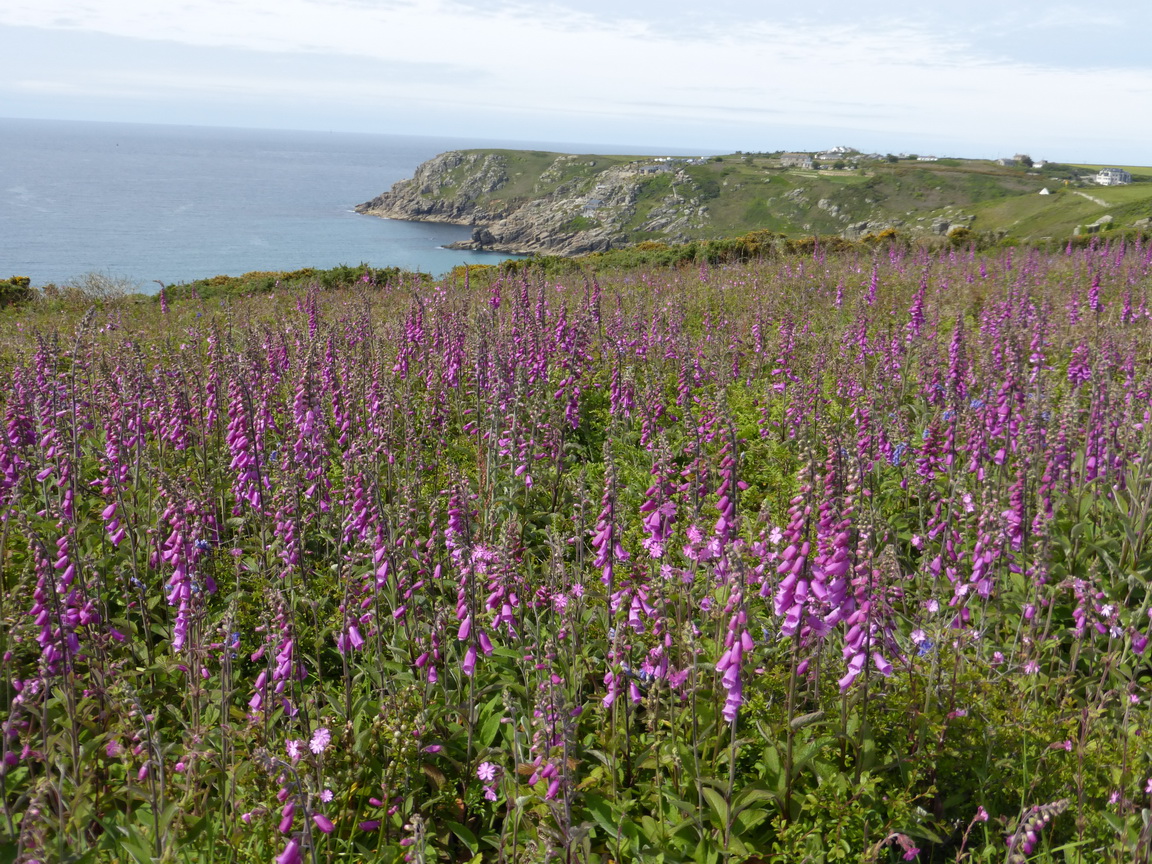
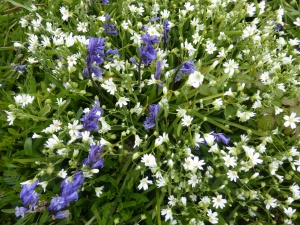
Most of the Spring flowers were faded by now and the great carpets we had seen in recent weeks were gone. The foxgloves were in bold flower but little else was fresh. In places a red mat of dodder covered the top of the gorse. We quickly identified the flower of the day which we think is English stonecrop, a sparkly succulent, which covered many of the rocks. The general smell was of fresh bracken.

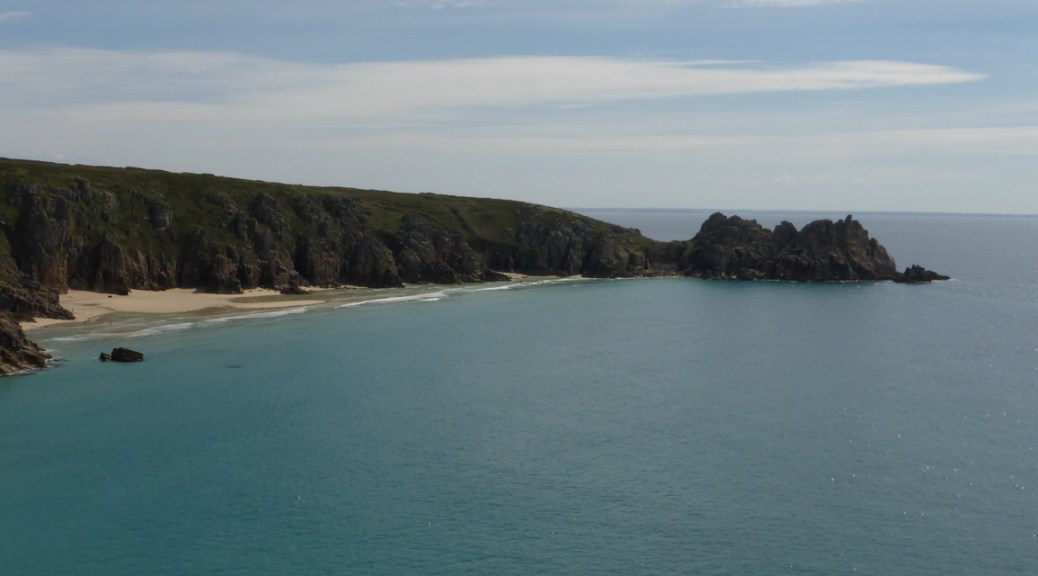
Below us, the sea was its usual turquoise but you would expect nothing less on a sunny Cornish day.
Emerging from the Cot valley, we skirted Ballowall (Carn Gloose) barrow without stopping, having visited it in the past. Although apparently terribly important archaeologically, this is surely one of the most confusing monuments for the amateur to disentangle. Our ancestors certainly picked a wonderful site for whatever it was they were trying to create.
A short distance further on was Cape Cornwall, so much better than Land’s End and reputedly better known by our ancestors. The little harbour, with its small tidal swimming pool looked calm and sheltered although it probably took the full force of the storms a couple of winters ago.

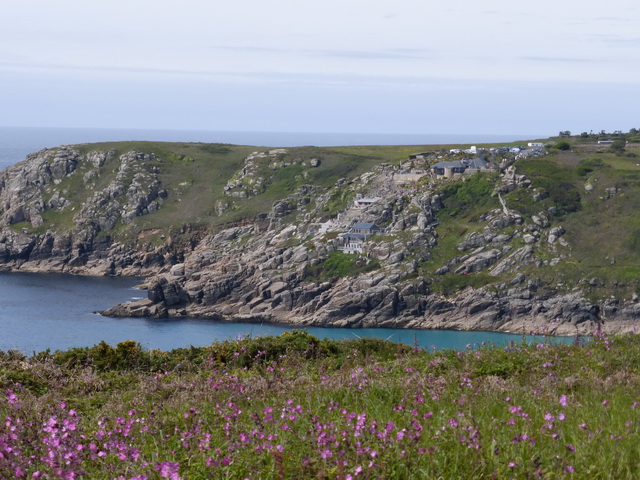
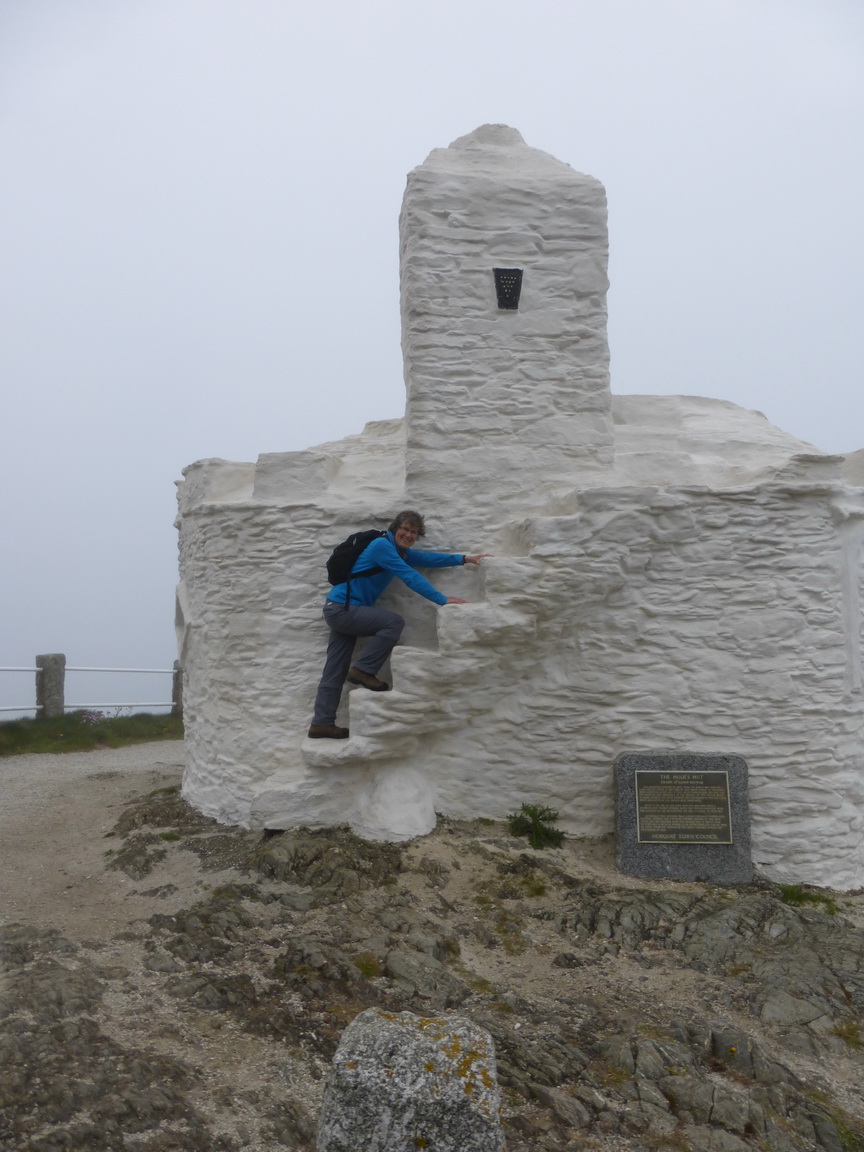
We had not come across the little medieval St Helen’s Oratory before. Perched on the saddle approaching Cape Cornwall, it has been rescued from its former use as a cowshed and turned back into something more evocative.
It is not hard to imagine that many such oratories once existed in Cornwall. Some must lie under our churches, others, like that at Madron or further up the coast beyond Zennor, have been almost recaptured by nature.
Porth Ledden lies on the north side of Cape Cornwall and is a natural harbour which has been described as ‘the best-defended early harbour in Cornwall’ with a cliff castle on both sides. We had visited this when we walked the Tinner’s Way a year or so ago. Today it was just as appealing even though the tide was out.
 The landscape changes markedly from Cape Cornwall onwards. We were approaching St Just and there was evidence of past industrial activity and disused mines – with as many warning notices – everywhere.
Round the corner from Cape Cornwall was the Crowns Mine of Botallack. It is almost a law that you have to take far too many photographs of it and we did, eating our lunch looking down on its amazing engine houses.
Behind us, the ghostly sounds of the folk music of Brenda Wooton and John the Fish seemed to waft to us from the Count House where they used to sing.
 Passing the Levant mine (NT) we came all too quickly to the immense denuded landscape and buildings of Geevor mine. Mining and arsenic production has so damaged the surface that little will grow here.
We had one last treat however. We had parked in Lower Boscaswell on purpose and the path to our car passed what remains of Boscaswell fogou. This was almost completely destroyed by a farmer in the past but a short section still exists, hidden away behind some long grass in the a wonderful wide, above ground Iron Age wall.
The walk had taken us three and half hours. The book says we had covered about 8 miles, Google thinks it was about 7.5 miles.
On the way home we visited Pendeen, St Just in Penwith and Sennen churches.


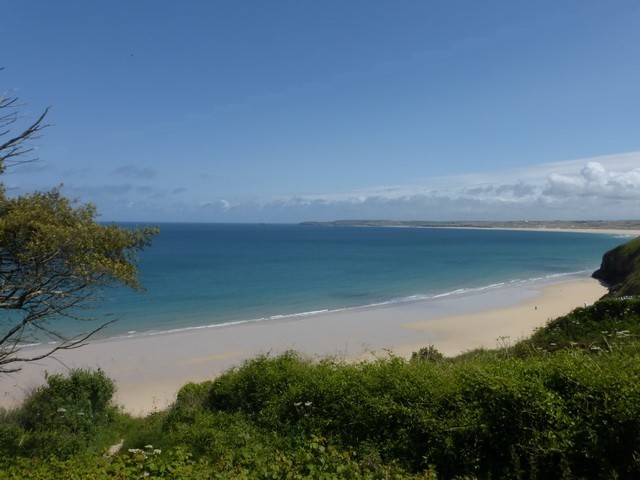

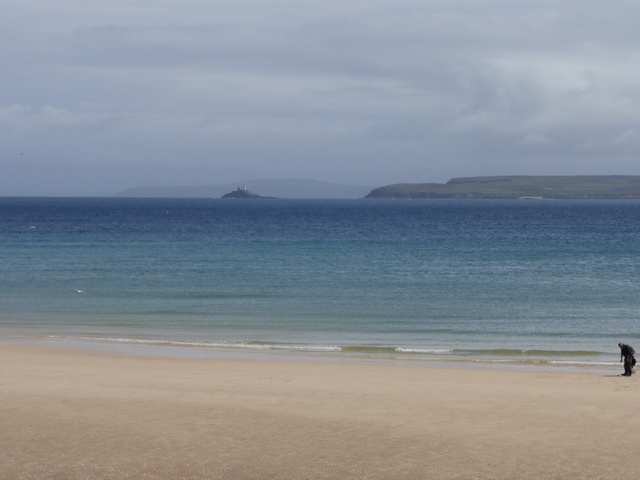
 Whatever the cause, walking into St Ives can sometimes feel like walking into a painting. Quite apart from the bright sun and acres of golden sand, it is hard not to be impressed by St Ives, in or out of season.
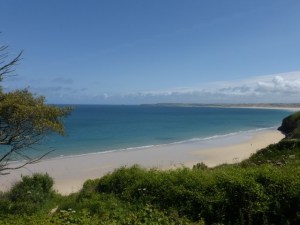 The path here was a mix of dried mud and rough lane, thankfully relieved of any further tarmac, as we made our way through lush greenery. On one side we had a variety of ‘more exclusive houses’ bordering the sea, and the railway line, surely one of the most scenic short journeys in the country. The views were constantly amazing.
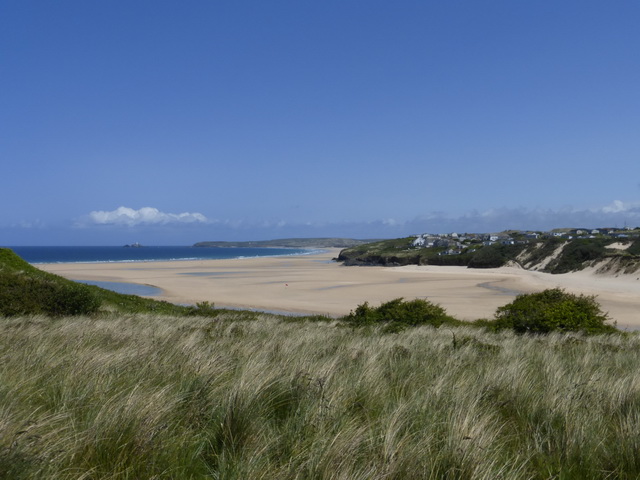
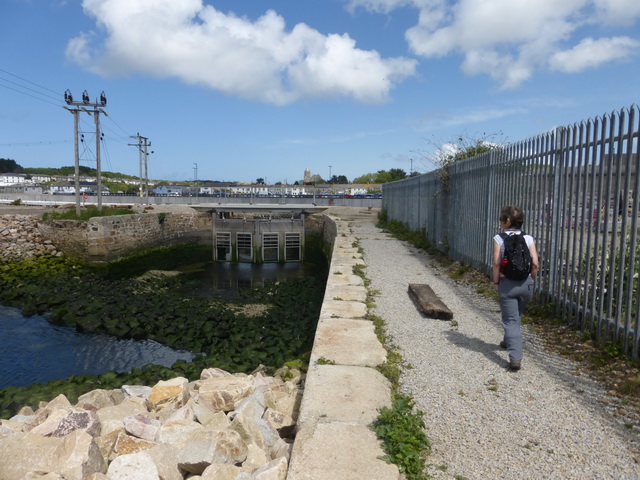
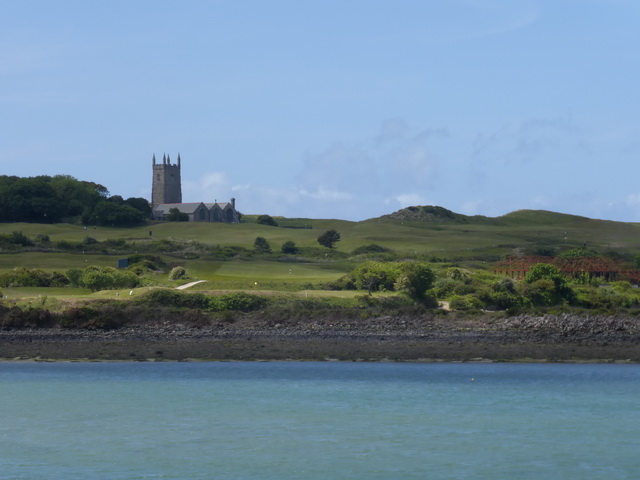






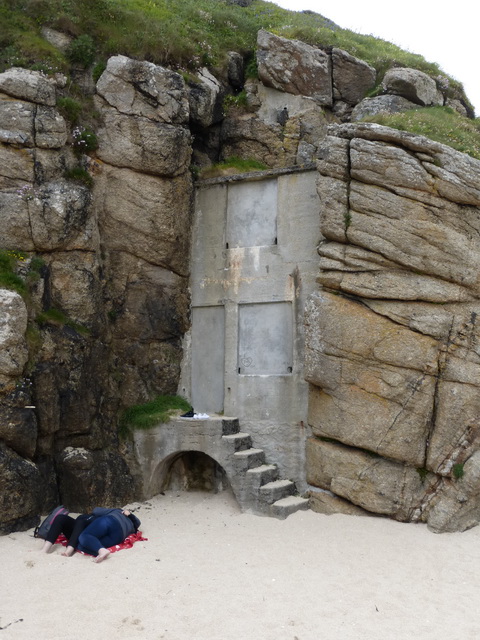
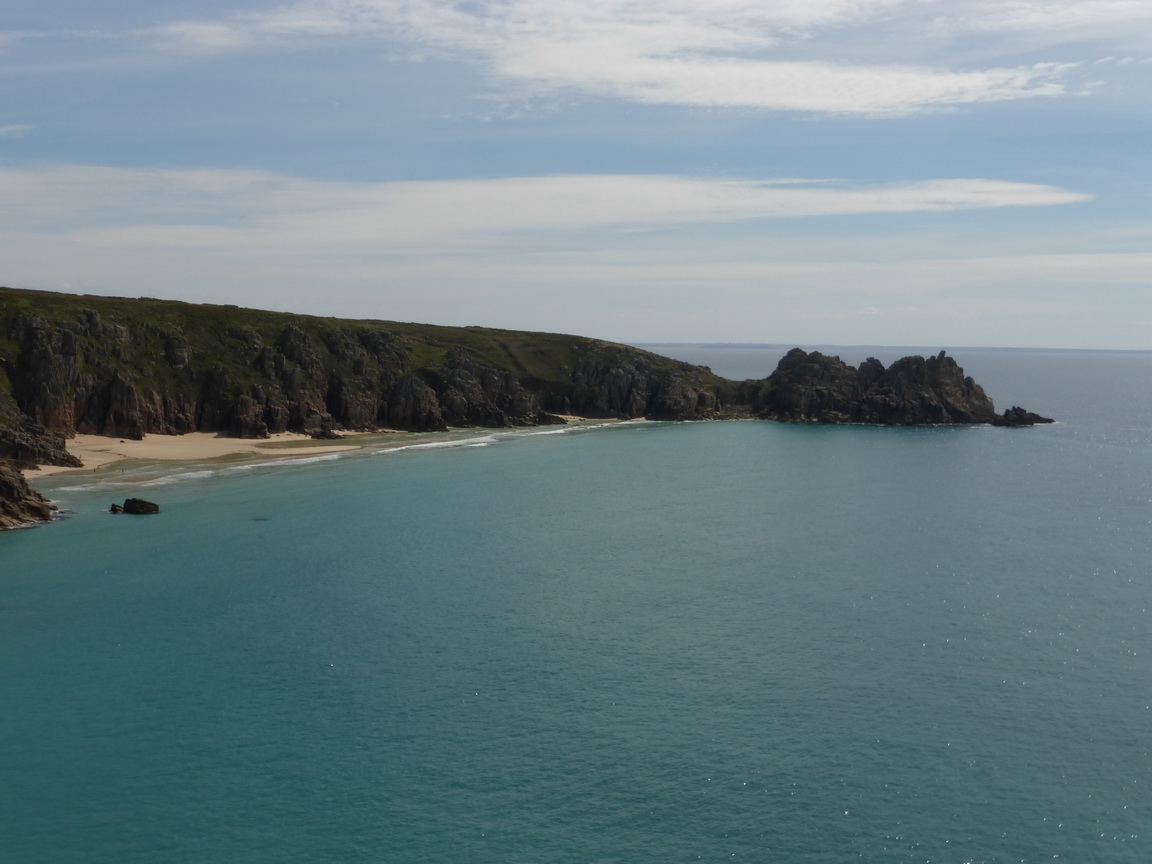


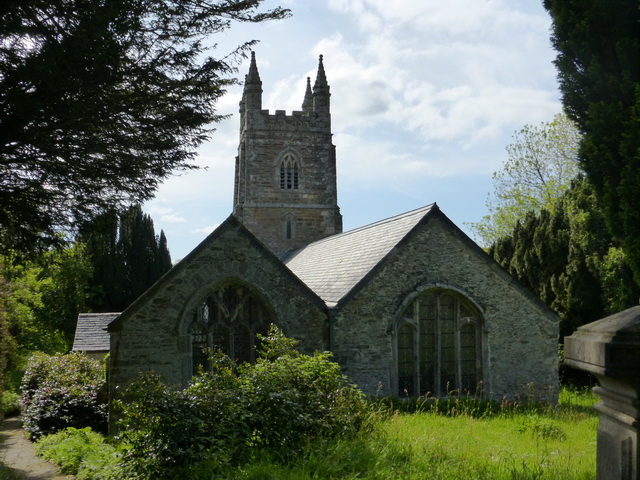

 Walking through a town like Newquay was never going to be our ideal for a coast path but we were pleasantly surprised at some stretches. The route attempts to follow the coast through the town following a litany of famous beach names: Fistral, Tolcarne, Lusty Glaze and Porth.

 Returning from across the Tamar, we popped into




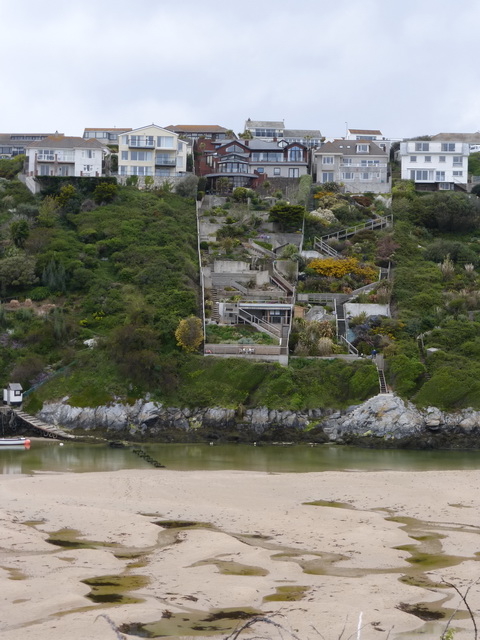
 Emerging on the banks of the Gannel, it was clear that we were approaching civilisation for the opposite – Pentire – bank was filled with smart houses whose estates tumbled down the steep cliff. Different solutions were adopted by the owners: meandering paths through vegetation, smart lined lawns to rigid modernity. We pondered on how often they carried food to the ‘sitting areas’ at the bottom of the hill, only to find that they had forgotten the salt, or wanted another drink.


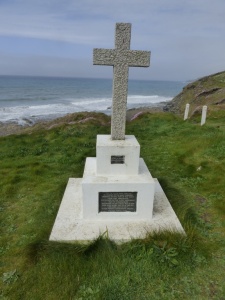 Just out of town, we passed a cross to all those sailors who had been lost on this coast (see earlier posting about
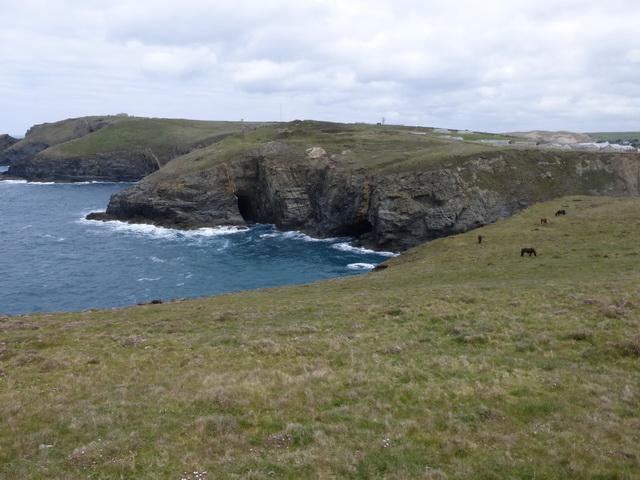
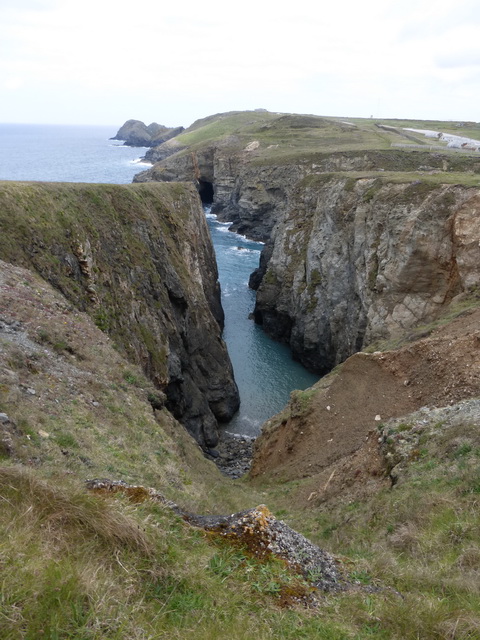
 The cliffs here are steep but crumbling. Managed retreat seems to be the order of the day. The beaches below were covered in a multiplicity of differently coloured stone: greenstone, granite and even some unidentified white stone.
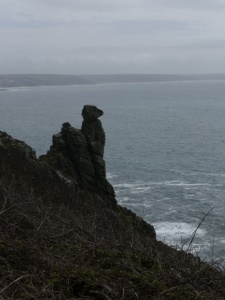
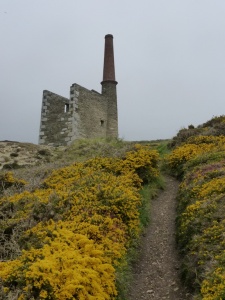 pproaching Trewavas Head, we delighted in the engines houses which rival the Crowns at Botallack for their precarious position on the cliff edge. Signs warned us that choughs were nesting here. It is good to know that they are no longer confined to an unspecified, and deeply secret, place on the Lizard, but are spreading to other parts of the Cornish coast. The black birds that we saw were, of course, simply black birds: not a red beak or foot to be seen.
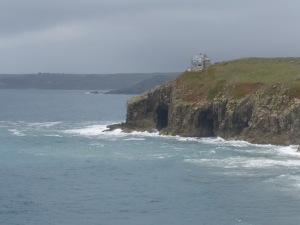 Moving on, after a little snack, we arrived at the familiar sight of Rinsey. This is surely the craziest siting of a house on this coast. Perhaps they thought that if they built any further back from the edge then someone would build in front of them and steal their view. On the other hand, we speculated, with caves below and in a mining area, perhaps the house has an elevator or staircase straight into the cave below to make smuggling easier. The plot for a re-working of ‘The House of Adventure’ started to develop in our minds …


