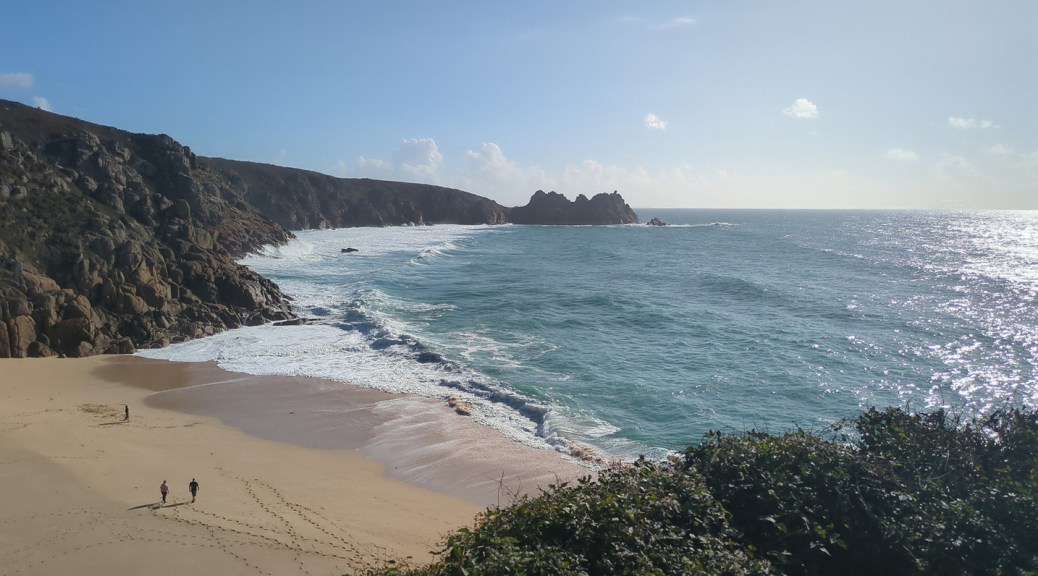
A walk down memory lane. A 5.4 mile circular walk takes you from Porthcurno to Gwennap Head along some of the most striking scenery in West Cornwall. What is more, it is packed with highlights.
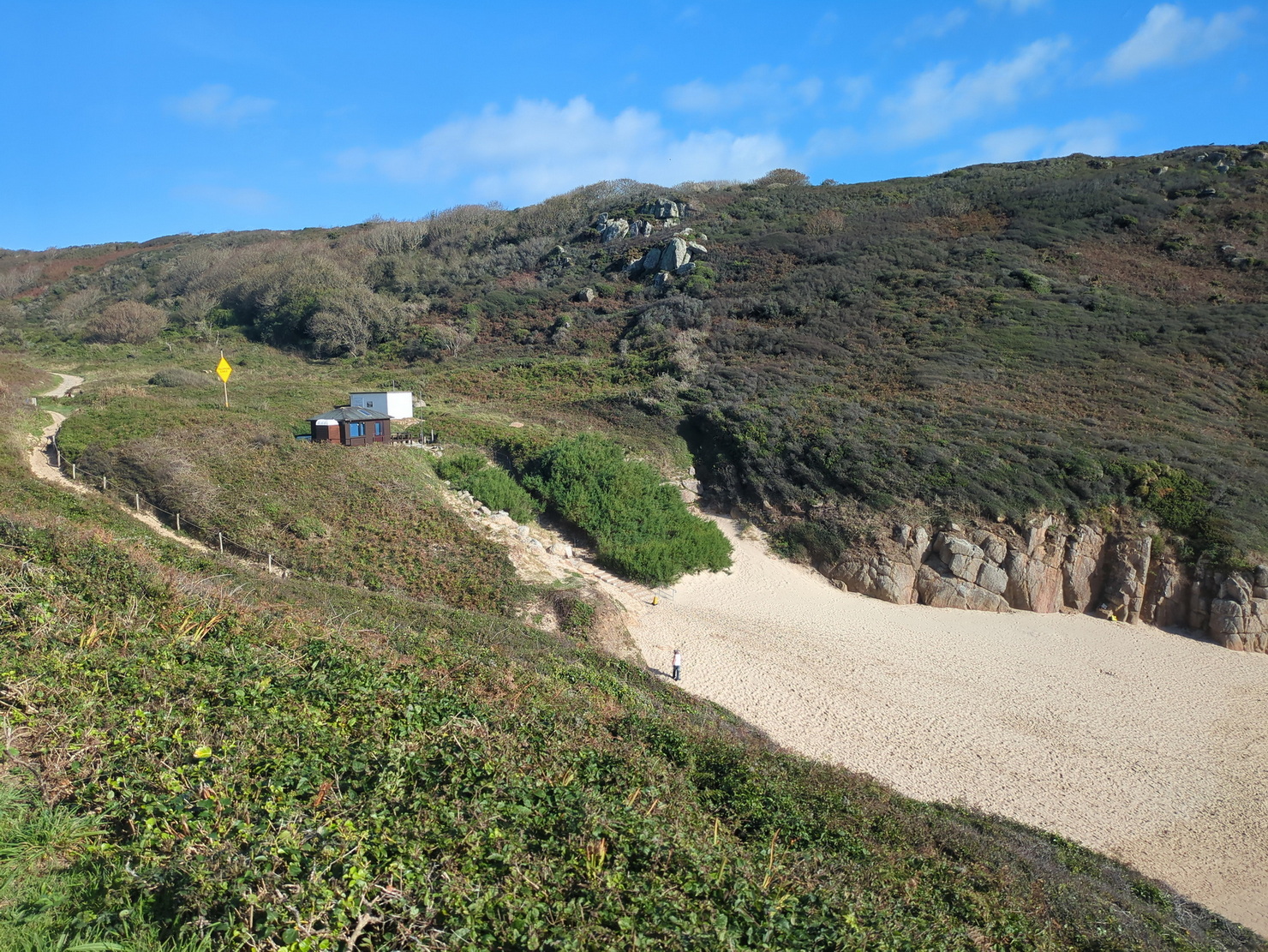
The starting view is of the lovely Porthcurno beach where the ‘sand’ consists of glistening broken shells. At the head of the beach is the little shed where the undersea cables come in, its doors open so that you can see the labels: Gibraltar, Lisbon … evocative names of far off places where the call sign PK would be instantly recognised. It is at the same time romantic and prosaic: to think that these famous places are connected with this little hut.
No time to visit the Museum where a cousin learned his trade before being shipped off at a ridiculously young age to run some chain of Pacific islands for Cable and Wireless.
On past the ‘house in the cliff’, built by Rowena Cade for the family, now sadly blocked off. I remember, as boy, entering its dank interior and wondering how anyone could wish to use it as anything other than a very damp store.
Past the ‘fishing rock’ where mackerel could be caught in abundance. This was once a better fishing spot than the more exposed Minack rock itself, no doubt encouraged by the proximity of the sewage outfall pipe. (We rarely swam off Porthcurno beach in those days.) And up the steep (Rowena Cade enhanced?) steps to the Minack theatre, remembering the days when we struggled up with a bag full of mackerel and our fishing gear, without the benefit of a sturdy metal handrail.
Then the Minack and memories of productions on warm, cold and wet evenings: a Macbeth so good that one could ‘see’ the dagger; a Twelfth Night when Viola reduced us to tears; Under Milk Wood, A Man for All Seasons, The Taming of the Shrew, Captain Corelli’s Mandolin. Of numerous G&S – Iolanthe in 2005 stands out – of children’s shows. And the nights when a fully-rigged sailing ship crossed through the path of the moon or dolphins played in the half-light … selling tickets, being in the prompt box, operating a follow-spot – all that was missing was a thin grey-haired figure being followed by several King Charles spaniels.
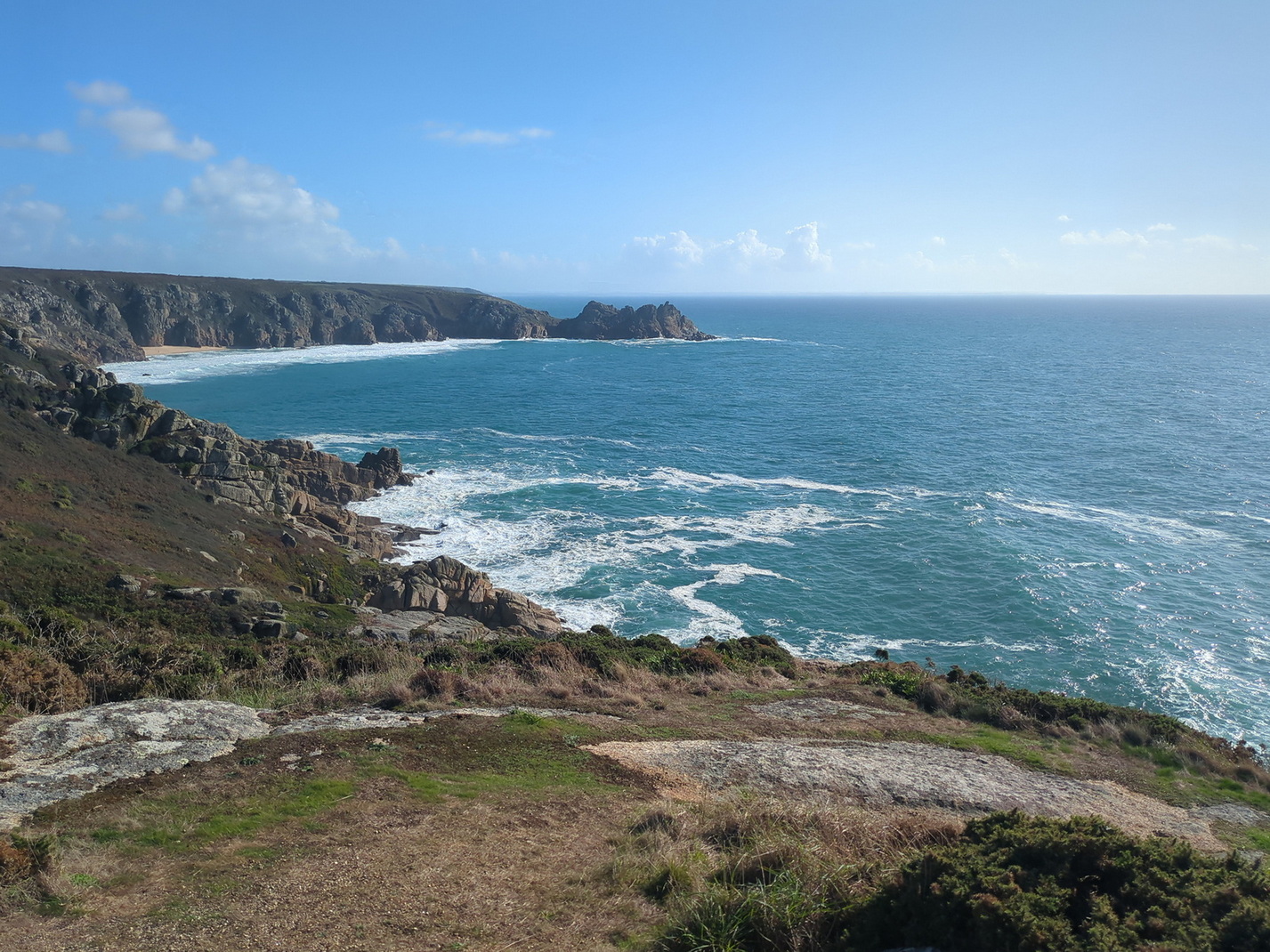
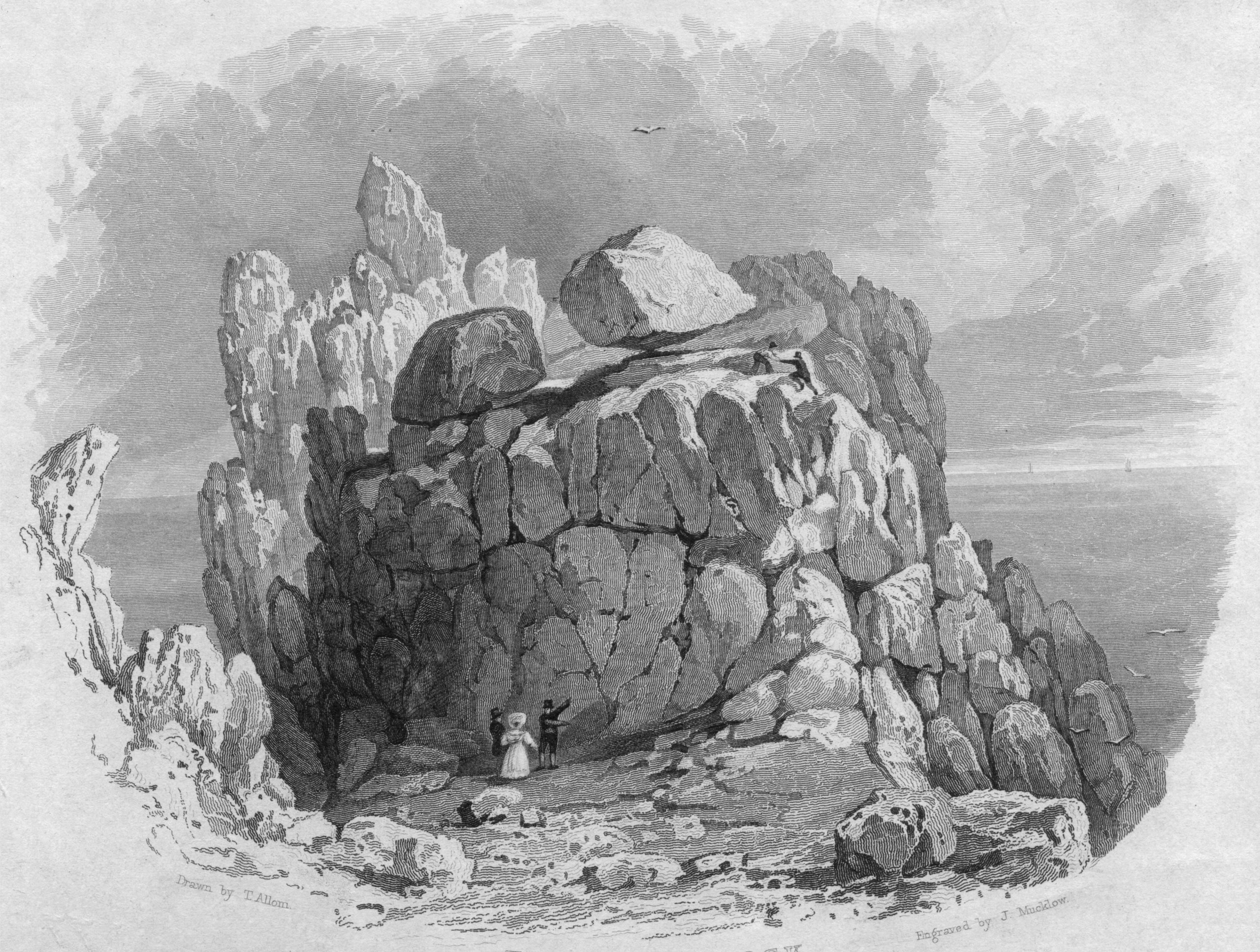
Across the bay the familiar shape of the Iron Age fort of Treryn Dinas with its more famous Logan Rock. Walking through the ramparts is always awe-inspiring and is followed by the inevitable search for the rock itself. It was dislodged by a Lt Goldsmith RN in 1824 and, by popular demand, re-instated under his leadership later that year. But which one is it? There are two rocks very close to each other and illustrations often muddle the two.
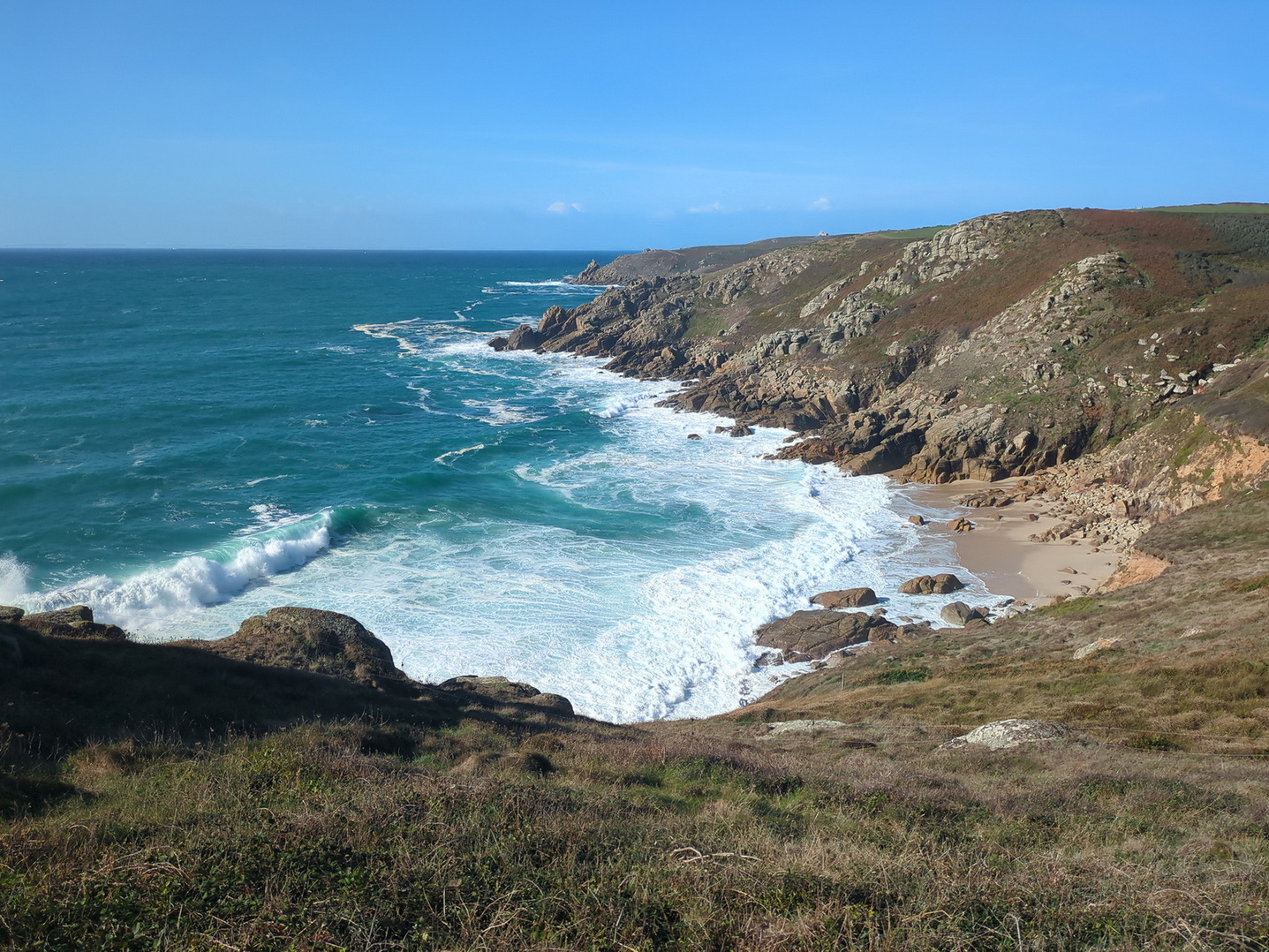
Porthchapel – not to be confused with the equally lovely Chapel Porth (St Agnes’ chapel and well) on the north coast – is the next beach. I learned to body board here many years ago. In the western corner, just by the coastal path is the well and ruins of the hermitage of St Levan (Selevan), the brother of St Just. Water from the well is still used in baptisms.
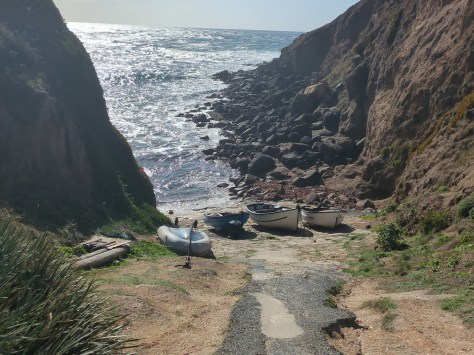
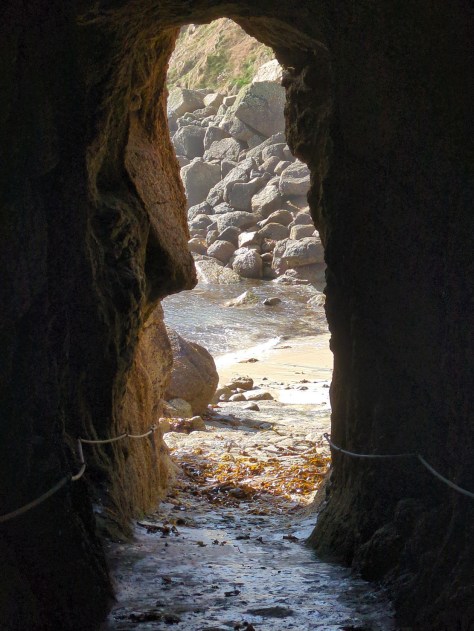
Porthgwarra can lay claim to being the last small community on the south coast: a few houses clustered around a beach where miners excavated a tunnel to allow easier access for the fishermen. Local tradition had it that this was a great beach for wrecking – the legal sort – as any jetsam tended to make landfall here.
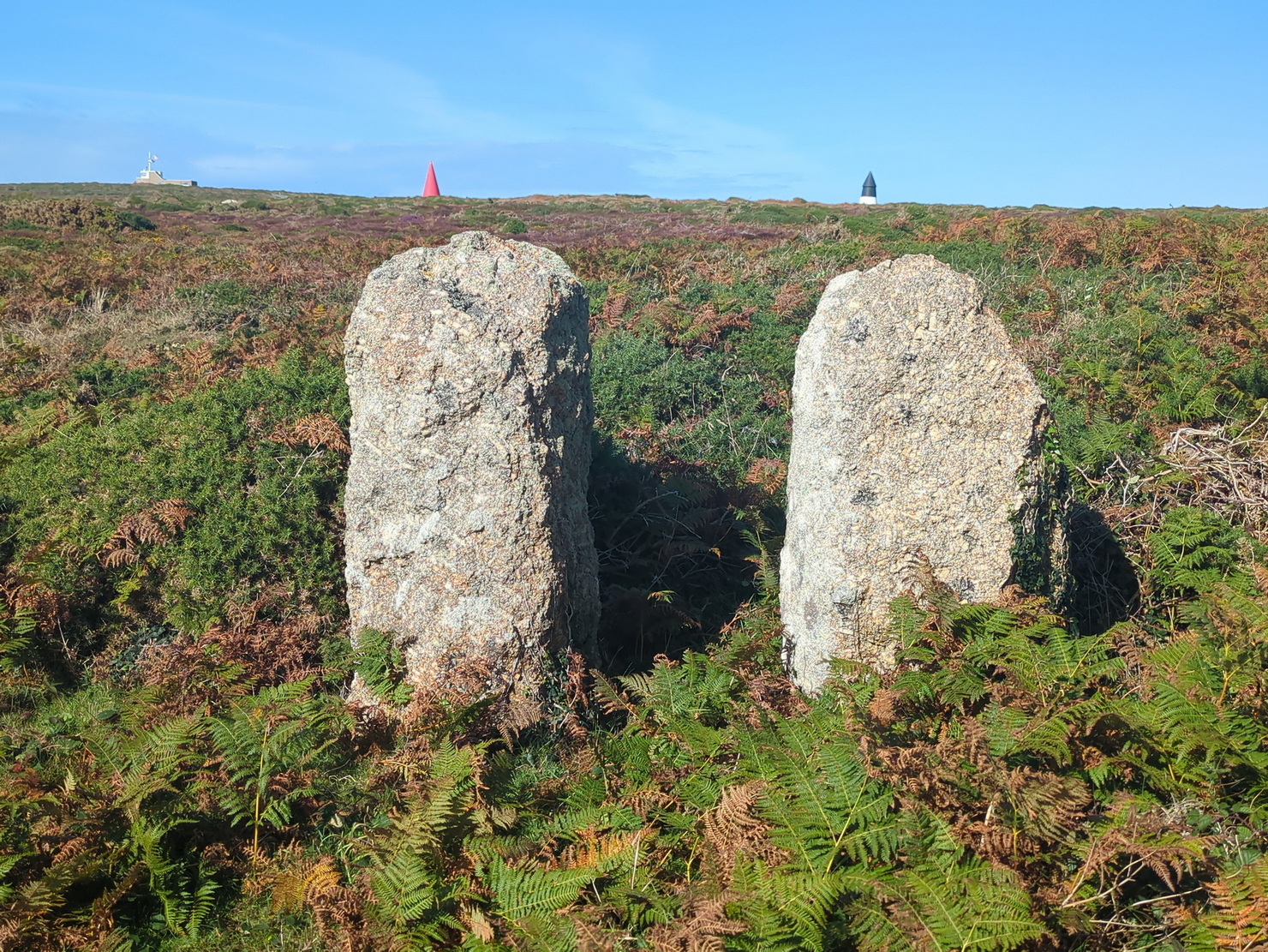
Onwards to Gwennap Head where an NCI (National Coastwatch Institution) lookout keeps guard over the two landmarks for the Runnel Stone. The lookout lost half its roof in storm Goretti which made landfall close by. The name Gwennap seems to have no connection with the village on the edge of the Poldice valley (‘St Gwenap’s church enclosure’ or ‘lan’). Here it is thought to relate to the name of a local family, having previously been known as Tol Pedn Penwith: Penwith’s headland with a hole in it.
A sudden cough and a flight of choughs descended onto a neighbouring headland. Are they becoming almost ‘common’ as their numbers increase each year thanks to the careful environmental management which provides them with good feeding grounds?
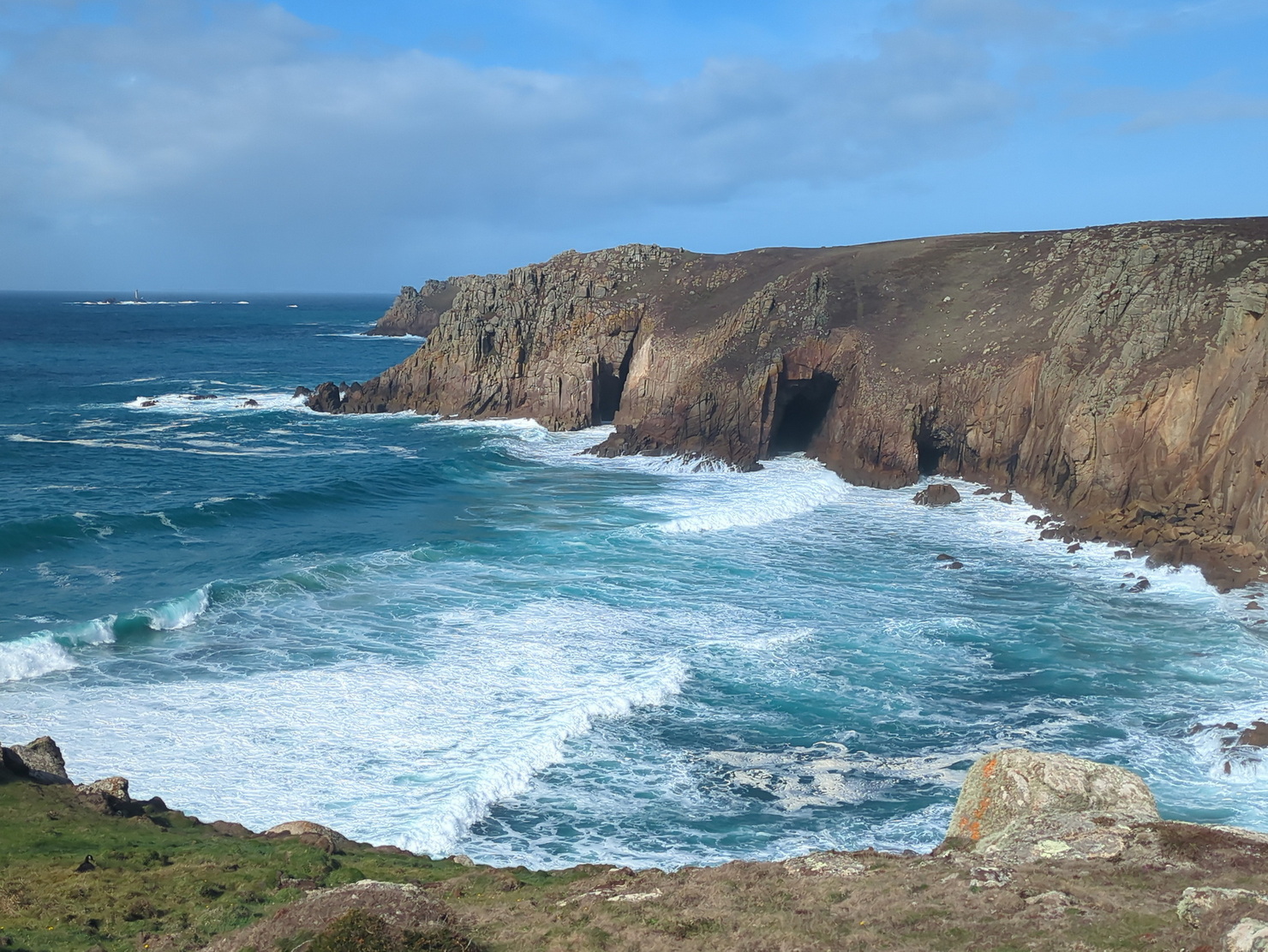
Turning inland at Porth Loe with its magnificent caves, we catch a glimpse of the Iron Age cliff castle of Carn Les Boel famous to ley hunters as the western end of the English Mary-Michael Line (try this for size), before striking off across country for St Levan’s church.
After the small farm of Arden-Sawah (silver stream farm), the route follows an old church route – not quite a coffin route – via a series of traditional granite stiles to reach the little church of St Levan (Simon Jenkins gives it one star): a little oasis set in its own valley. On this occasion, the church was closed for repair.
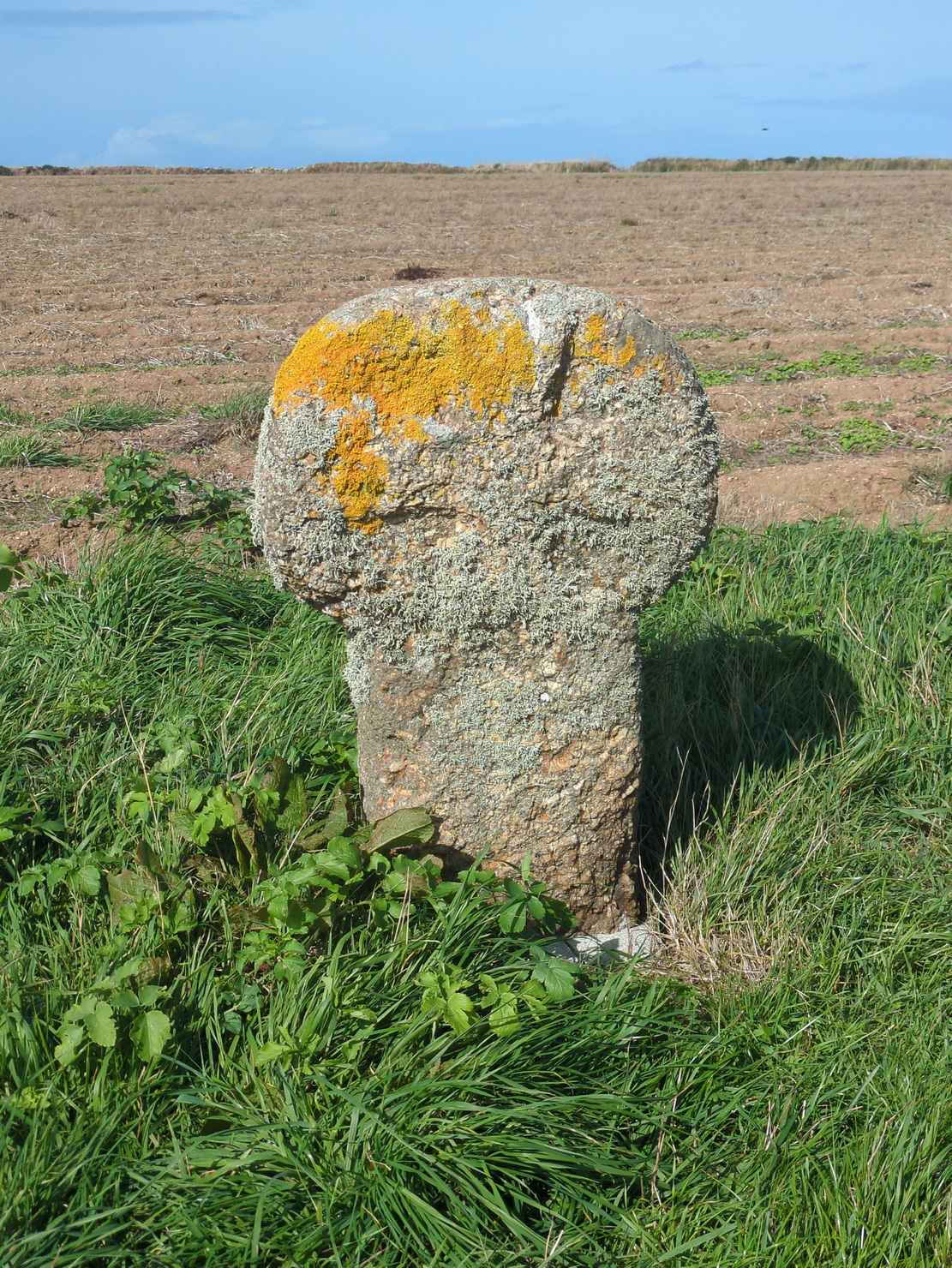
Passing the lovely coffin-shaped coffin stile at the north east corner of the churchyard, the path heads for the lonely Rospletha cross, surely a waymark between the church and the settlement of Porthcurno, but curiously low to the ground when compared with other wayside crosses. And onwards to the car park and dodging the next coach delivering tourists to the Minack.
A circuit which covers the Iron Age to Digital Age; culture and technology; landscape nature and memories, all set on cliffs which stand proud against Atlantic gales, illuminated by a blue, blue sky. Not a bad walk, that.

