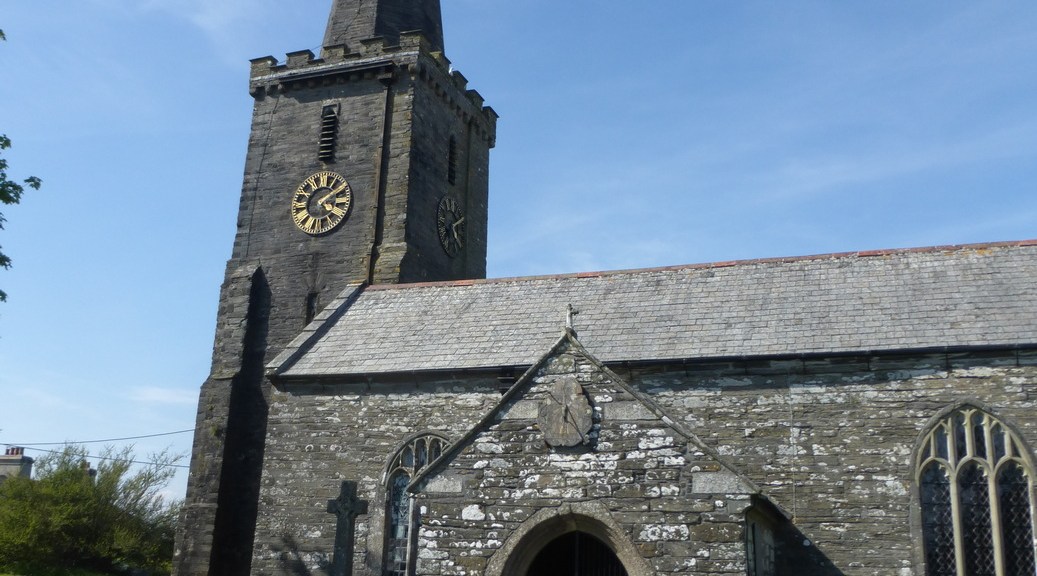
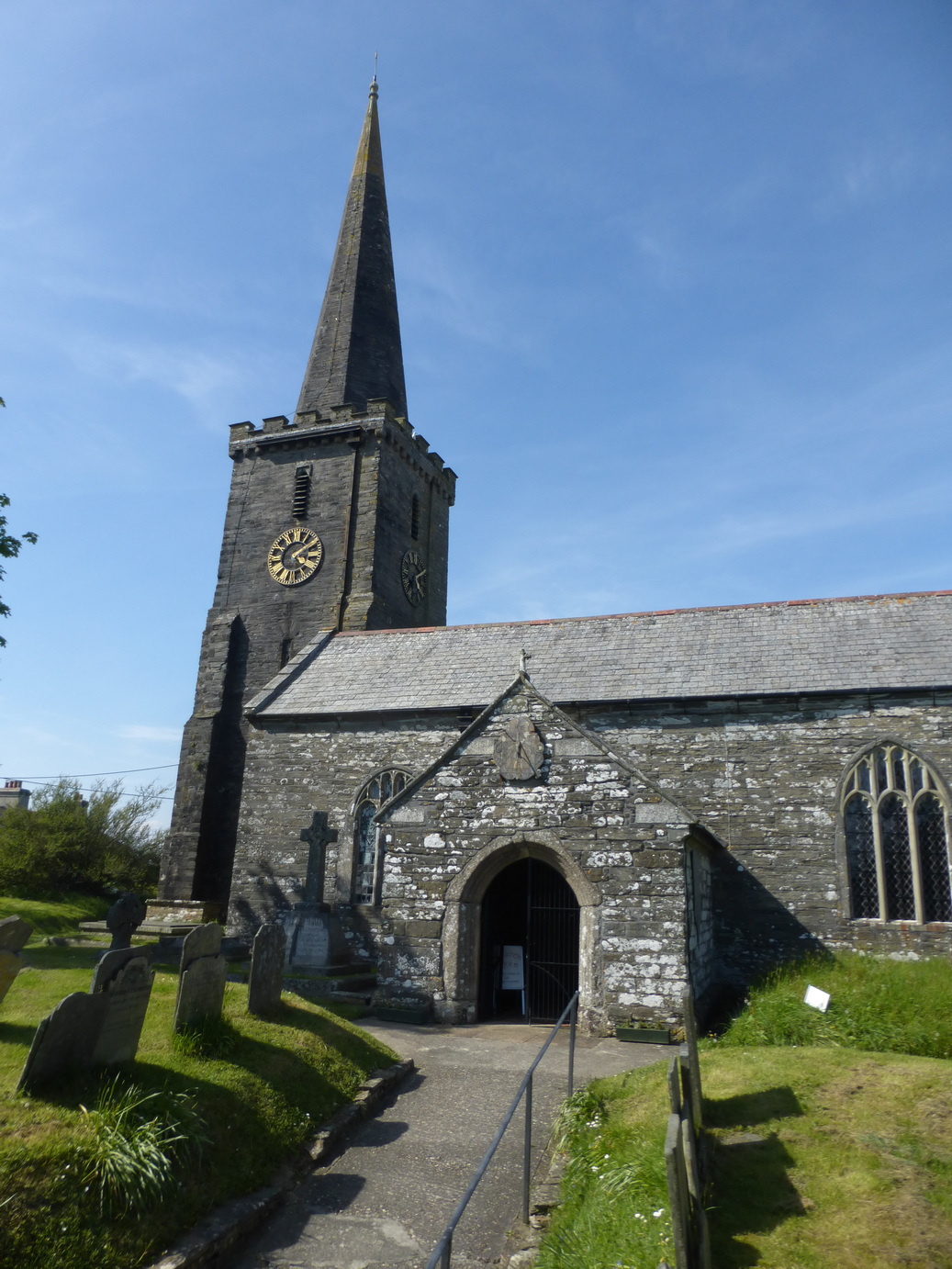
Menheniot is a self-confident village with some lovely C19 buildings in a soft stone, funded no doubt by the successful mining which took place in the surrounding area. At its heart is the large church of St Lalluwy with its C14 battlemented tower and spire, set on a platform which was probably an old lann.

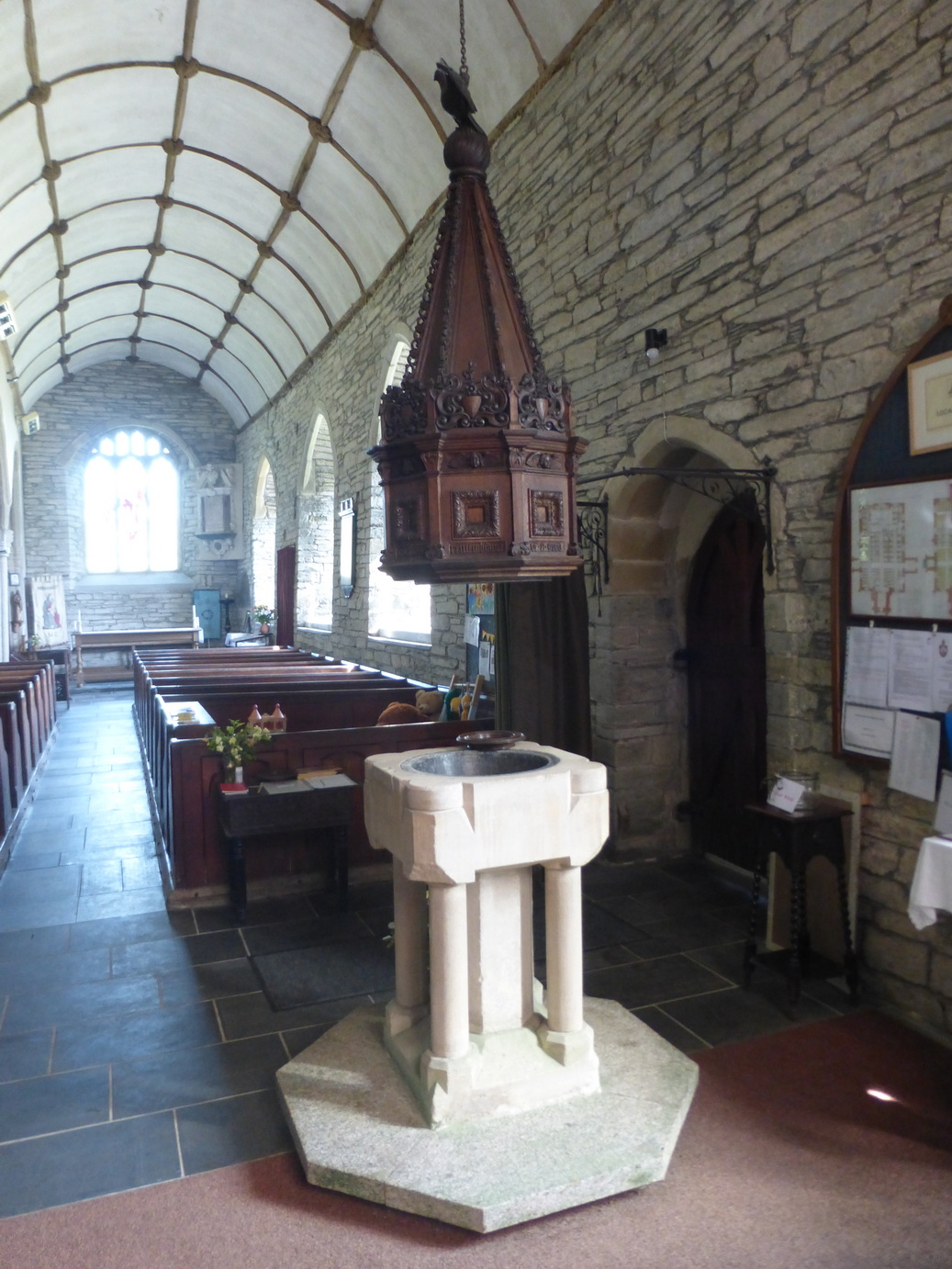
The church underwent two restorations in the C19, the first by JP St Aubyn who extended the sanctuary and installed a rather heavy wind-braced roof. Thankfully, it does not detract from the lightness of the space with its tall arcades and elegant wagon roof, lit by large perpendicular windows. Unlike many large churches, the walls have been left bare of plaster.

You cannot move far without tripping over some remnant of the Trelawney/Trelawny family or of previous Rectors/Vicars. Five stand out:
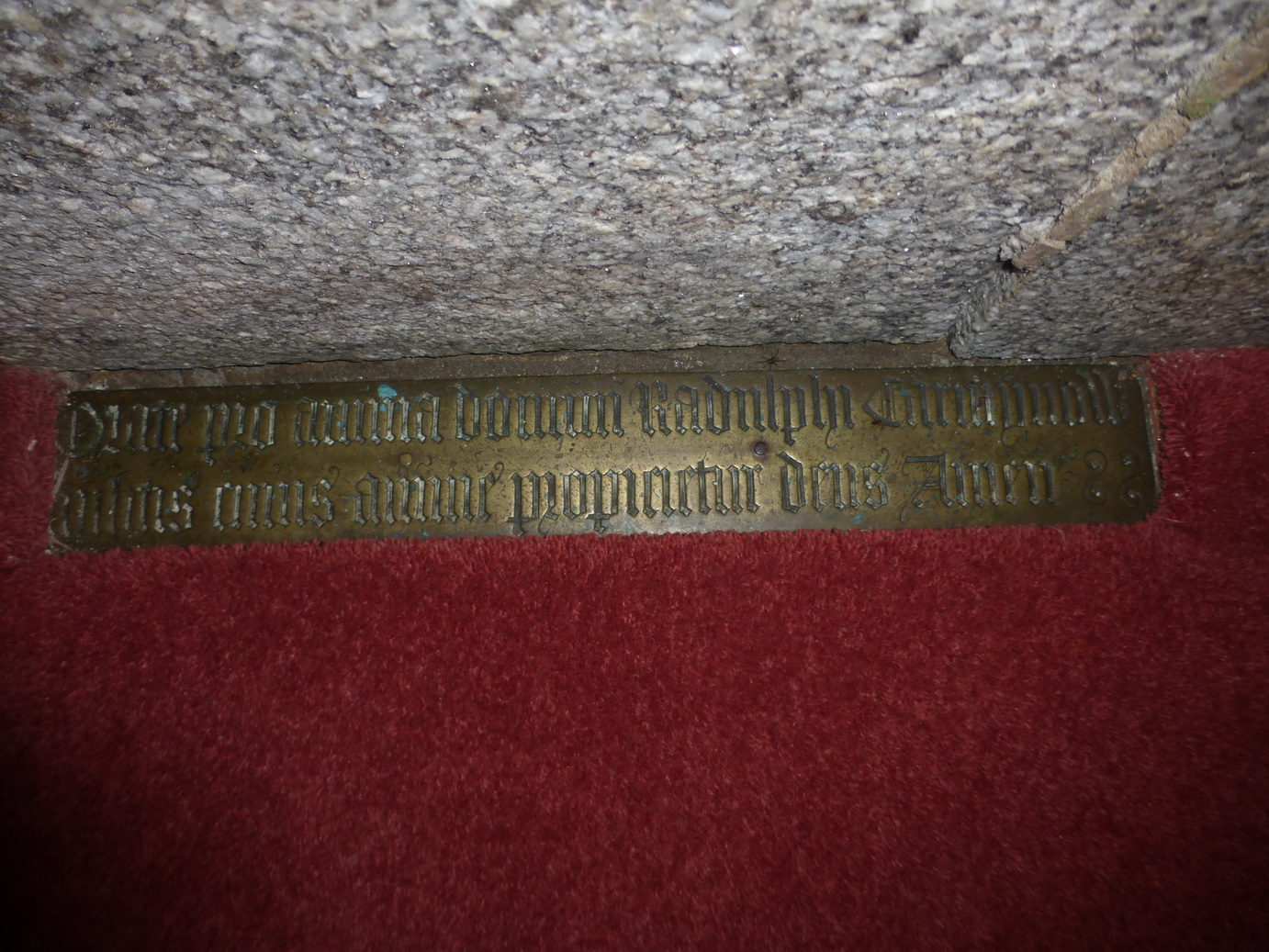
- The brass to Sir Ralph Carminow d1386, set in the floor at the foot of the pulpit, which is the earliest brass in Cornwall
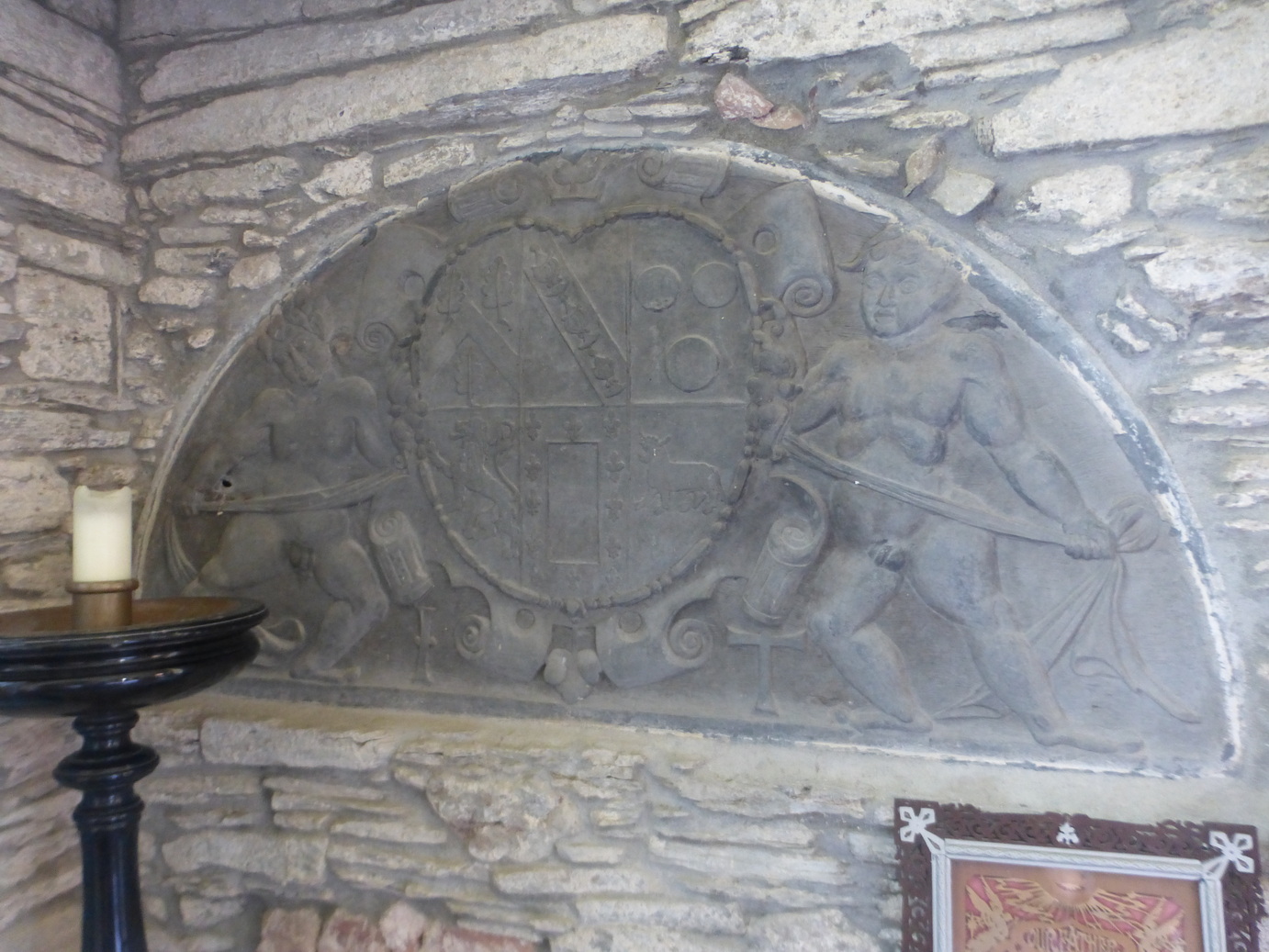
- The semi-circular slate memorial to Jonathan Trelawny d1674, in the south chancel, with its over-sized very naked putti
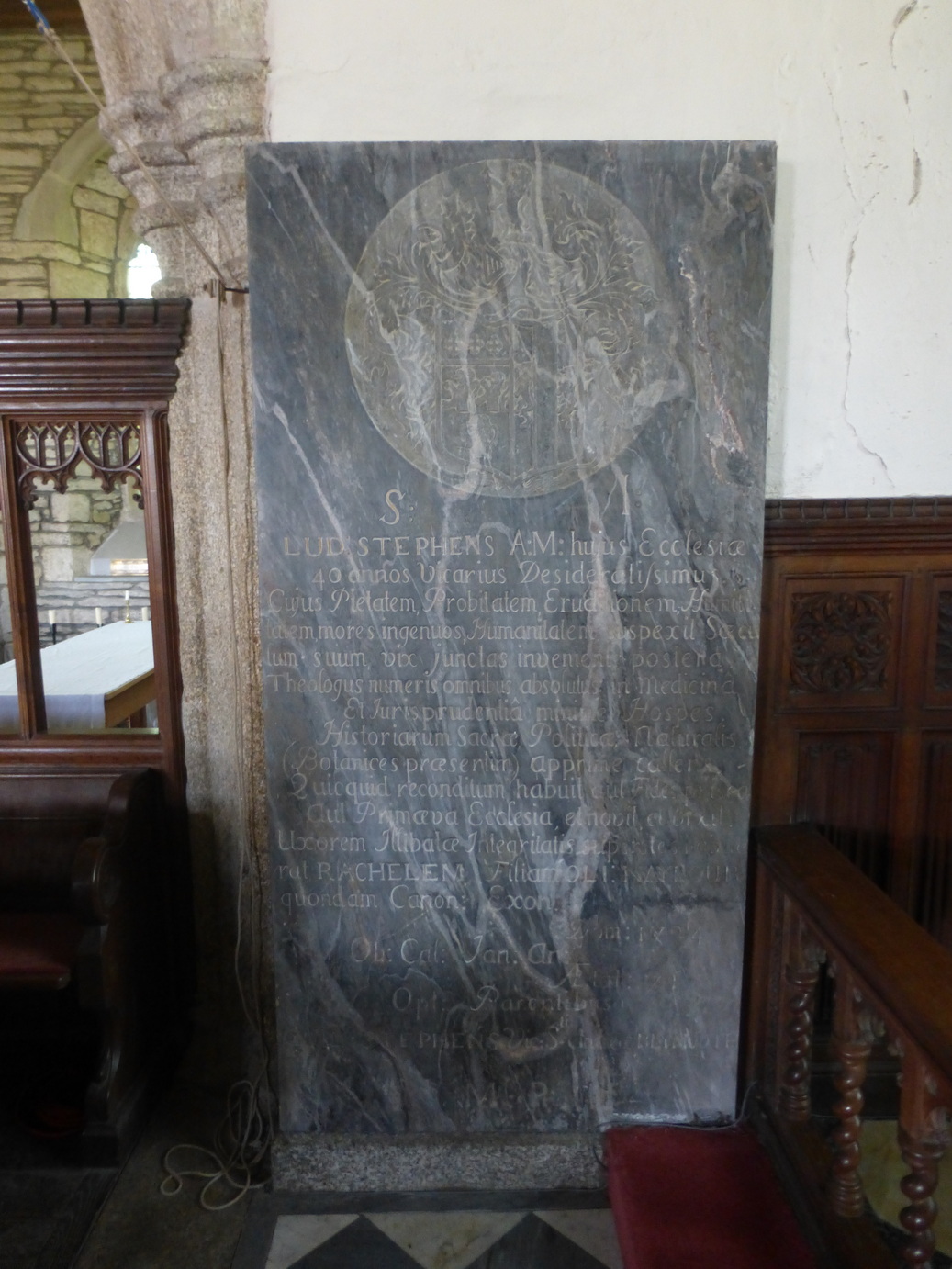
- The large slate to L Stephens d1724, a former vicar, which graces the wall of the chancel
- And the most grandiose of all, the Rysbrack memorial to Edward Trelawney, former Dean of Exeter d1726 which dominates the south chancel
The fifth is the pulpit itself which has four carvings. Two depict the polar expedition of Admiral Trelawny-Jago (one of them looking suspiciously like an image of Cornish wreckers), and two showing the biblical story of fishing in the Sea of Galilee.

The Victorian stained glass covers a variety of subjects including one window featuring those famous saints, Sir Galahad, King Arthur and Sir Perivale. A memorial window to a fallen soldier of WWI feauture a very modern image of St George, no doubt a likeness of the soldier concerned.
There are several gems outside including a Parish Room/Sunday School in the corner of the churchyard and a variety of alms houses outside the enclosure.
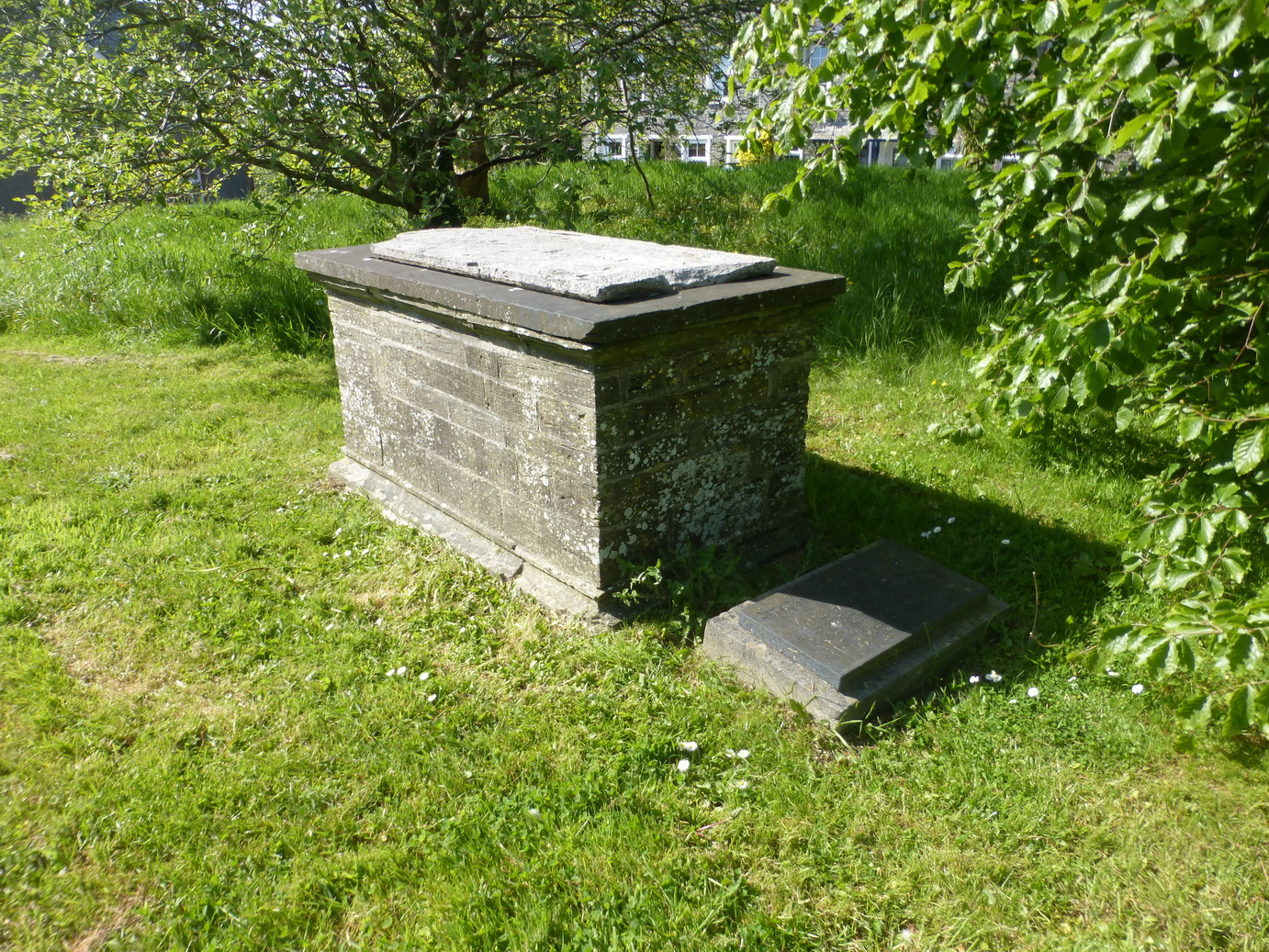
For students of Trafalgar, the greatest joy is the table tomb on the north side of the churchyard where lies ‘Lt’ John Richards Laponetiere who brought the news of the victory home in HMS Pickle.
Close by is the holy well of St Lalluwy about whom nothing is known.


 A Cornish Journey