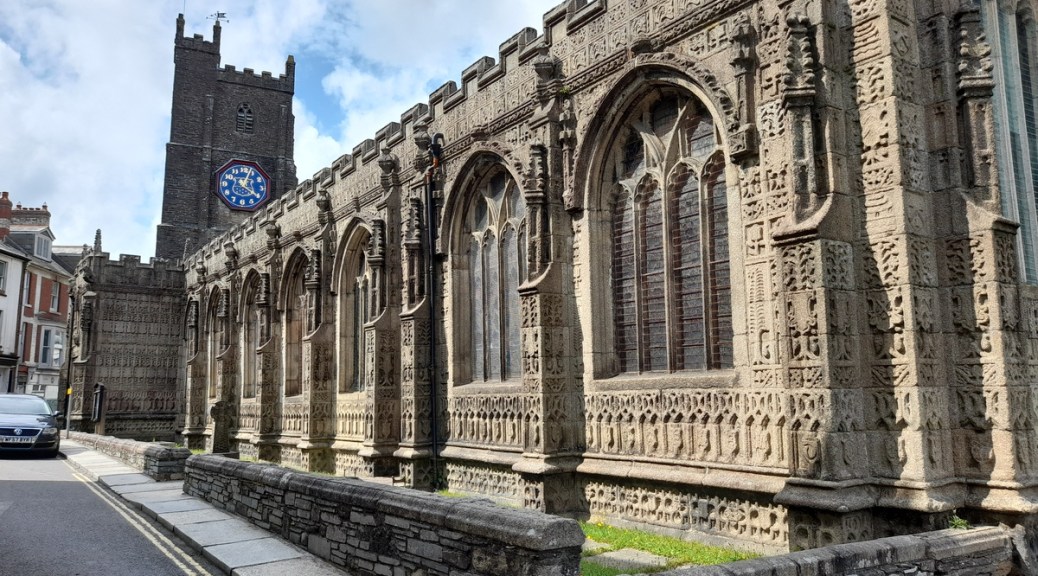
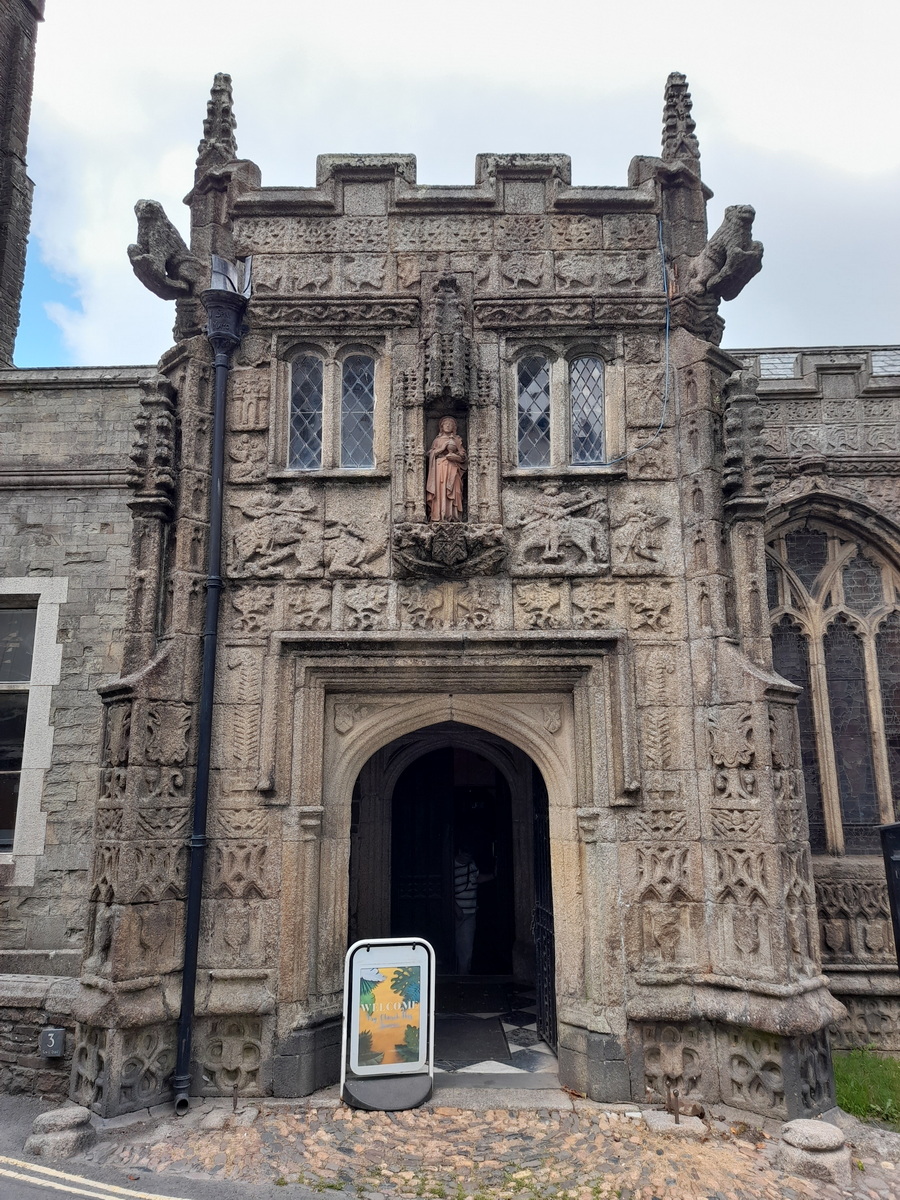
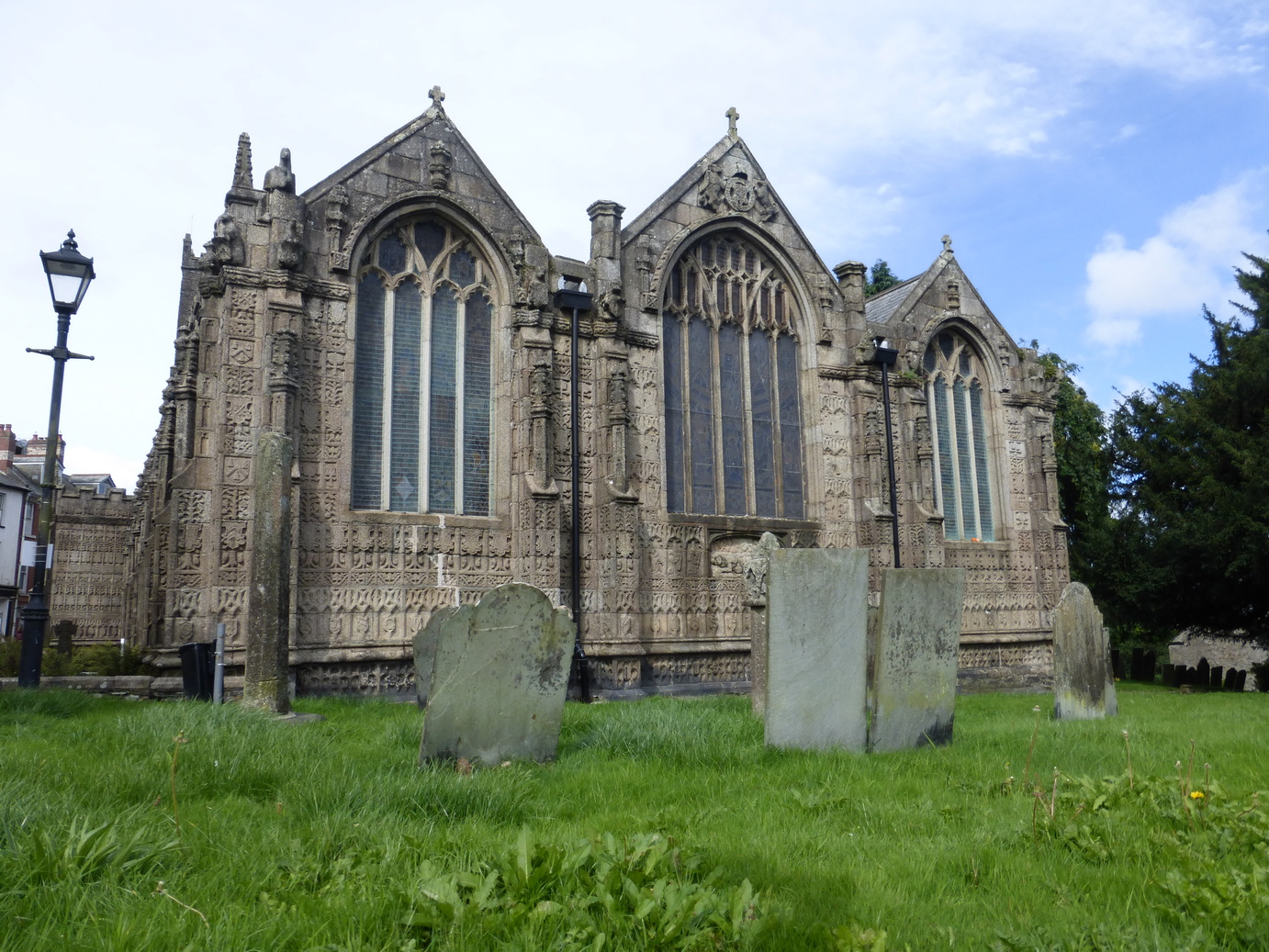
St Mary’s is one of the two churches in Cornwall – along with St Neot awarded four stars by Simon Jenkins. We do not disagree with his assessment which repeats Nicholas Pevsner’s description of the external ornamentation as a ‘barbarous profusion’. The granite walls are covered in carving which must have been an incredible task as the stone is notoriously difficult to work.
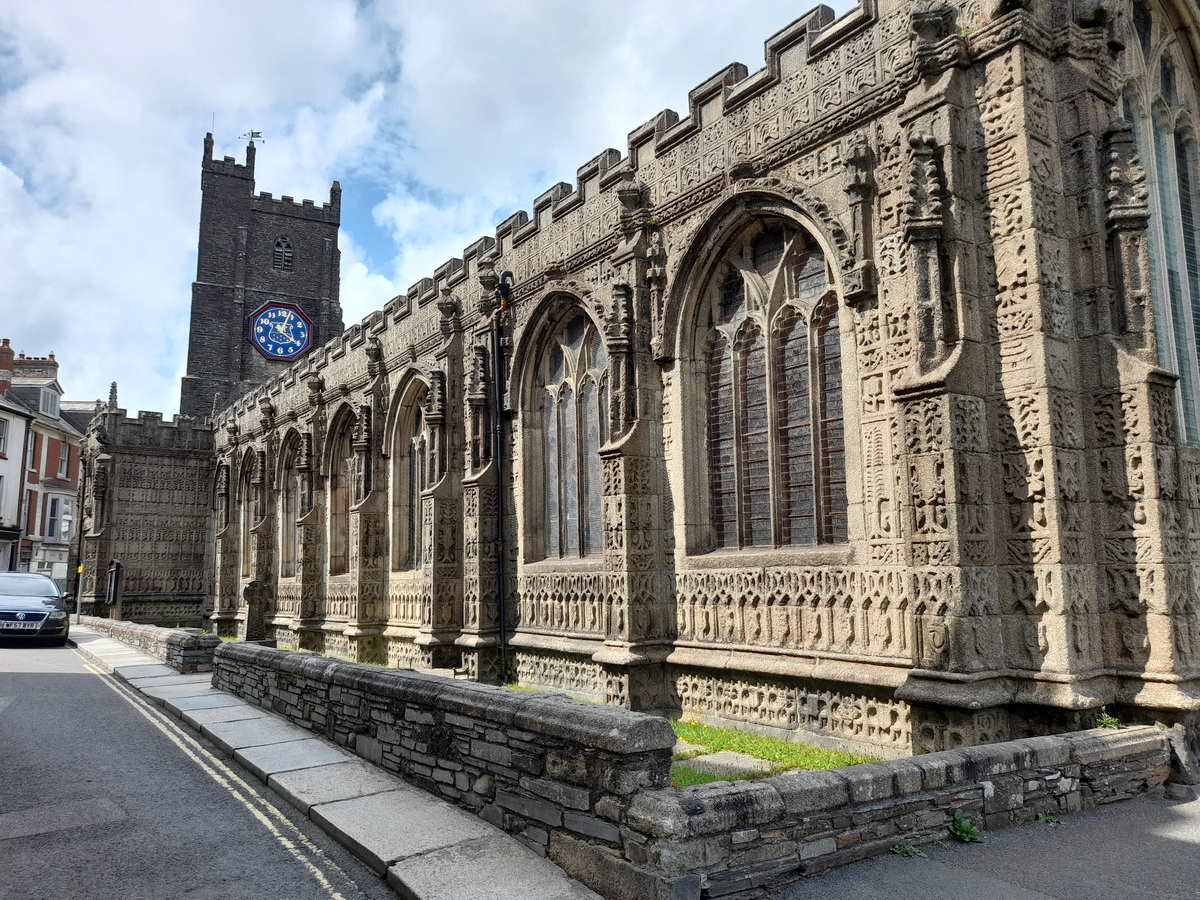
Situated in the middle of the former capital of Cornwall, it is a late church by Cornish standards, having been built 1511-1524, as the Reformation was about to burst upon the scene. Curiously, the church was not built right up to the C14 tower and there is an awkward junction between it and the church which is filled in with what could be described as a vestry house although it has had many purposes down the years. The main entrance is through a grand porch with images of St George and his dragon, and St Martin of Tours cutting his cloak for the beggar, both saints imported to Britain after the Crusades.
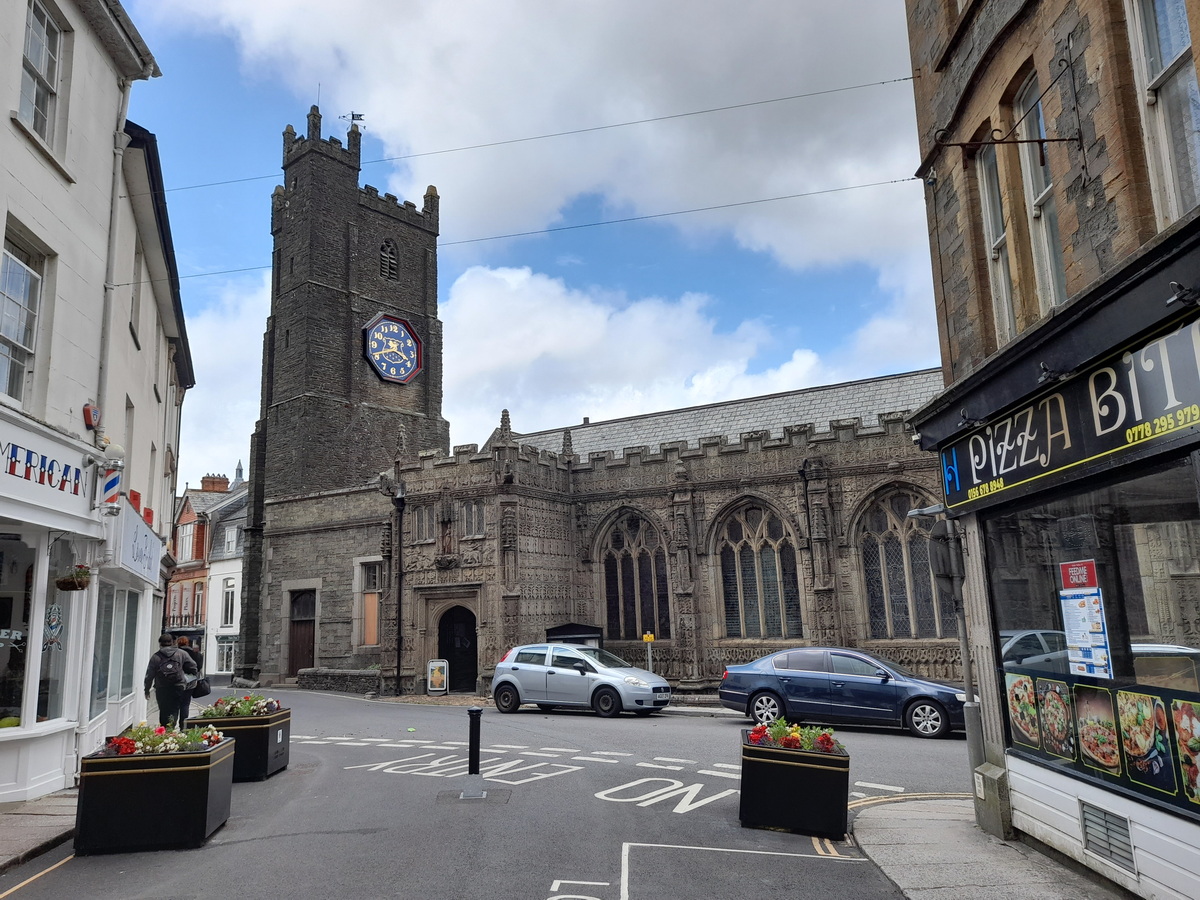
The moving spirit was one Sir Henry Trecarrel who donated the granite in memory of his dead son.
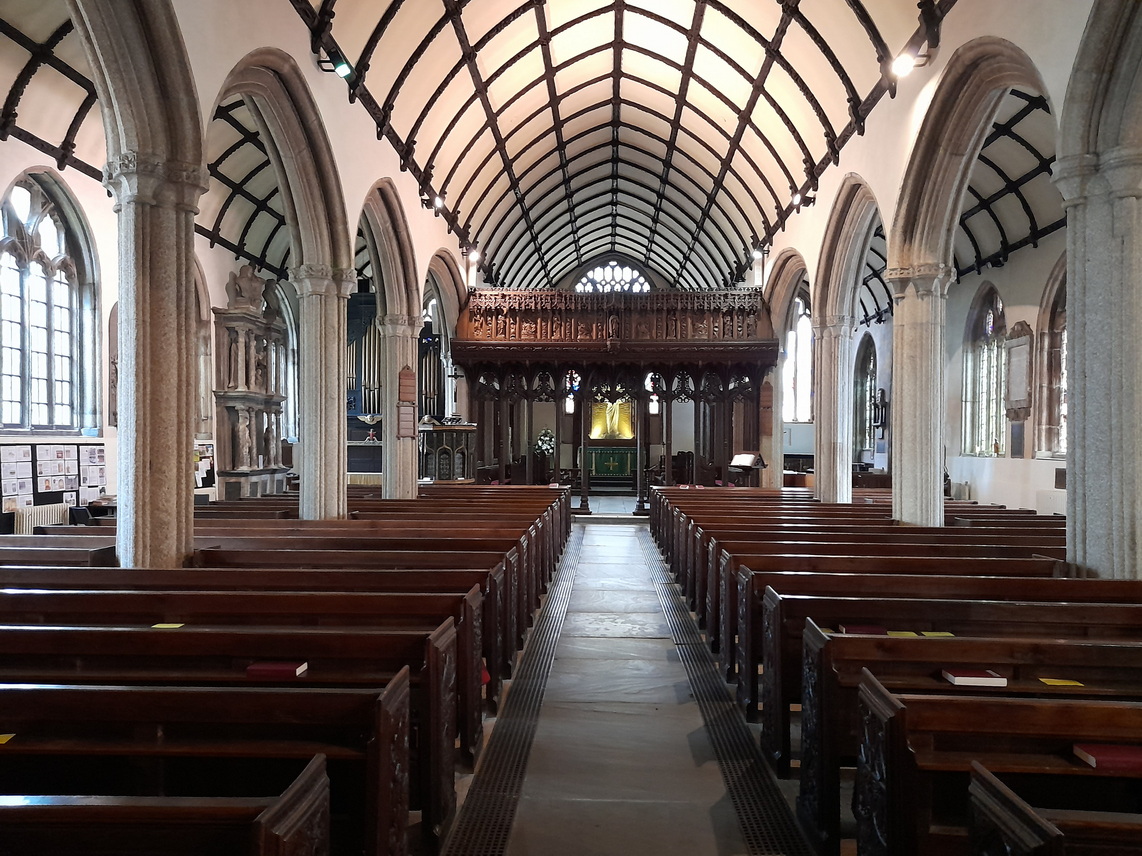
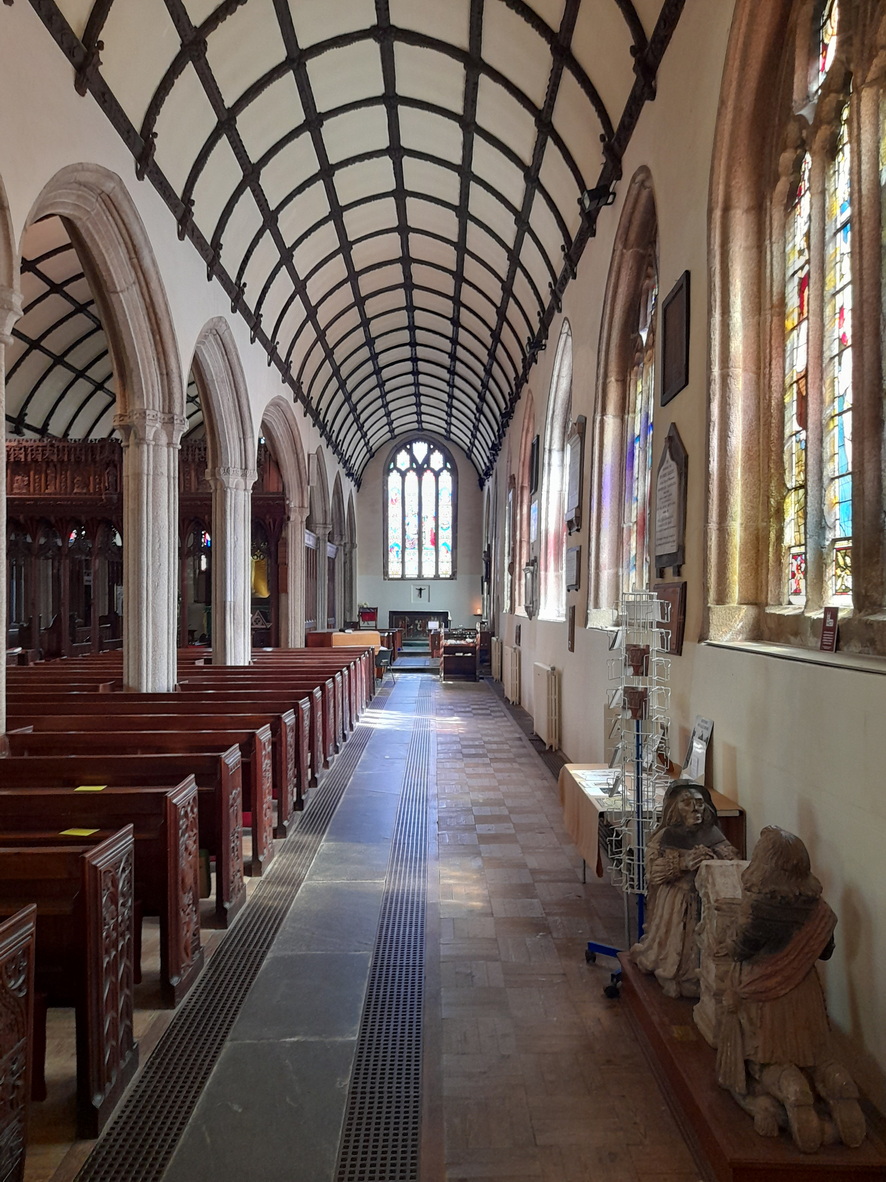
Inside, there are three wide aisles, each with a wagon roof. The chancel is surrounded by late C19/early C20 rood and parclose screens by the Pinwills in a very understated art nouveau style. We could have wished they had saved themselves the bother. The lack of chancel arch and continuous roof would look so much more impressive had it been left unblocked as at St Austell. The Oxford Movement has much to answer for.
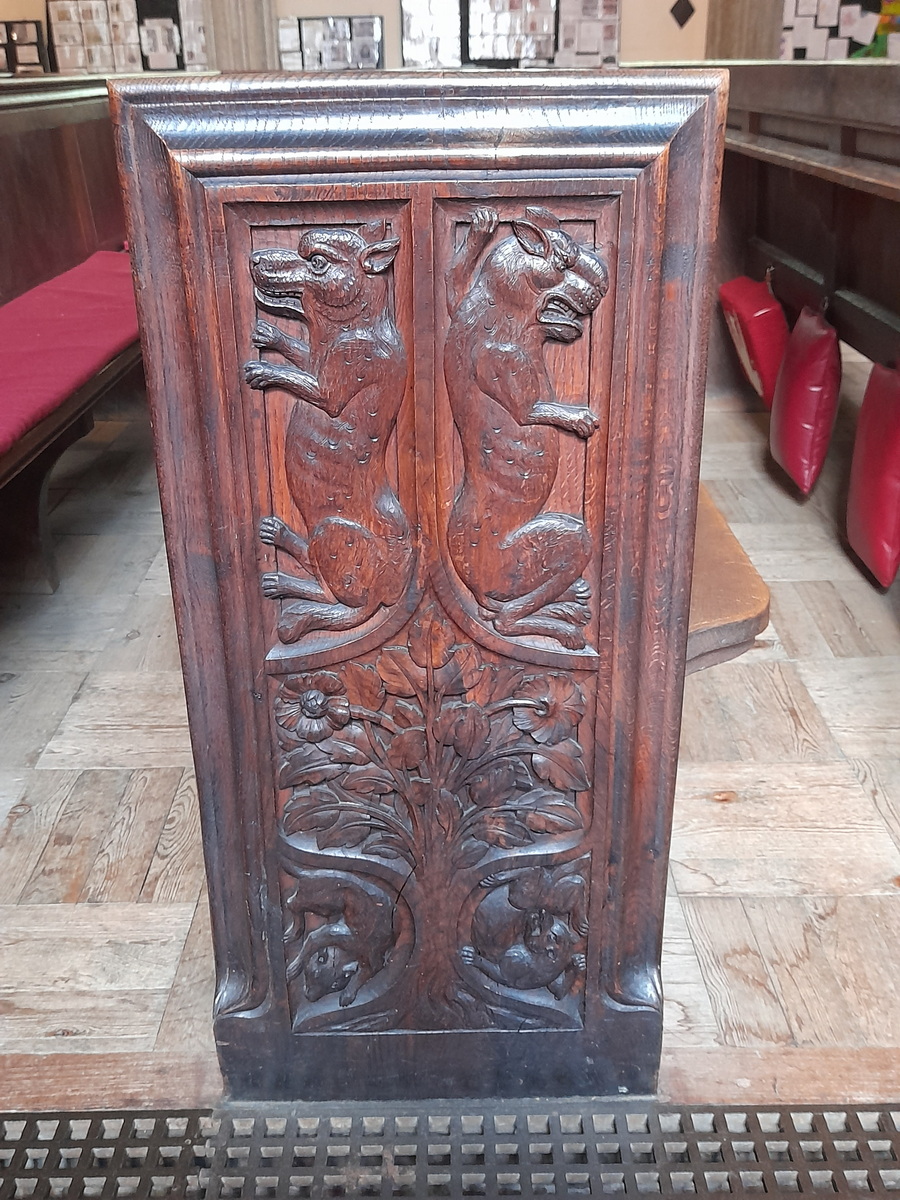
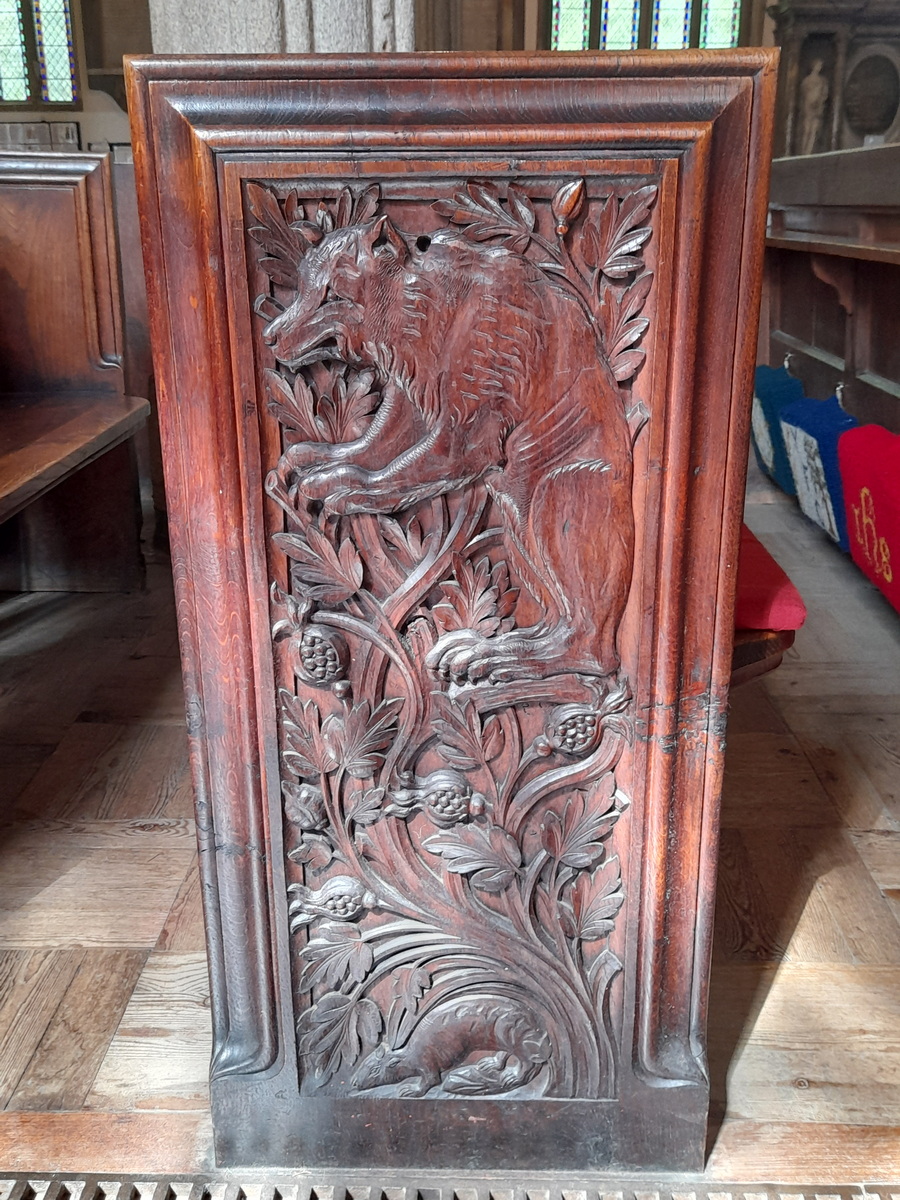
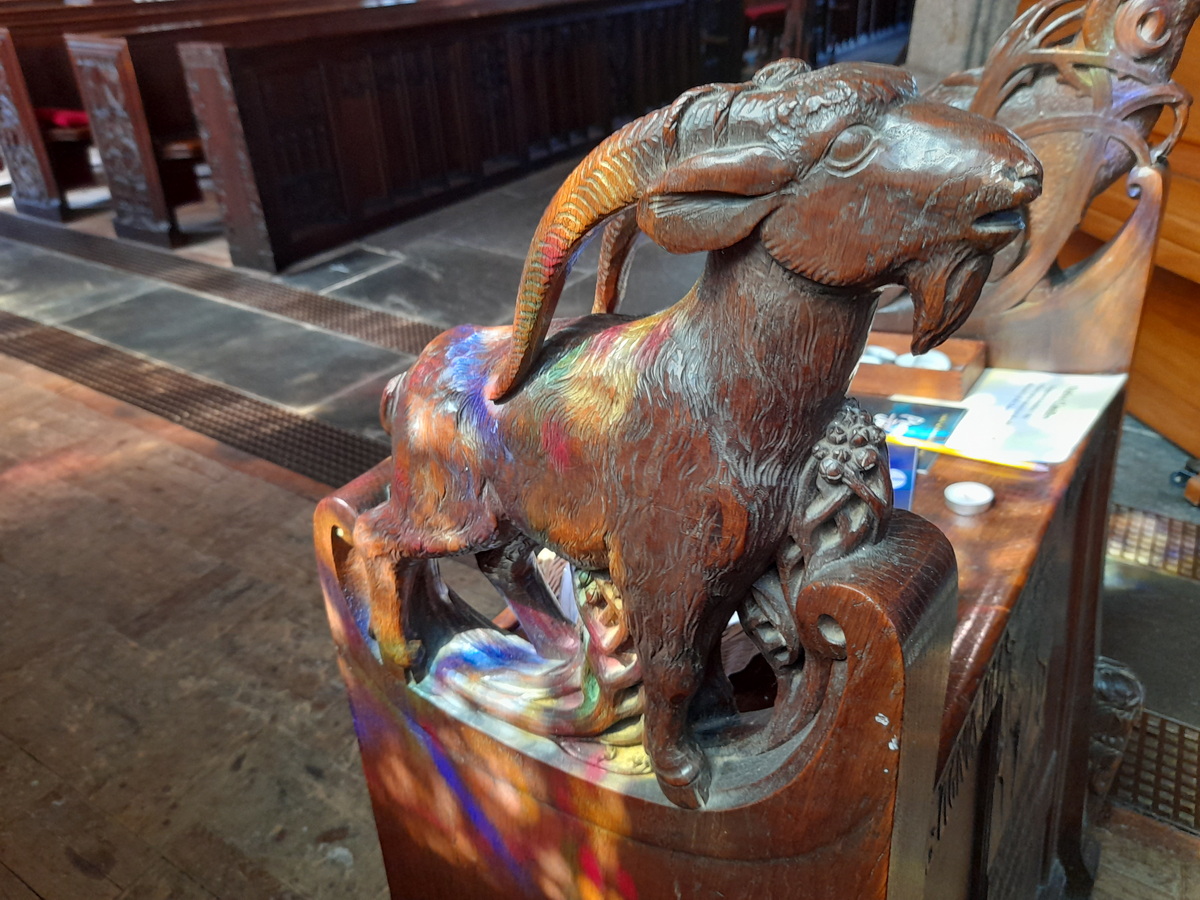
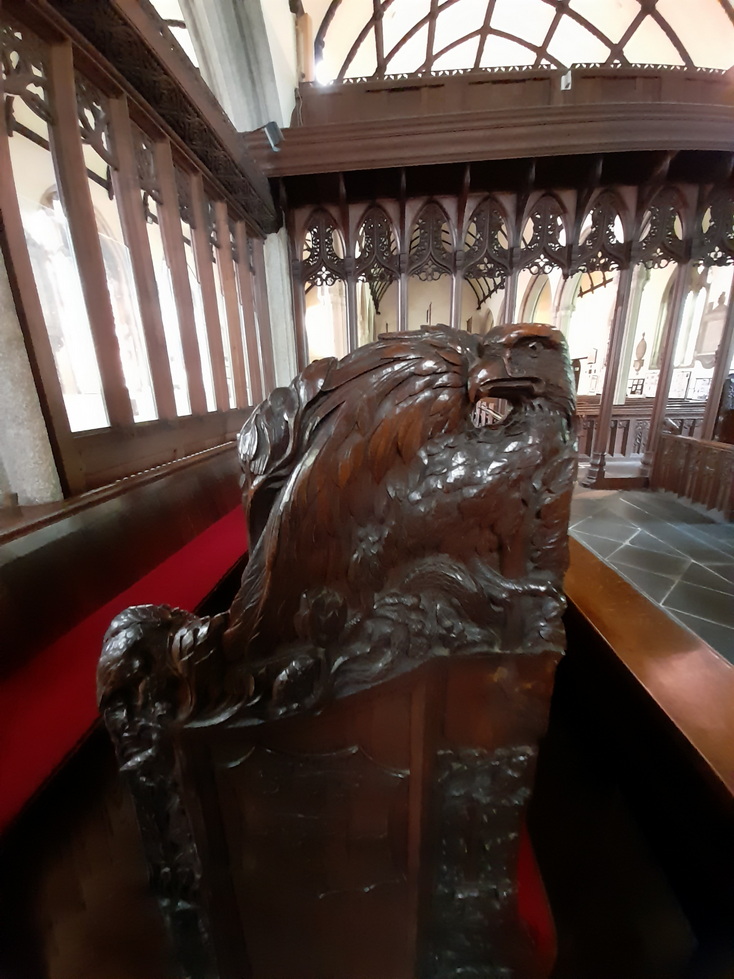
They did rather better with the bench ends which nod to the traditional C15 style of places like Altarnun.
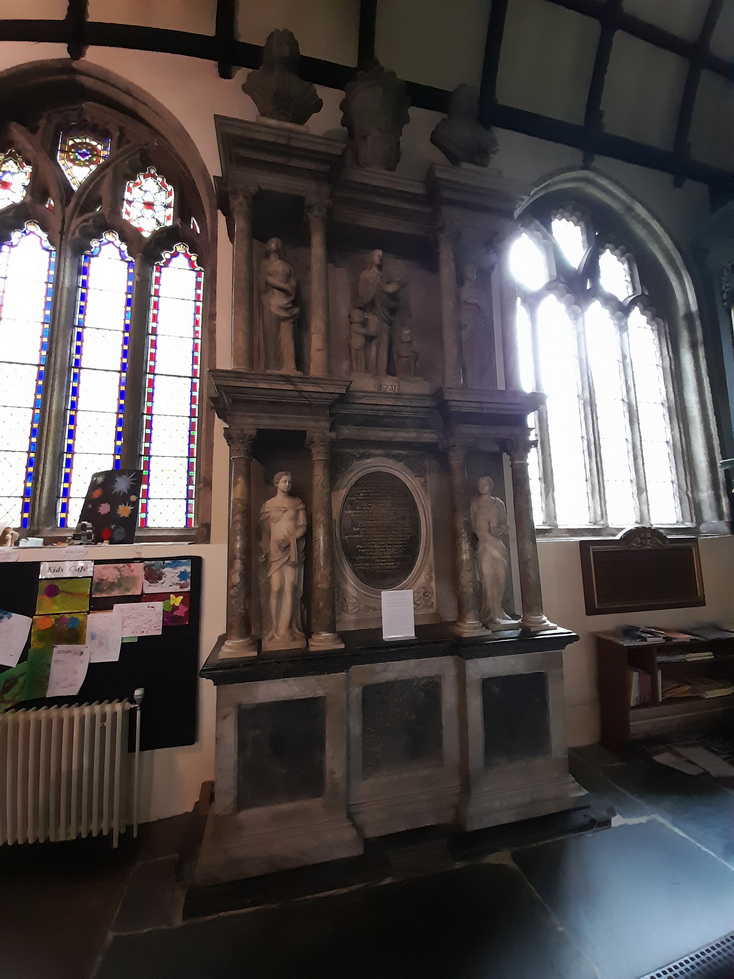
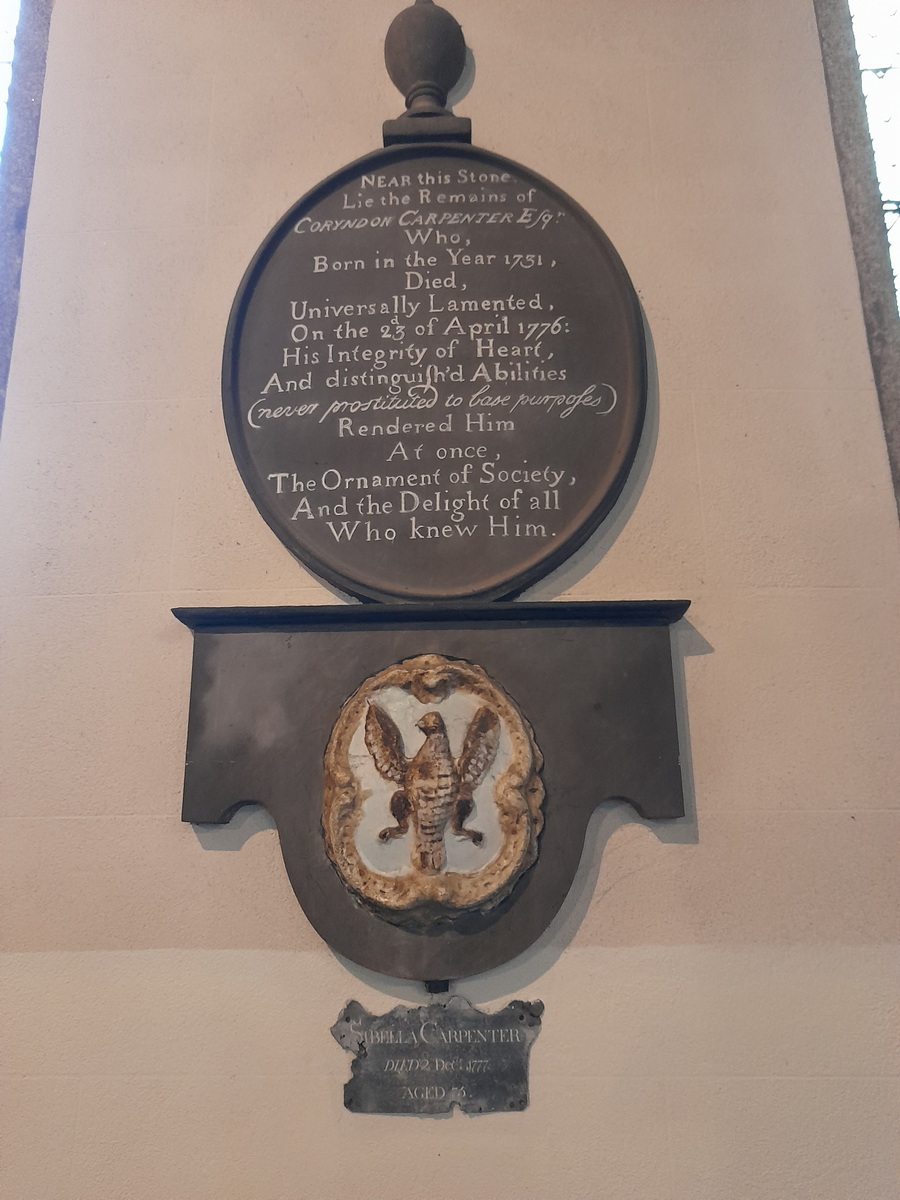
The church was worked over several times in the late C19/early C20 by Decimus Burton and then by EH Sedding and later his son JD Sedding. They managed to incorporate many of the previous features, including a selection of memorials to the great – and good? – of the town.
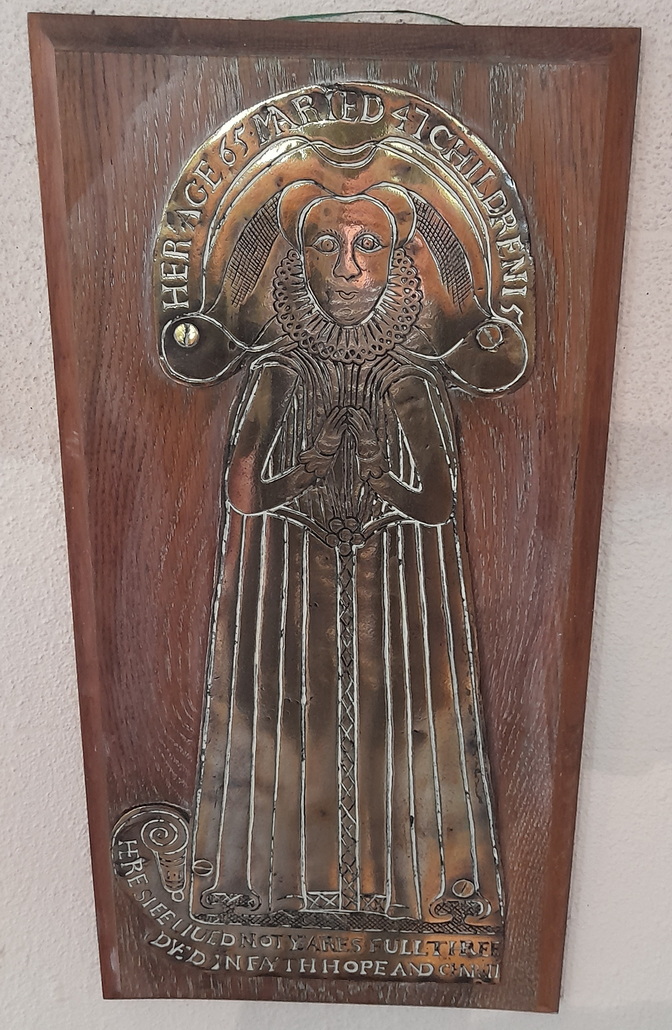
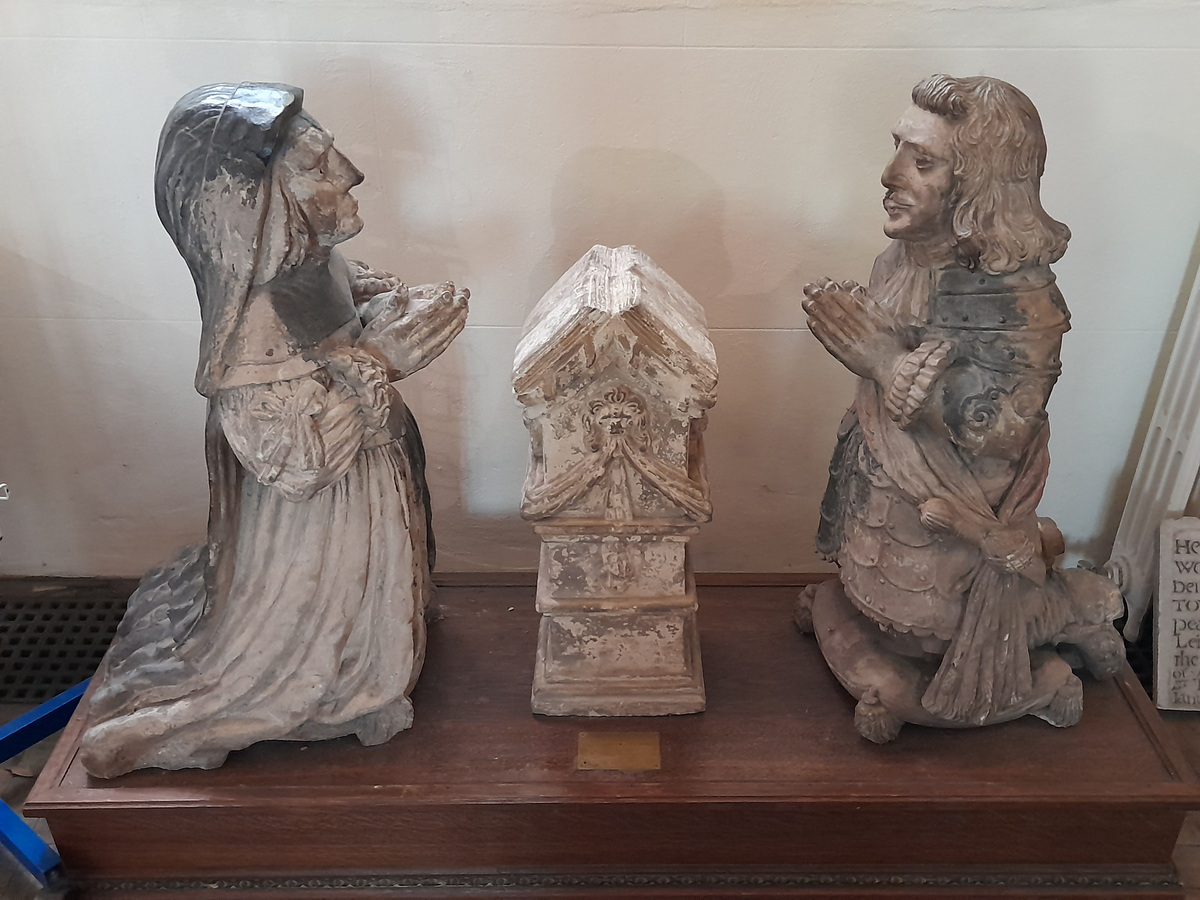
We enjoyed the sight of Sir Hugh and Lady Piper destined to kneel for all eternity, the grandiloquent words about the life-long friends Granville Pyper and Richard Wise and the charming brass to an unknown C16 lady who no doubt found rest after bearing 15 children in a 47 years marriage.
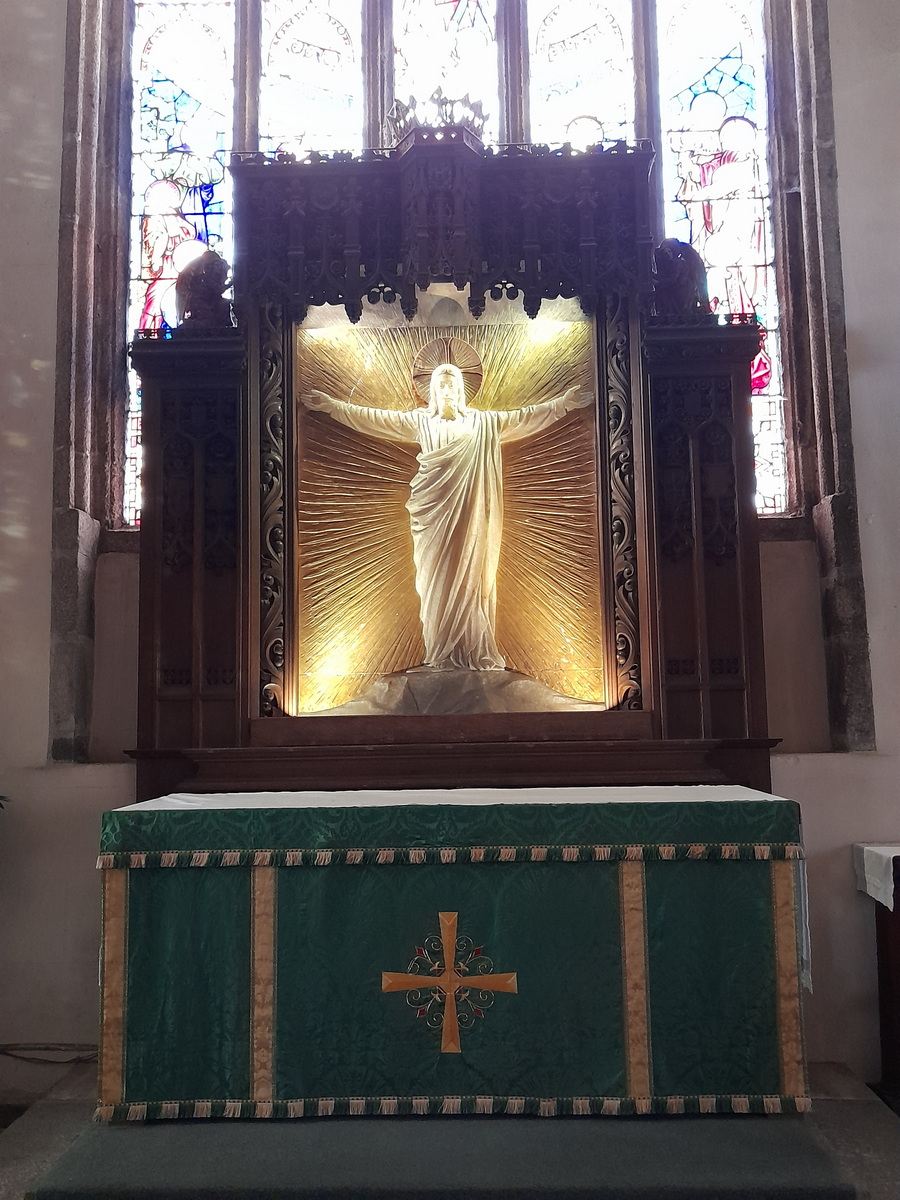
The reredos is relatively modern and apparently divides opinion but we liked it immensely and found it more striking than the usual late-Victorian carvings that adorn the east end of other churches.
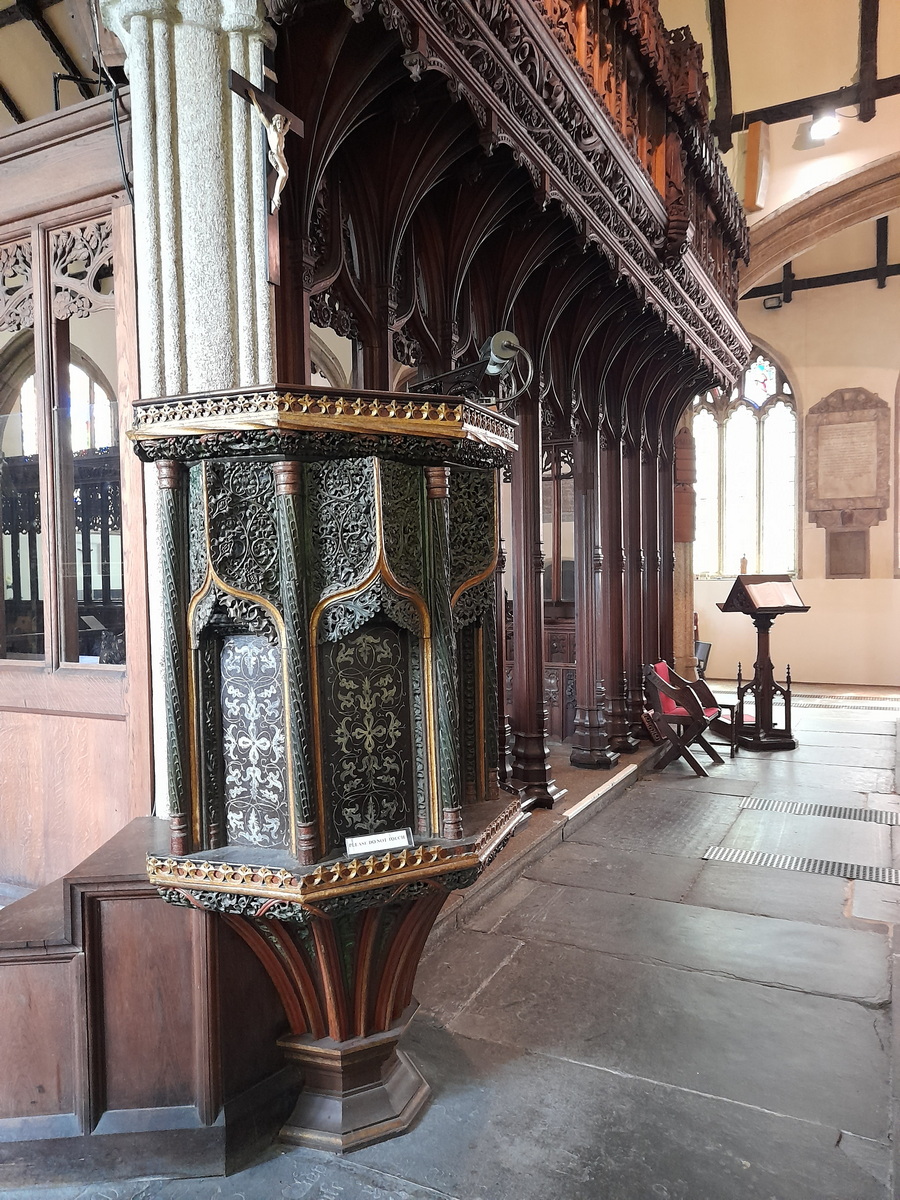
St Mary’s greatest asset is perhaps the C15/C16 pulpit which was covered up during the Commonwealth and only later uncovered to reveal its fine decoration. Understated, with some fine carving it has an elegance that the Victorians rarely captured.
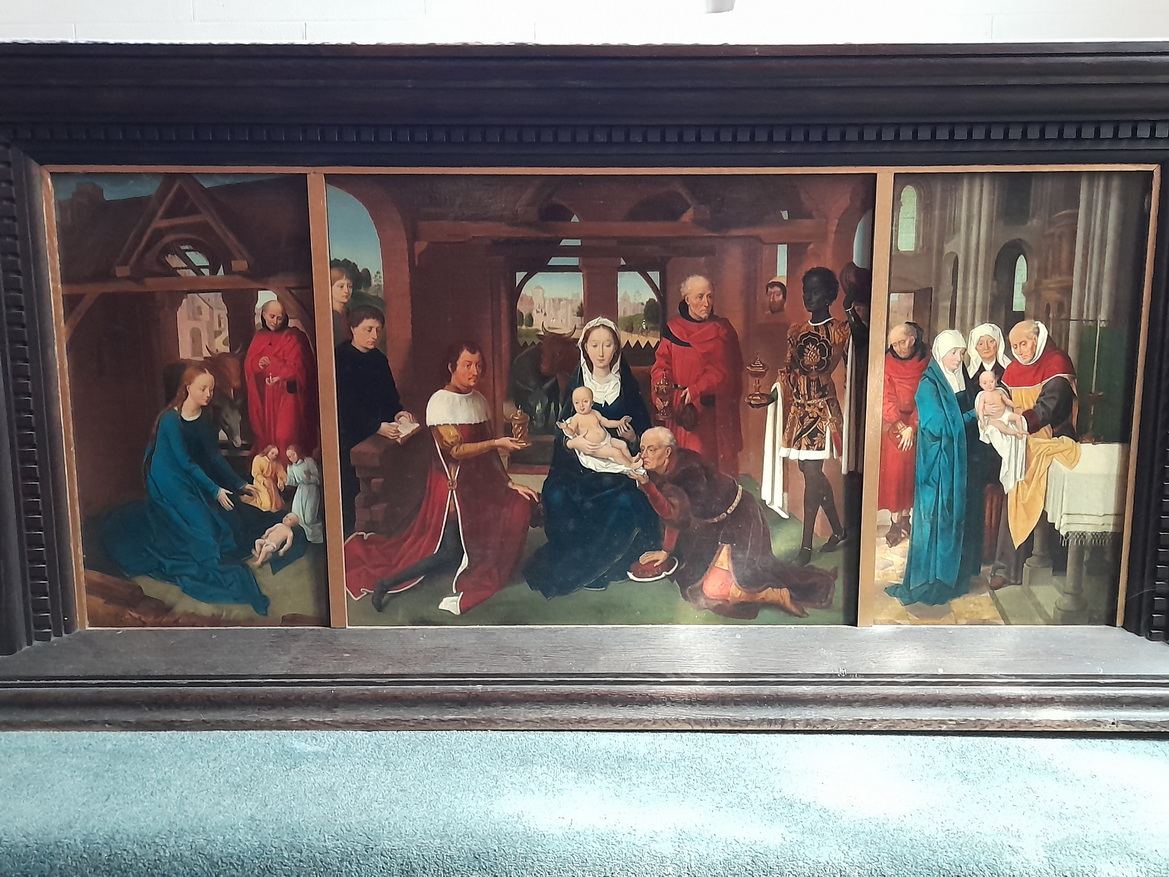
Through sheer personal bias, we loved the altar frontal in the south aisle/Lady chapel which is an excellent copy of the Hans Memling late C15 Adoration of the Magi triptych (the Prado Triptych) a copy of which has hung on our wall for many years.
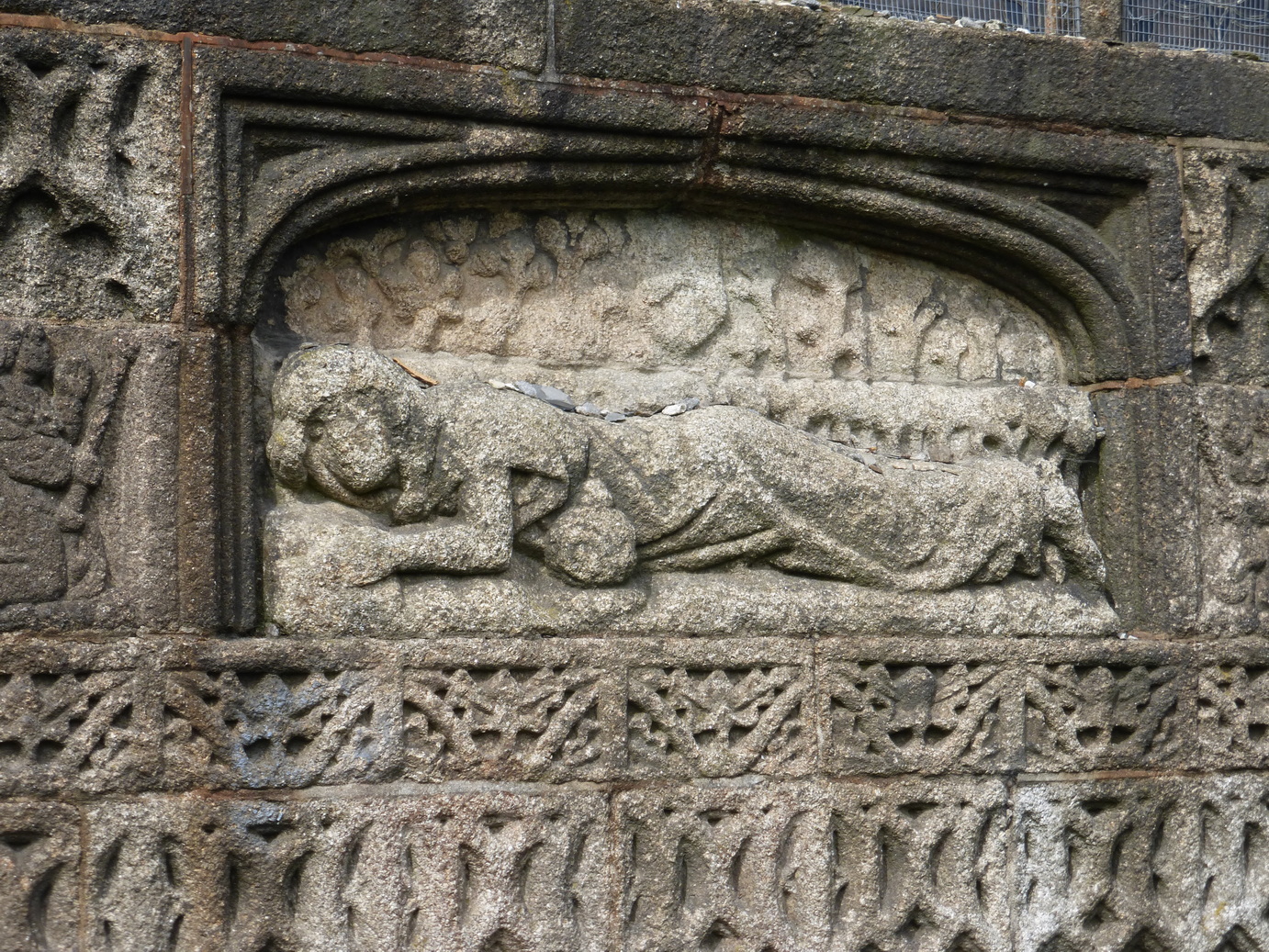
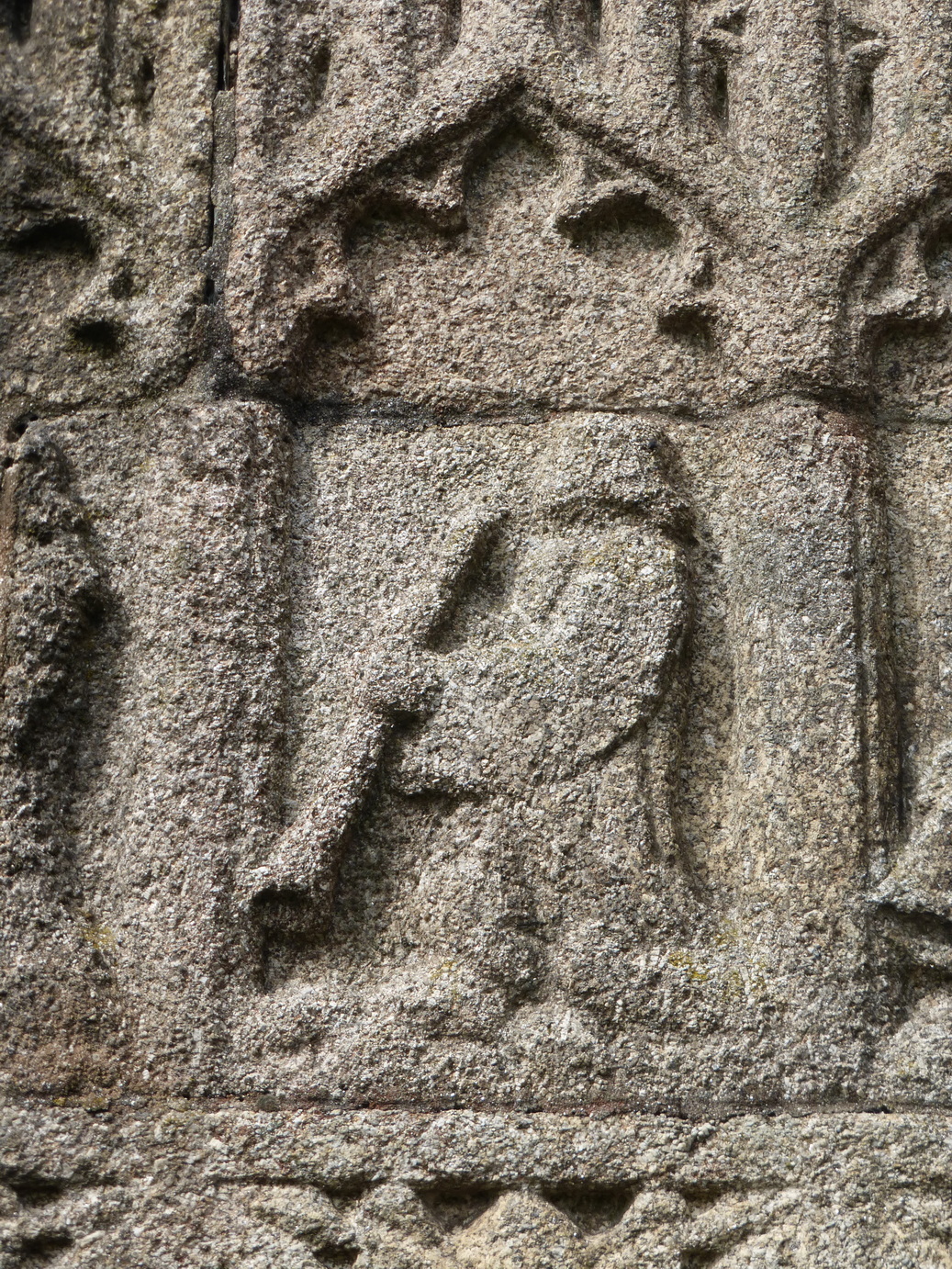
To return to the outside, on the eastern wall is a life-sized figure of St Mary Magdalene lying in wait in the Garden on Easter morning. By tradition, a stone that sticks when thrown on to her back brings good luck. On the wall beside her, musicians play their medieval instruments.
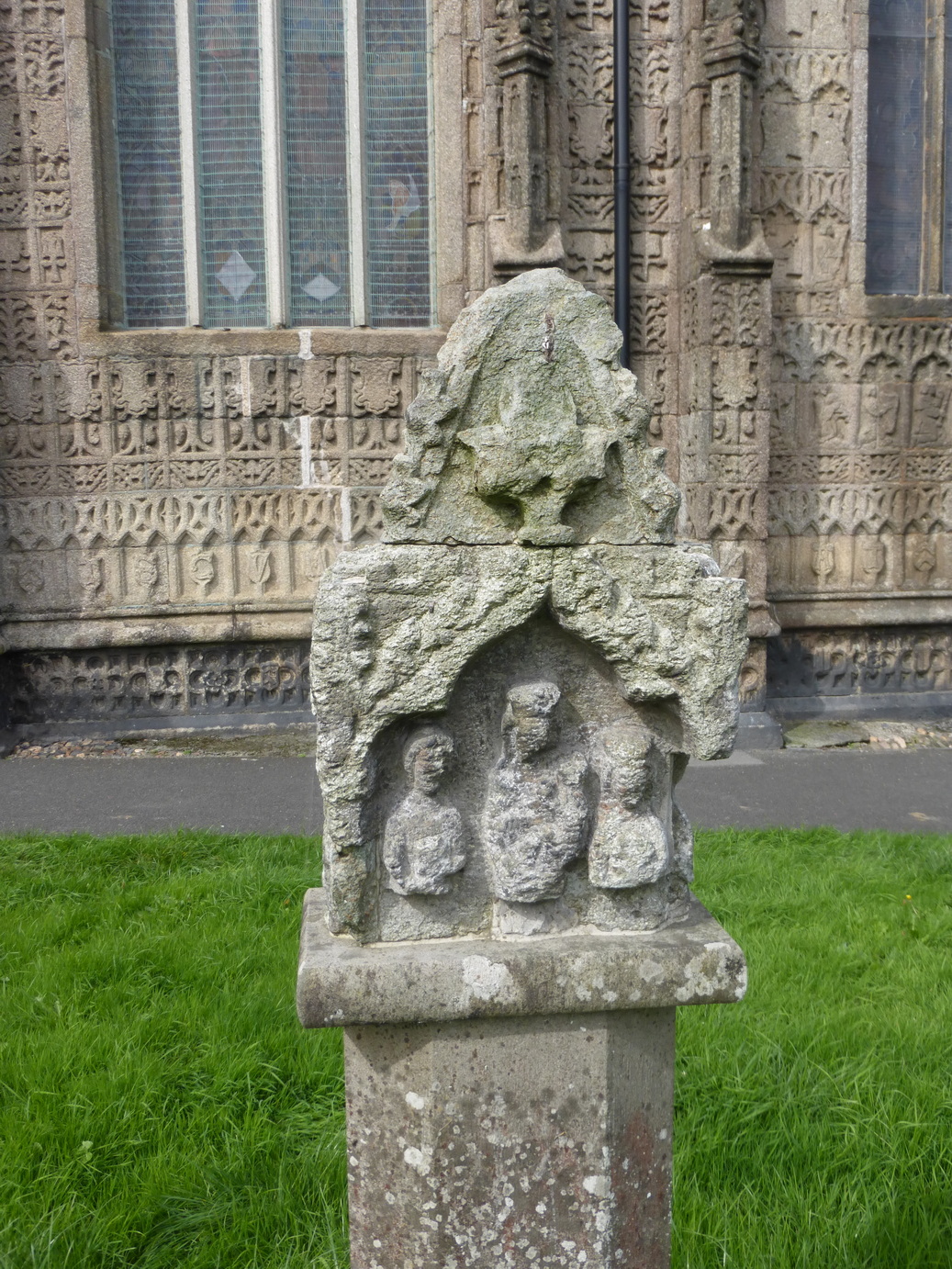
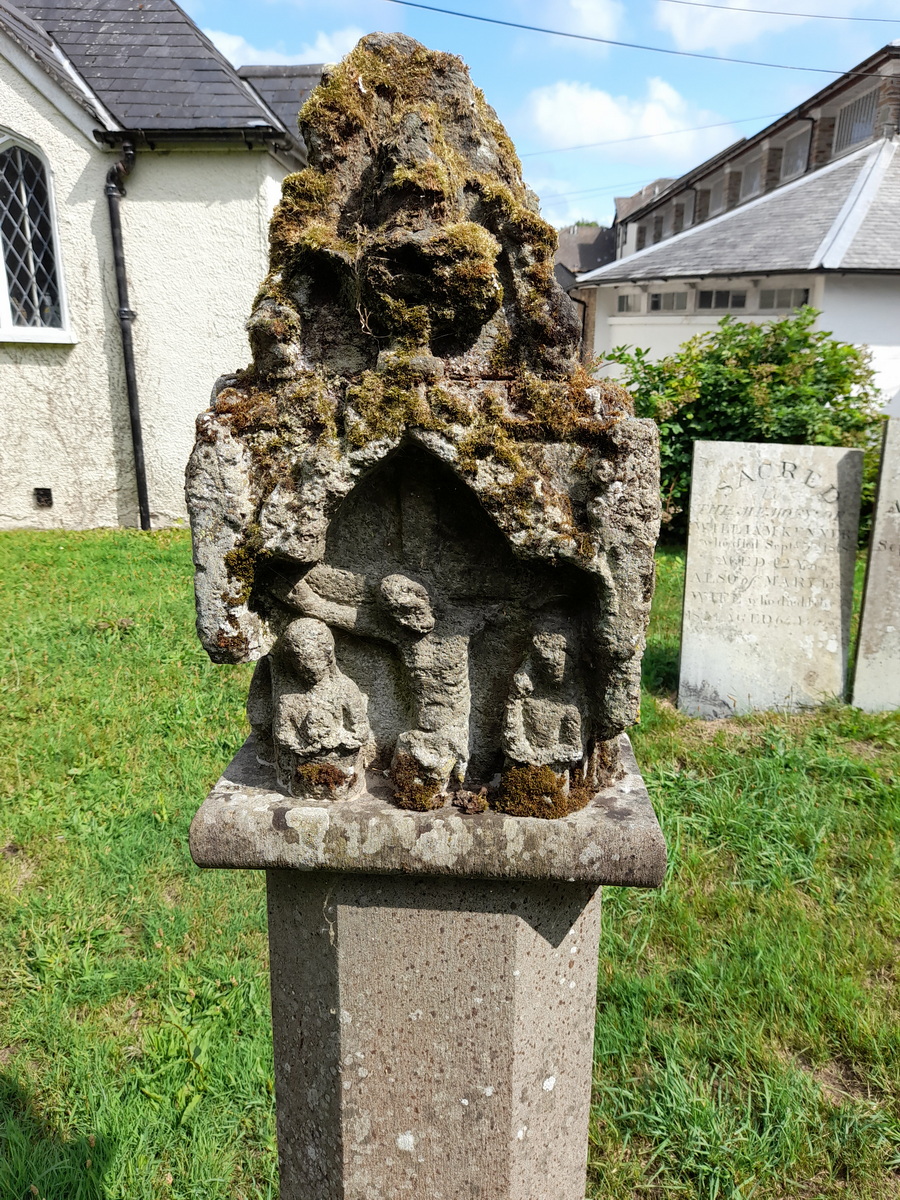
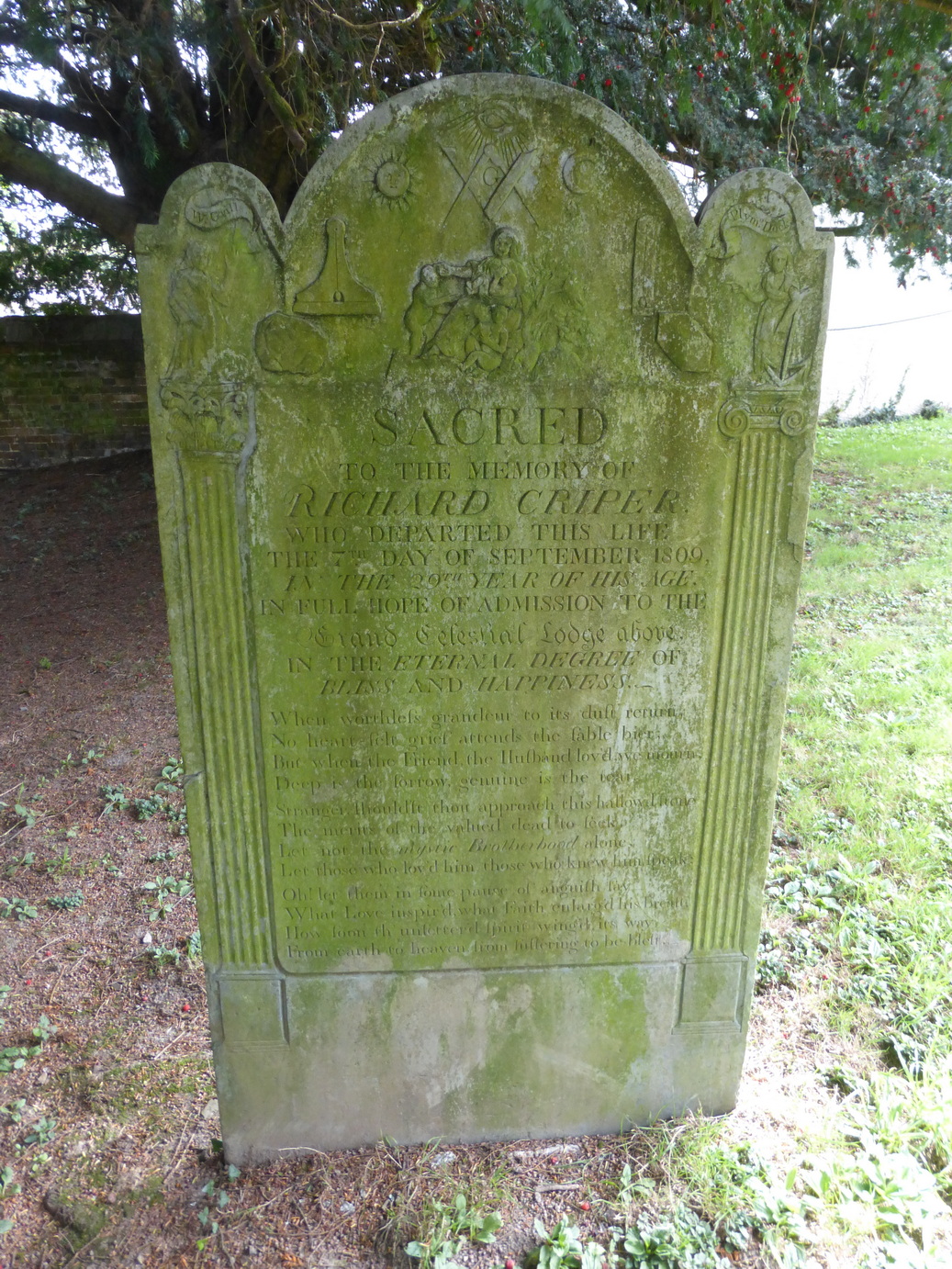
Nearby, is a small lantern cross on a modern base and a headstone to a former mason which plumbs the usual depths of ‘Vicar’s verse’:
When worthless grandeur to its dust return
No heartfelt grief attends the sable bier:
But when the Friend, the Husband lov’d, we mourn,
Deep is the sorrow, genuine is the tear.
Stranger, should’st thou approach this hallowd stone
The merits of the valued dead to seek,
Let not the mystic Brotherhood alone,
Let those who lov’d him thos who knew him speak.
Oh! Let them in some pause of anguish say
What Love inspir’d, what Faith enlarged his breast
How soon the unfetter’d spirit wing’d its way,
From earth to heaven from suffering to be blest.
Simon Jenkins was right: this is definitely worth its four stars. There is an excellent guidebook to the church.
 A Cornish Journey