
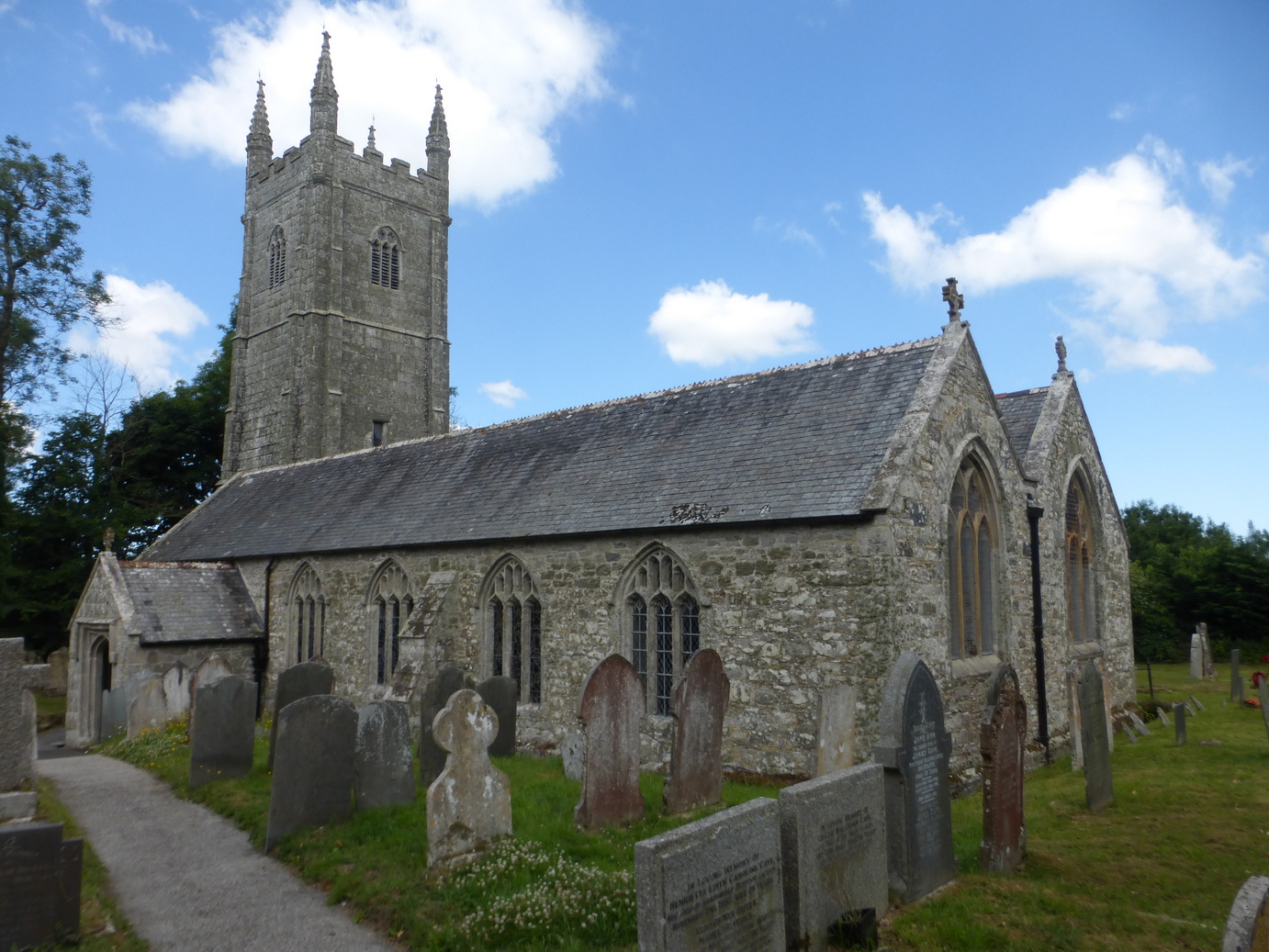
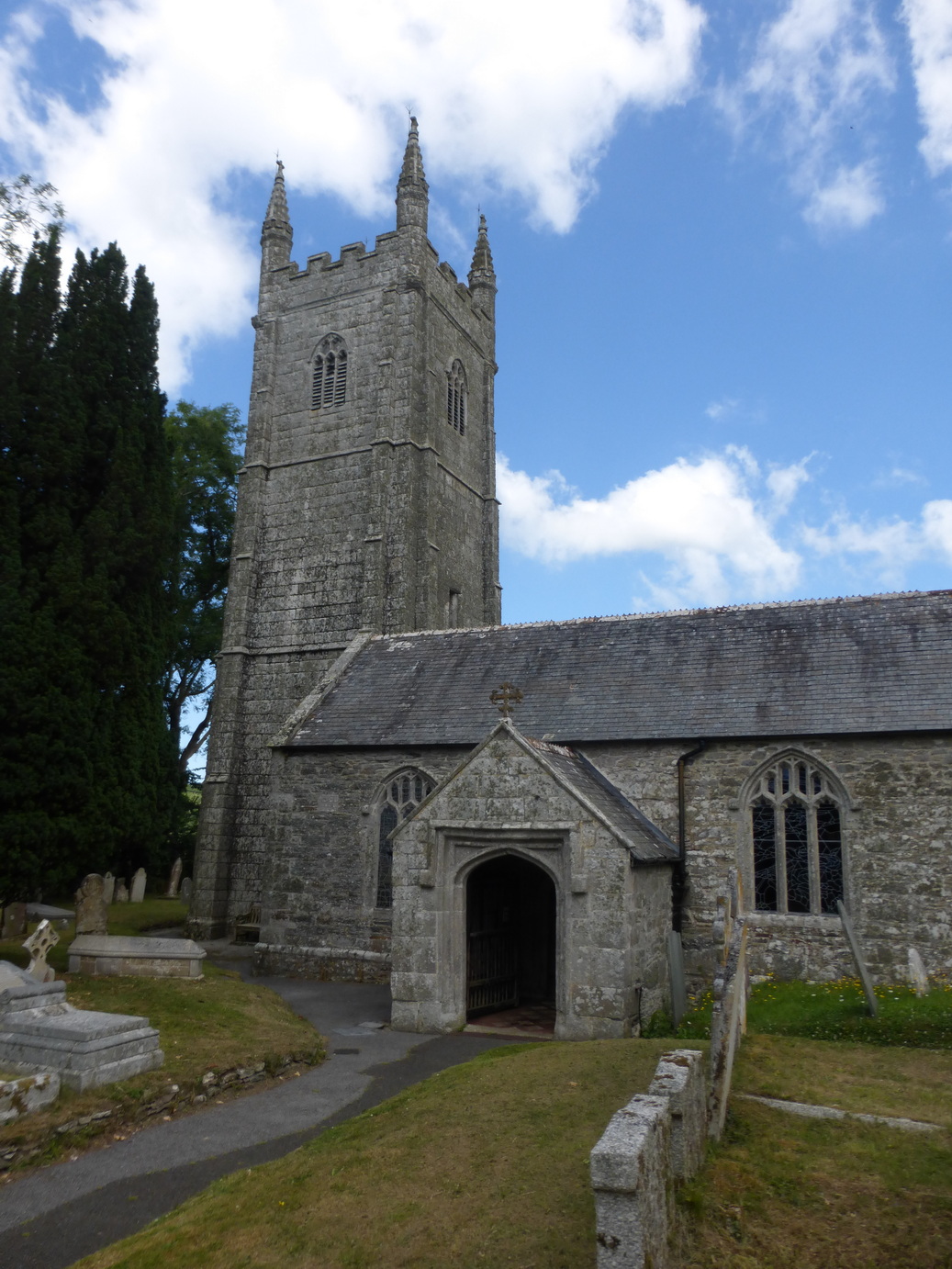
Little is known about St Ladoca (Ladoc or Latoc) although tradition has it that she was ‘a beautiful lady with lovely long golden hair’. Her church stands on a hill on the edge of the village of Ladock and is a familiar two-aisled Cornish church with a north transept and C15 three-stage tower. Her holy well is down a grassy track close by.

The church was extensively and sensitively repaired under the direction of GE Street in 1862. The work was funded by the vicar, Canon Wise. He and his cousin, Stamford Raffles Flint, covered the period 1846-1920 and certainly left their stamp on the church. They later employed EH Sedding to sort out the North transept aisle and EA Fellowes Prynne to beautify the altar in 1907.
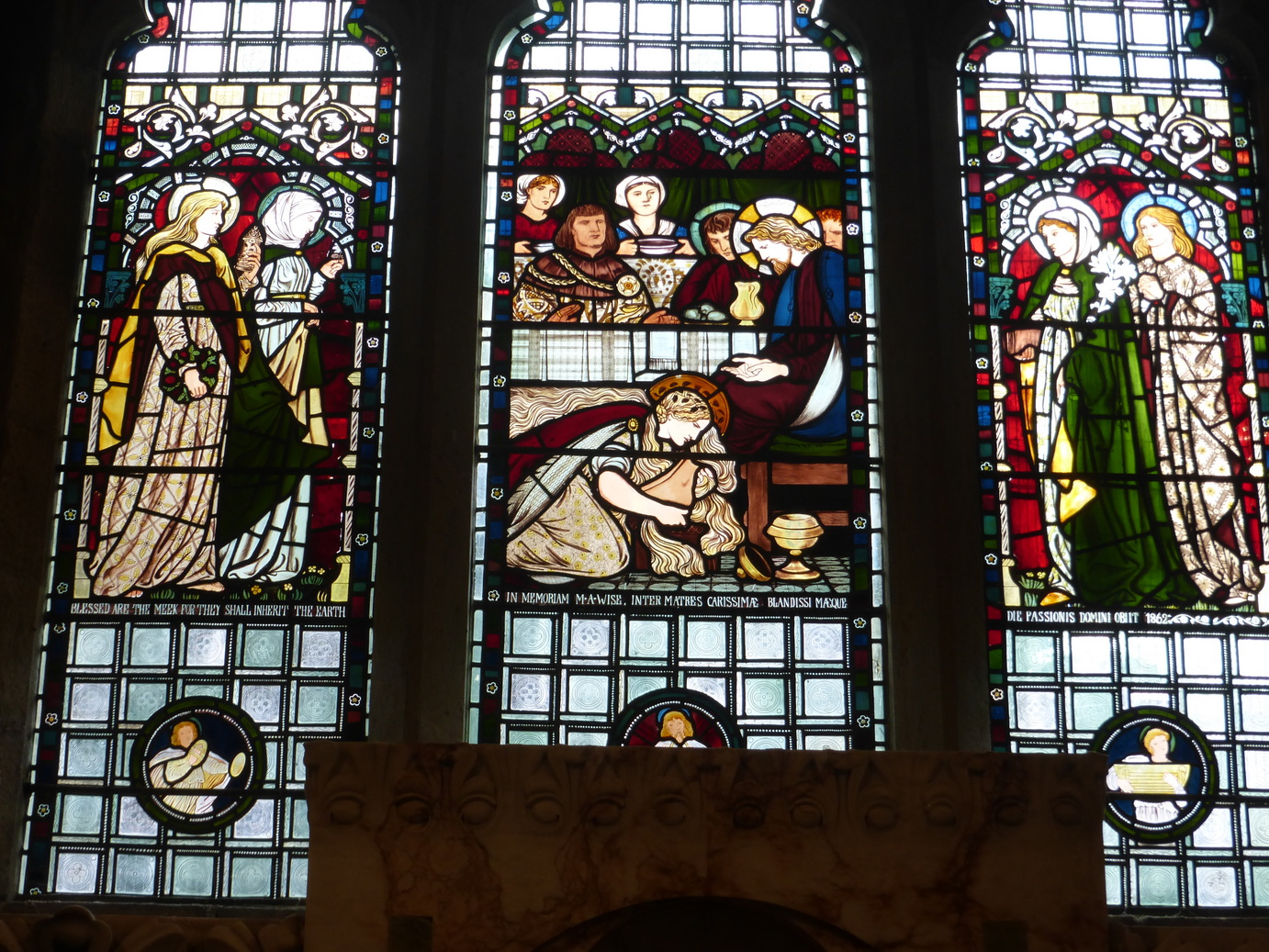
The chief glory of the church is the three windows which came from the Morris company and two modern ones.

The main East window (1863) contains a central panel by Burne-Jones in Pre-Raphaelite style.
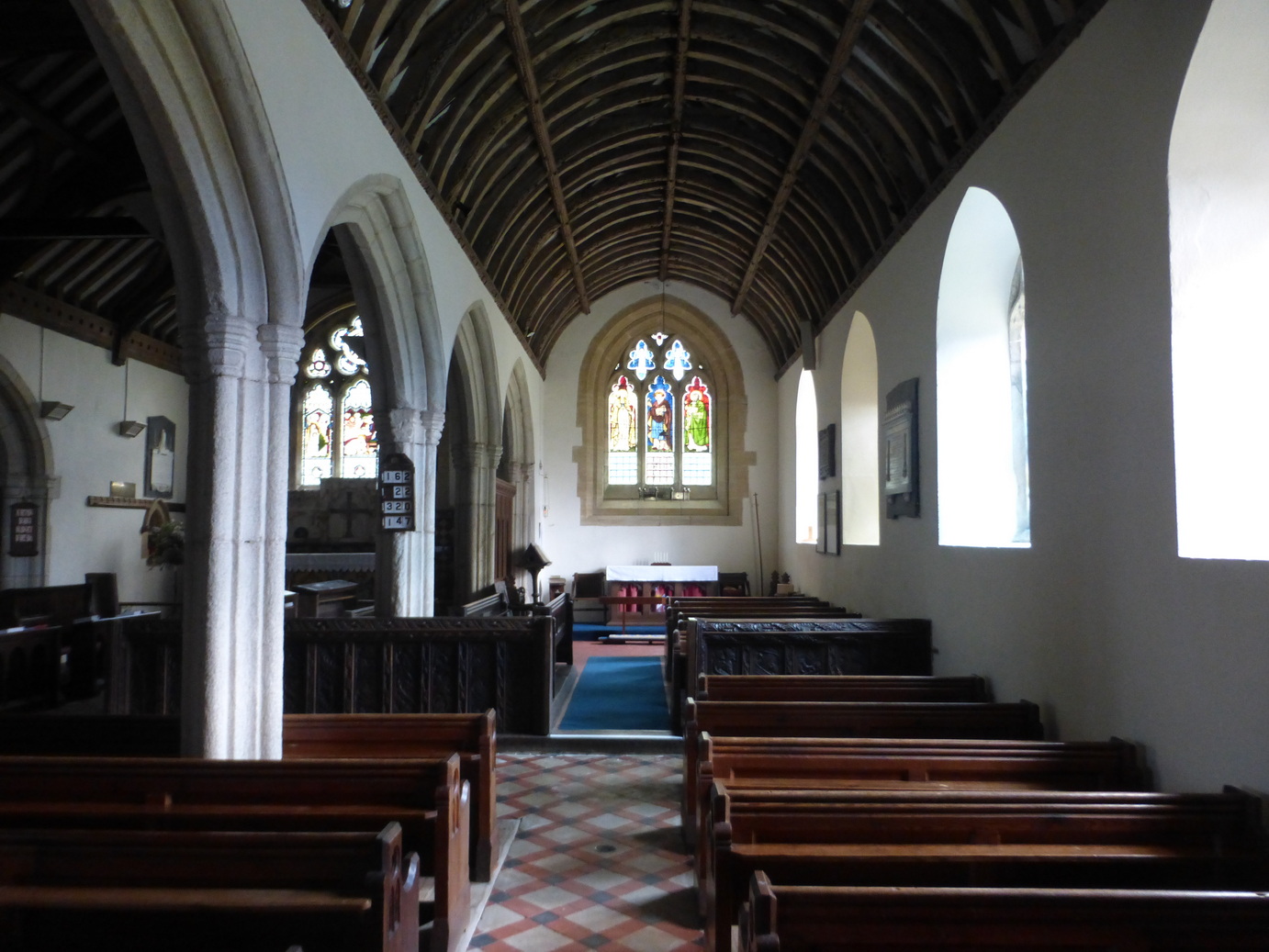
The south aisle window has a theme of ‘healing’: Raphael (associated with healing), St Luke (a doctor clutching a copy of Hippocrates) and St Peter (the healer).

The South aisle’s West window features Moses, St John the Baptist and Isaiah, re-using Burne-Jones designs.
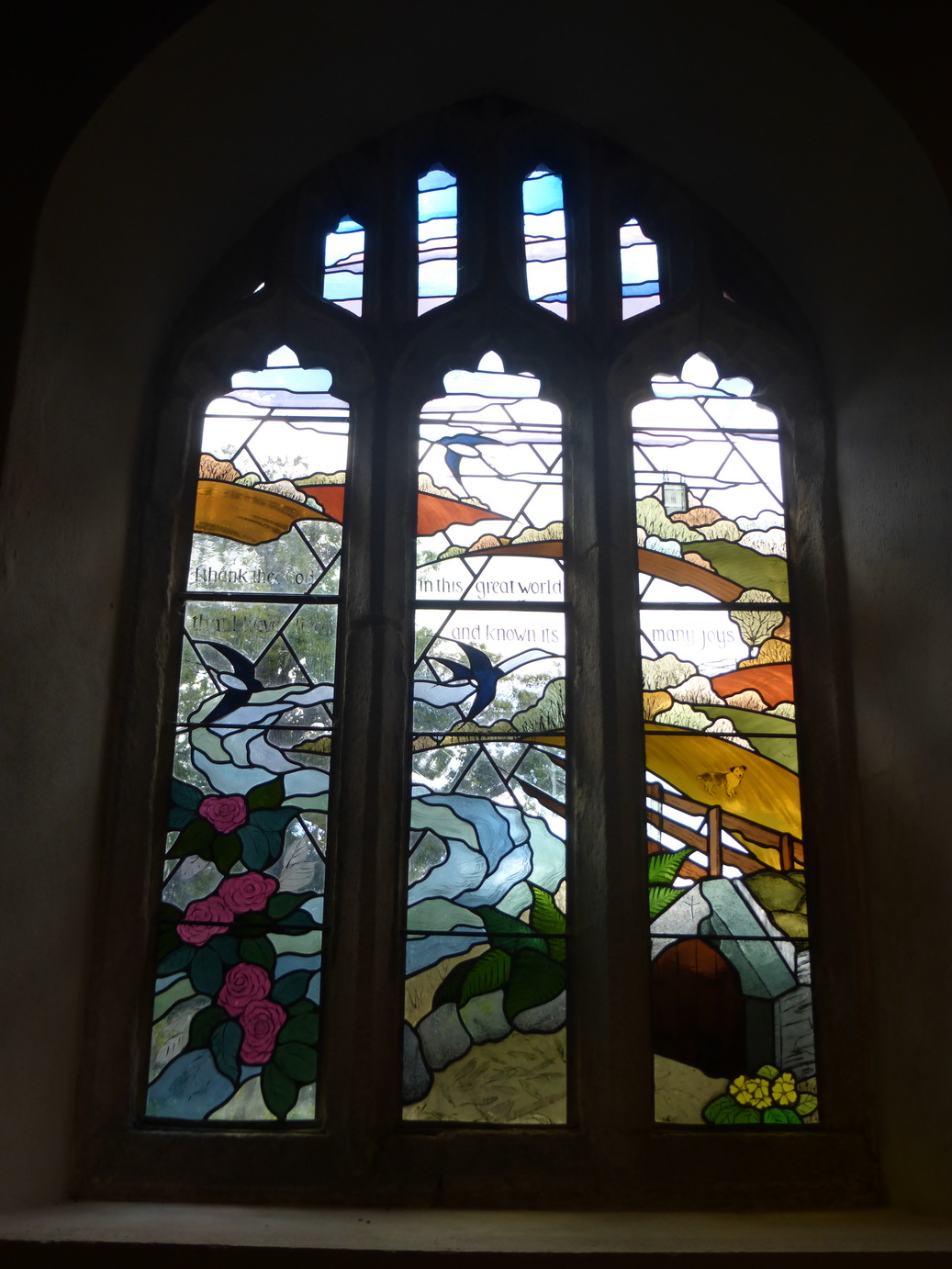
And then there are two modern windows in the south aisle which bear no dedication and are not mentioned in the guidebook. We venture to suggest that these are in memory of Geoffrey and Lady Mary Holborow (the highly-respected former Lord Lieutenant) who lived across the road for the westerly window includes a small and familiar dog.
There are other delights such as:
- A Norman font which is very similar to that at Feock
- The lower portion of the rood screen with some simple carving
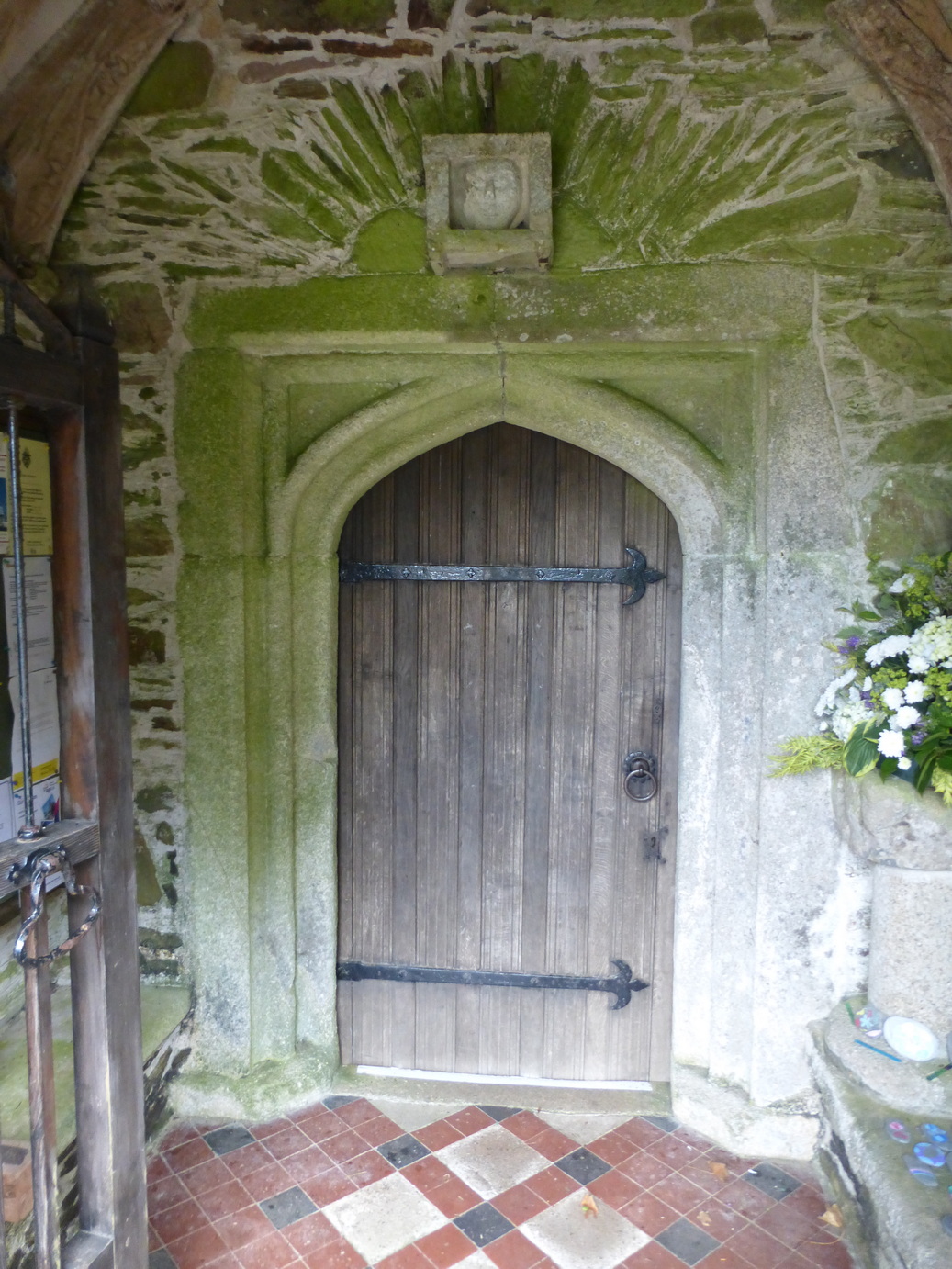
- A charming little face which greets you over the main door in the porch
- The well-constructed modern facilities unit at the base of the tower
- The well-restored C15 wagon roof in the south aisle
- The late C19 school house outside by JP St Aubyn – thus making it a hat trick of the major C19 architects who had been involved with the church
- A simple well-presented guidebook written by Geoffrey Holborow




 A Cornish Journey