
St Cuby’s church is something of a surprise. Set within a spacious lann on the edge of the village, it is immediately notable for its C13 tower is attached to the end of the south transept (see Blisland where the tower is attached to the north transept).
Inside, the church is tall, light and spacious with a nave, north aisle and two transepts, the south one being dedicated to the organ, preventing access to the base of the tower.

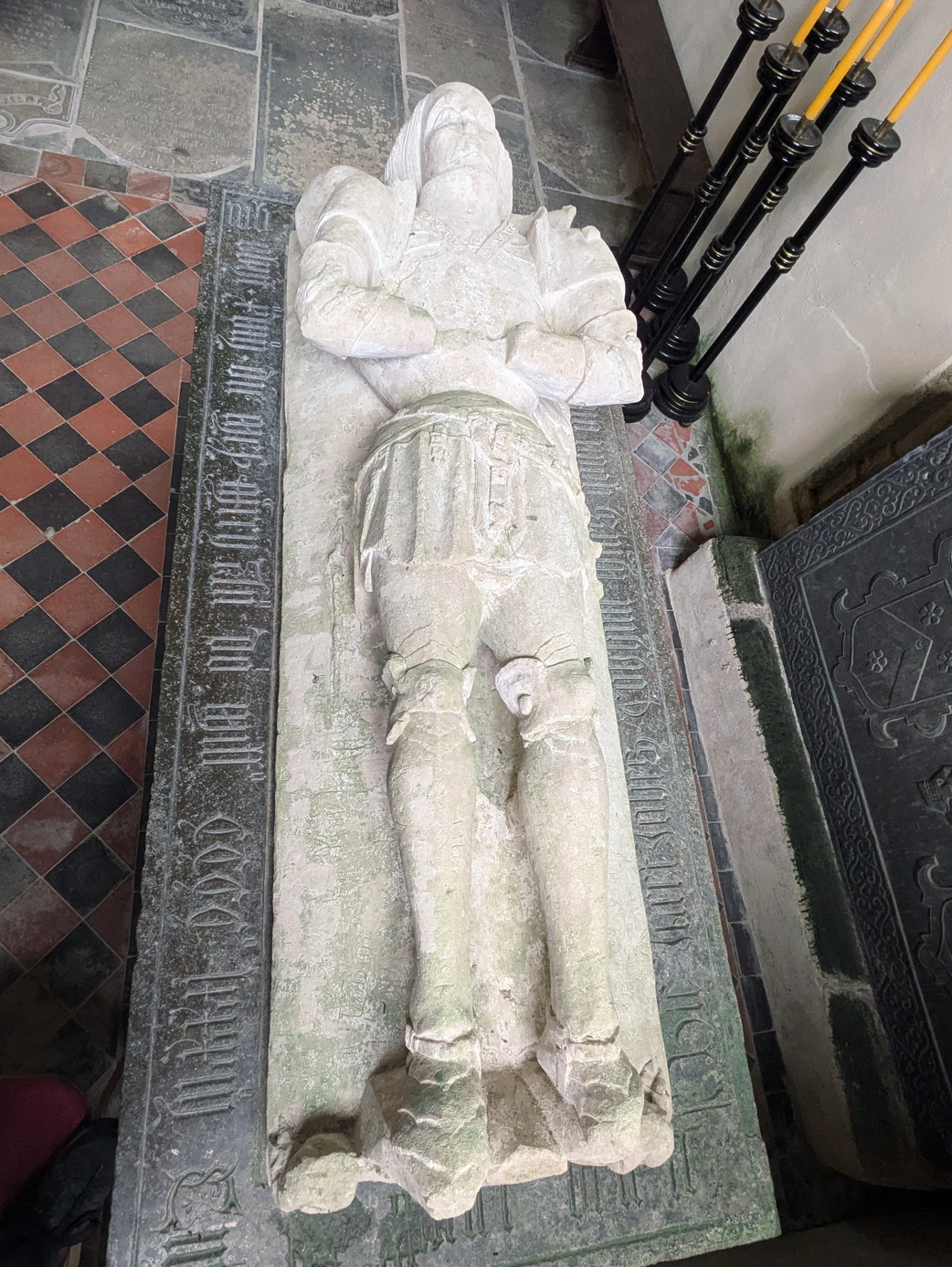
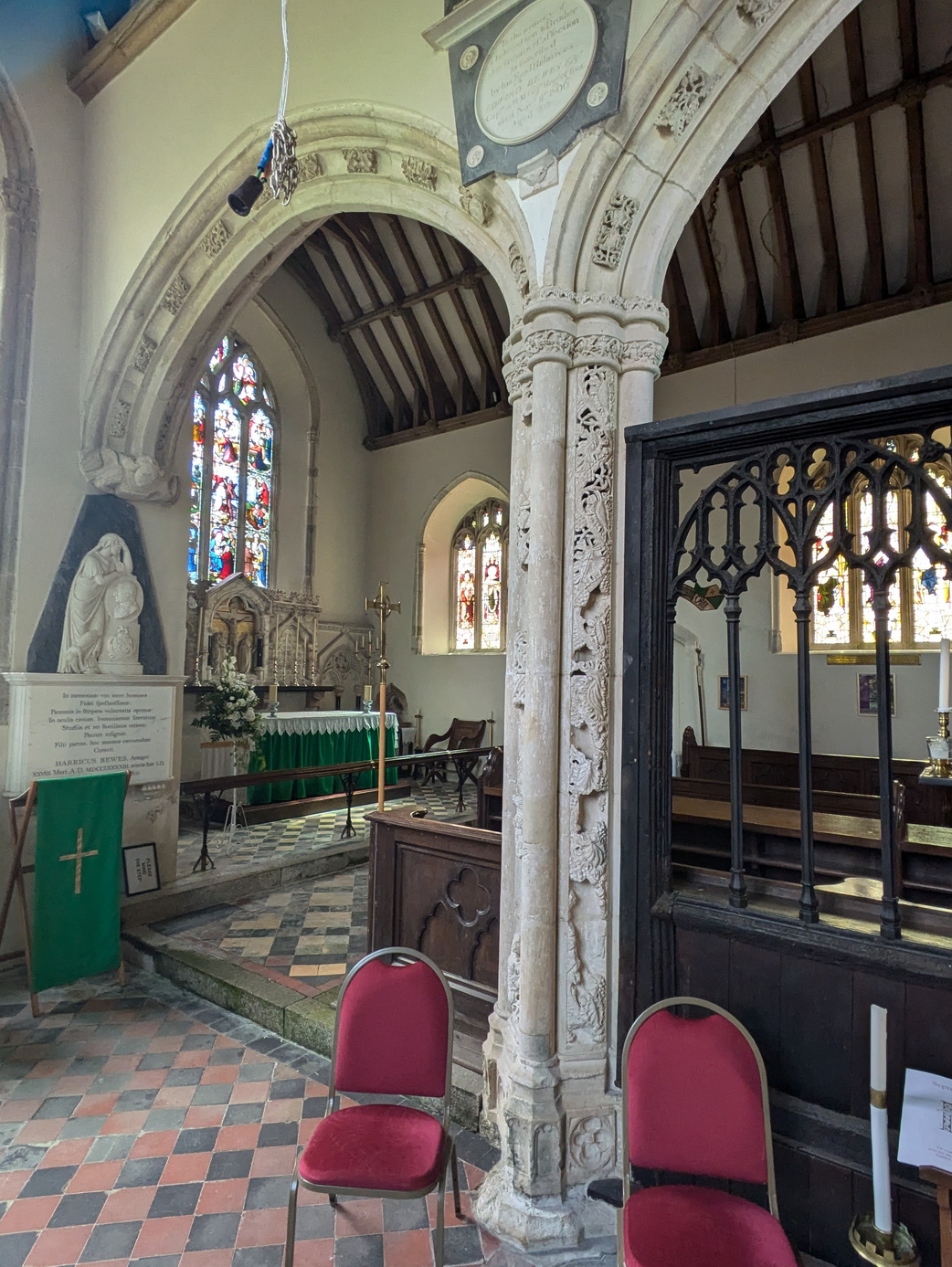
In the northeast corner is the elaborate Colshull chapel. Here the screen and arches are more highly decorated. At the centre of the chapel is large tomb of Sir John Colshull d1483, once an important person in Cornwall.

The tomb has been moved but it still dominates the space with Sir John in his fine armour and with a distinctly receding hairline.
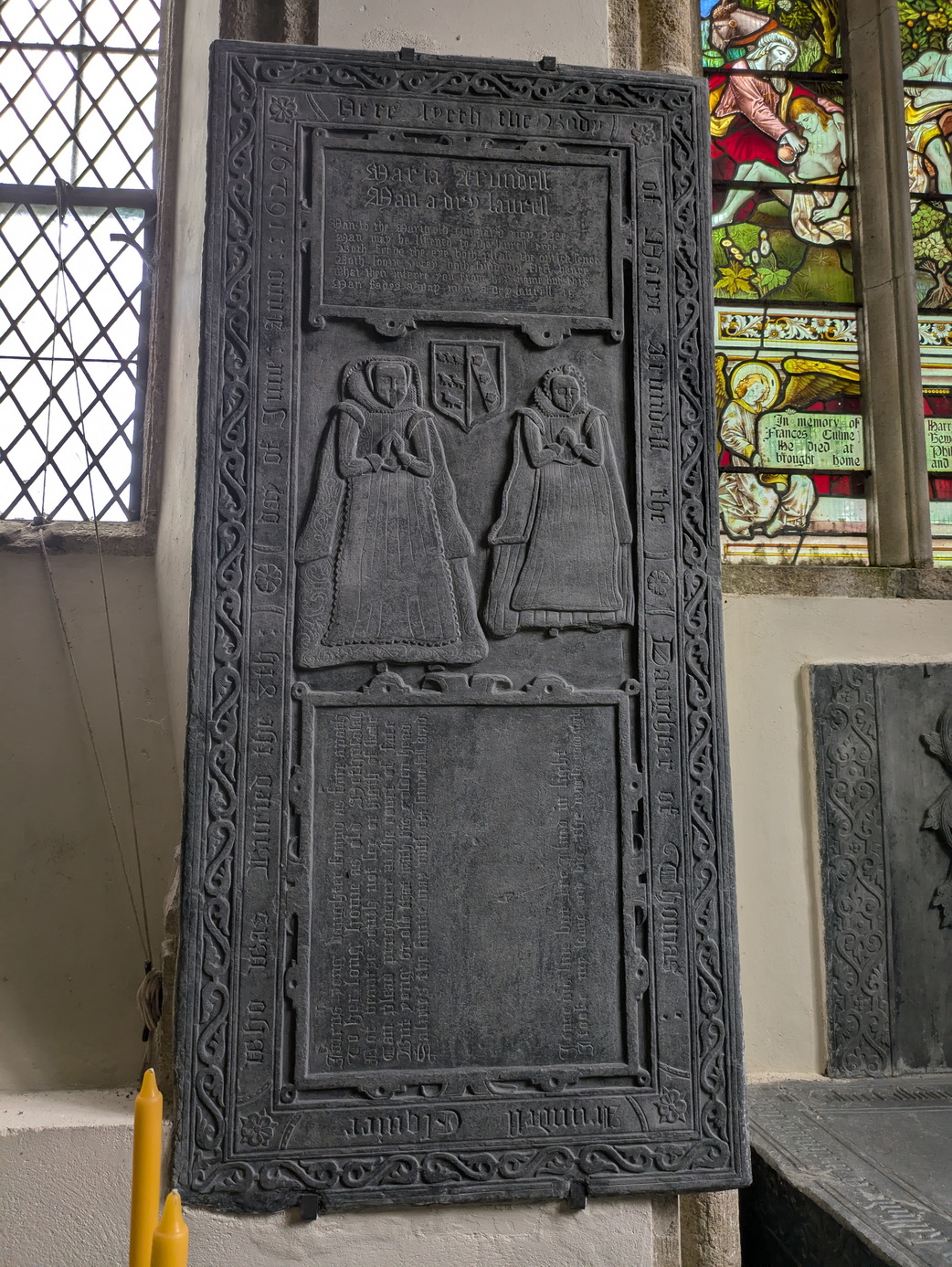
Beside him is a fine array of slate monuments, notably that to Ann Smith d1592.

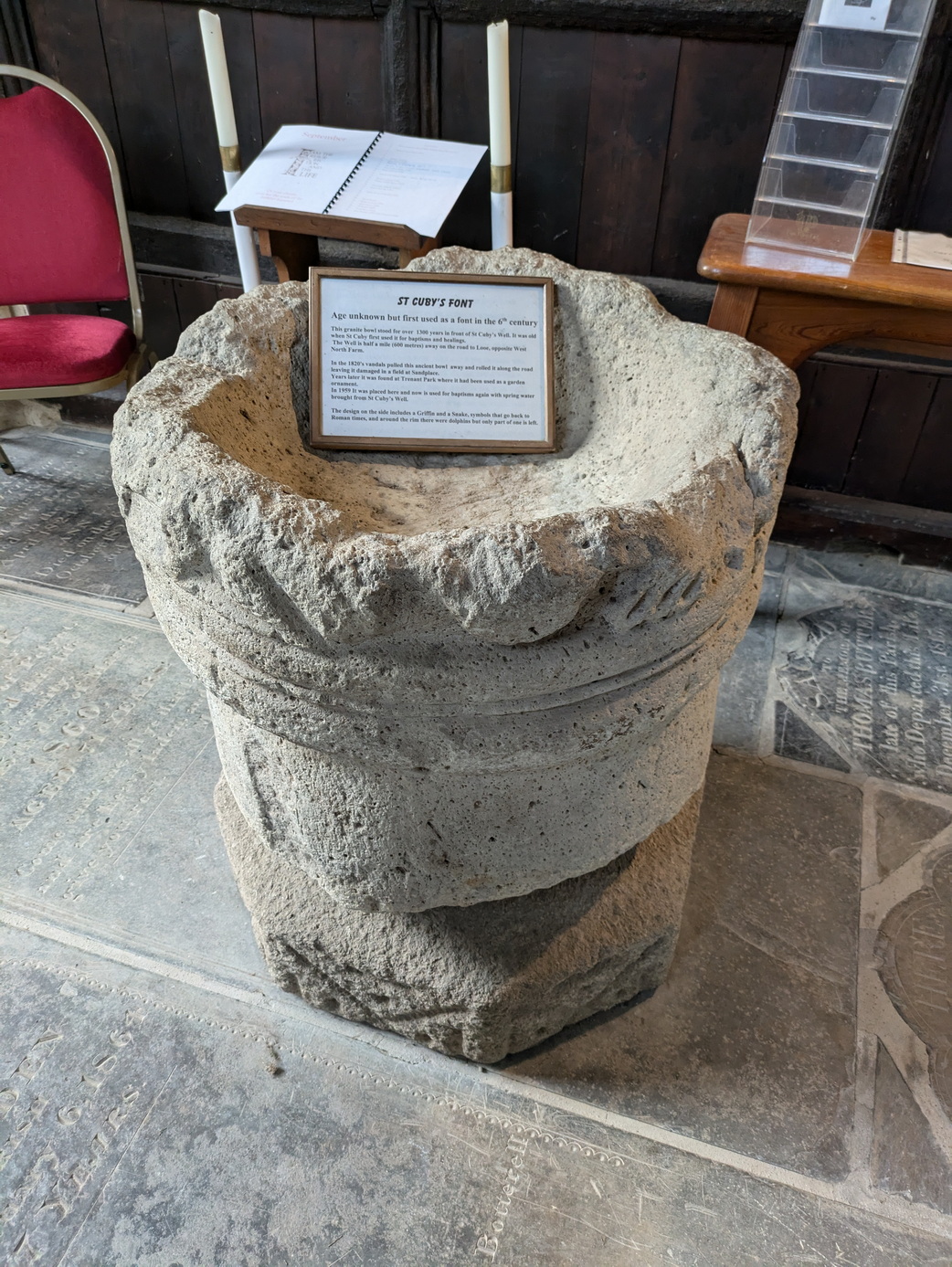
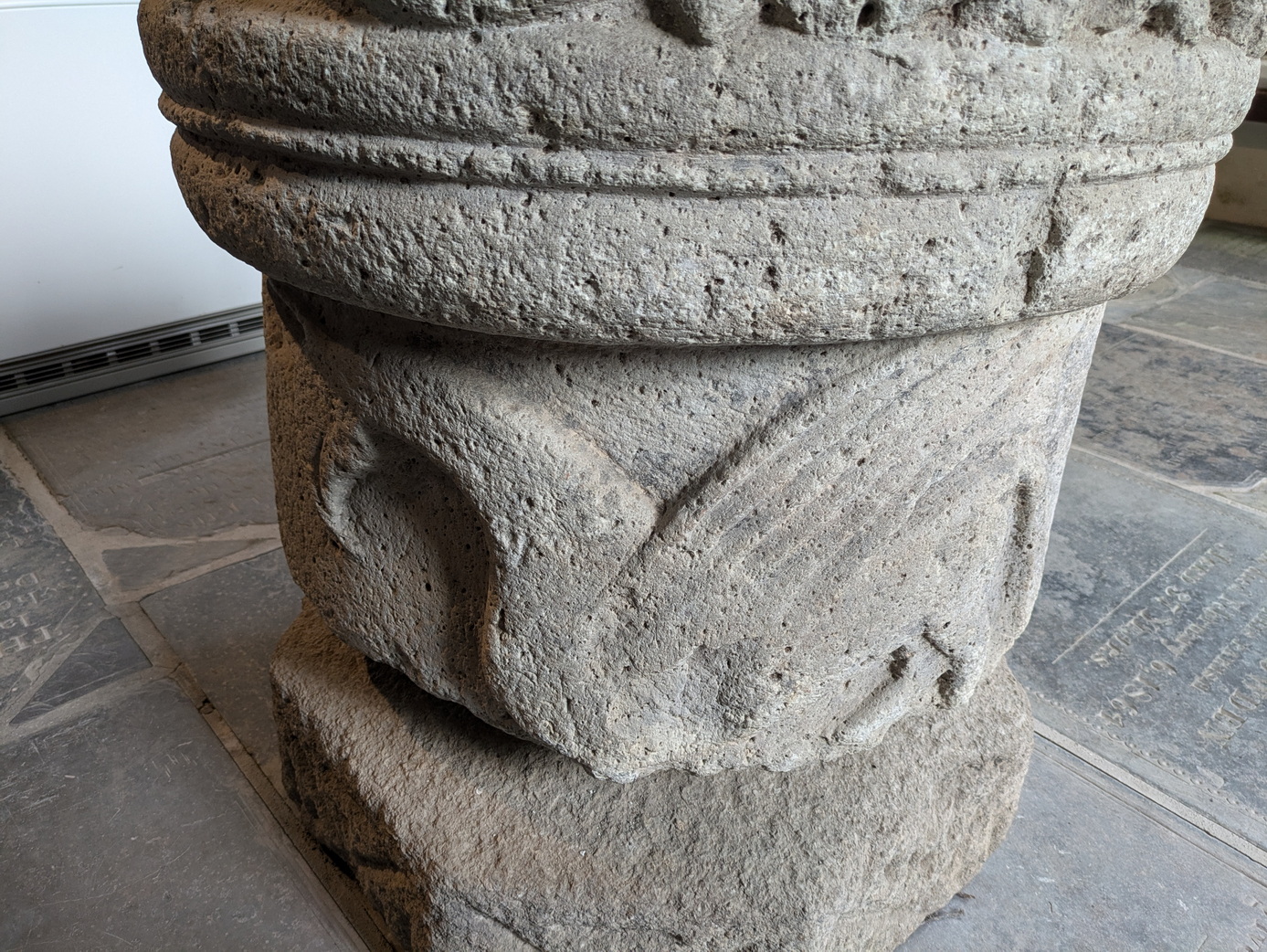
Also in the chapel is a stone basin – possibly C6th – which tradition says comes from the neighbouring St Cuby well. This looks remarkably like an early font with a dolphin on one rim and a griffin incised on the base.
The sanctuary and choir stalls – from Balliol College, Oxford – hint at the C19 restoration by JP St Aubyn and various rectors with connections to that college.

It was St Aubyn who also re-modelled the tower, removing an upper storey and perhaps a spire, replacing them with the pyramidal roof.
Part of the attraction of this church is the light airy feel, much helped by the use of clear glass rather than heavy message-heavy C19 stained glass.
The dedication to St Cuby is interesting since the saint is more usually associated with Tregony where he was possibly born. He may have been the son of St Selevan (St Levan). Just down the road towards Looe is St Cuby’s well while, behind some houses, across the road is Duloe stone circle.





 A Cornish Journey