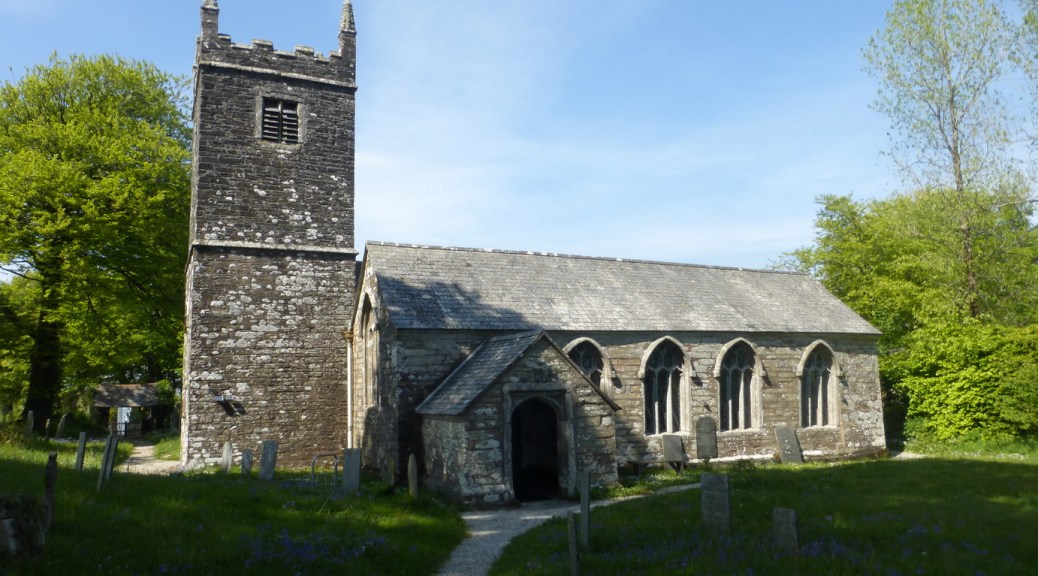
Braddock St Mary feels like a long way from anywhere, far down a road which declares itself to be a dead end on the edge of the Boconnoc estate.
Being set in a remote church town, we were anticipating a closed or neglected church. We could not have been more wrong: it was a riot of activity and warmth.

Trying to separate the church from its activity is difficult. The building is set within a lann which was a lush green and white when we saw it.

Inside, the church feels lopsided, like any church with a nave, a hidden north transept, and a light airy south aisle. This feeling is emphasised by the presence of the Elizabethan pulpit right over in the south aisle, close to a window: enough to give any congregation neck strain.
Overhead, there is a fine wagon roof with exposed woodwork.

Our sources seem rather confused about aspects of the church. The double arch to the north transept, while probably of C16 date is suggested as a sign of an aborted north aisle. To us, they seemed like a natural opening, slightly tidied up.

The lovely Norman font has echoes of an Altarnun font with faces at each corner, but here the font feels lighter and has wonderful tree of life style decorations on each face.
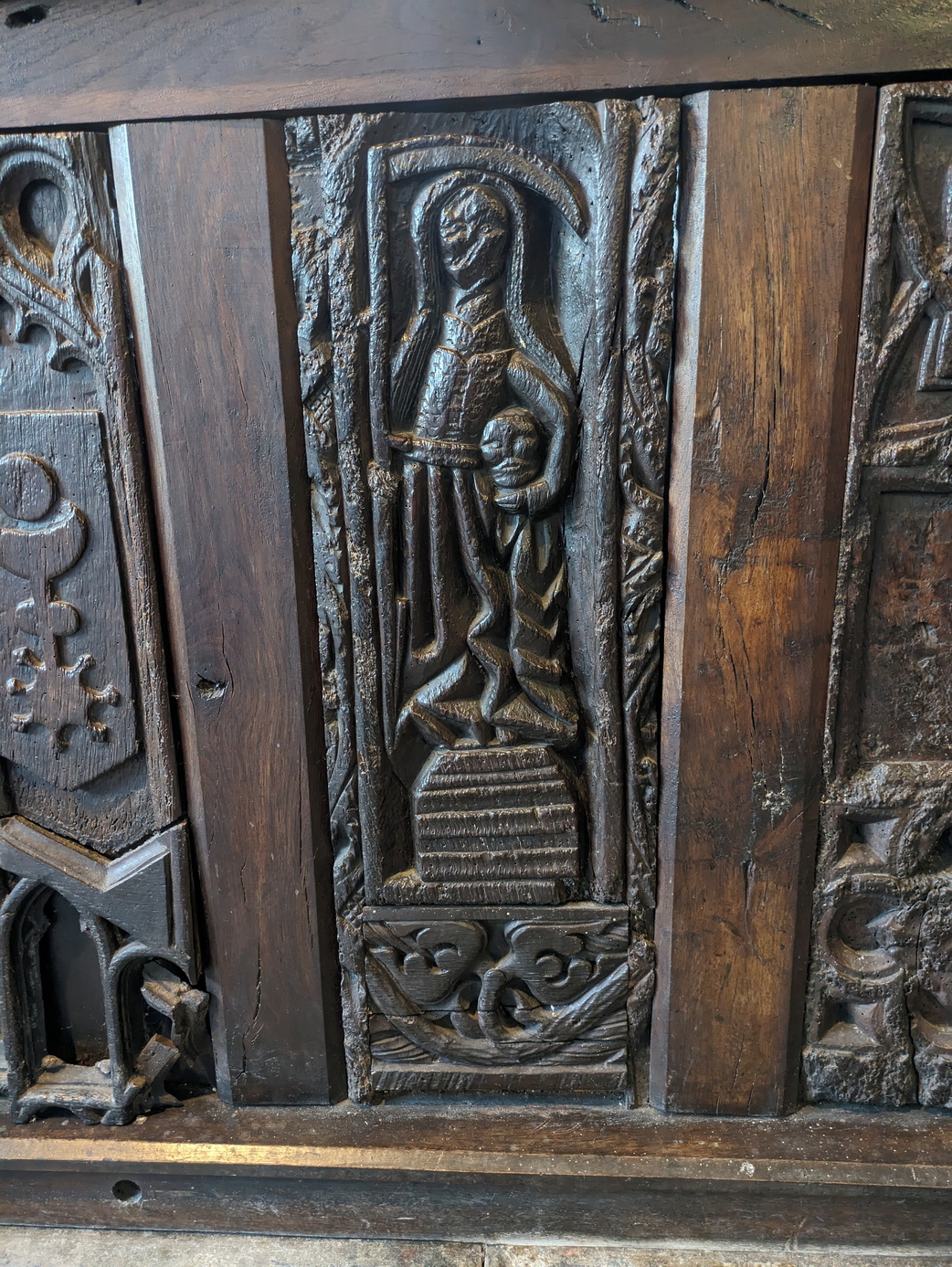
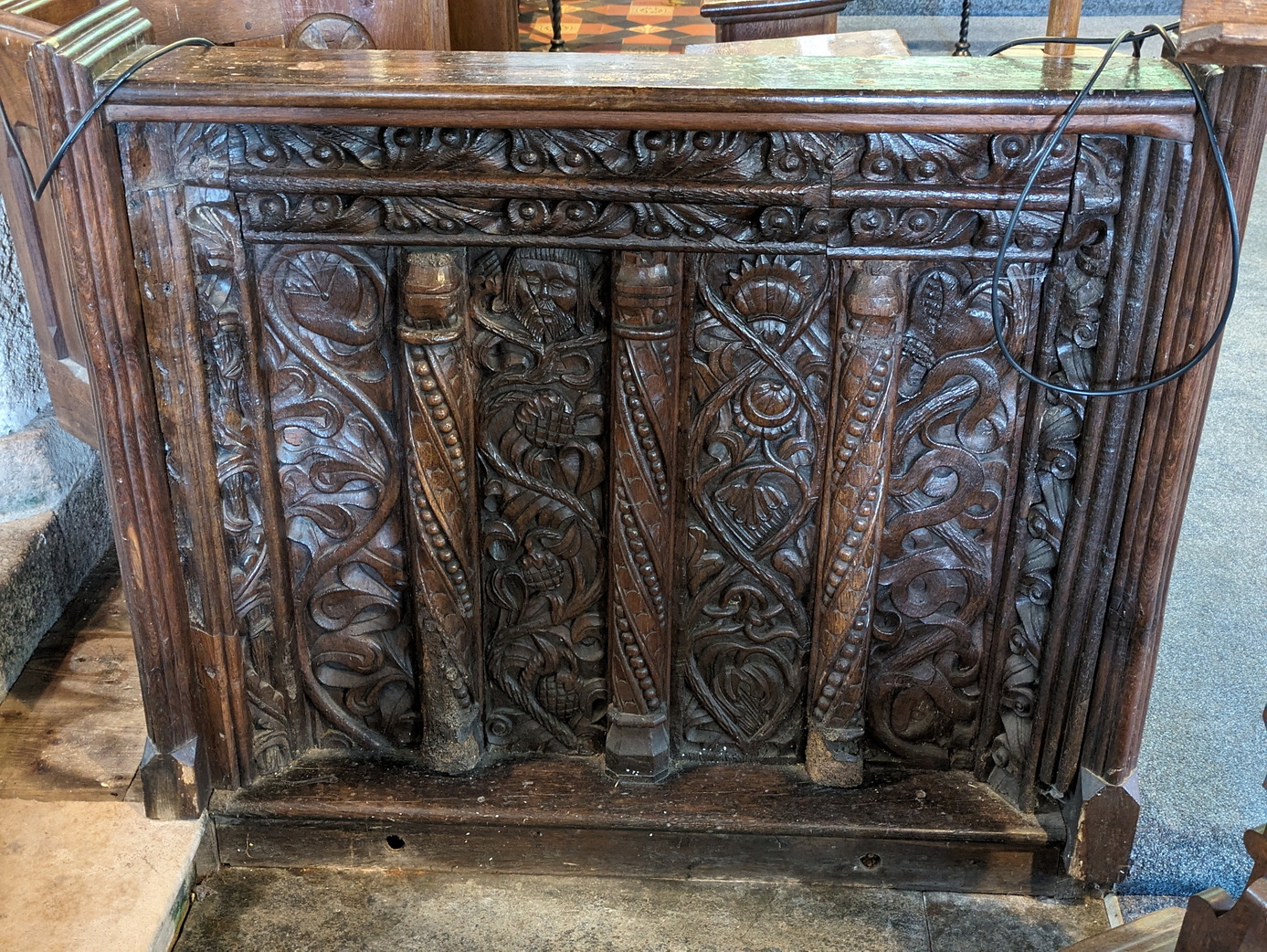
The lower half of the rood screen still survives with some elegant carving, while what were probably bench-ends have been incorporated into ‘modern’ pews quite effectively. Father Time stands out, his scythe very evident and a head cradled under his arm.
Our sources reported other naive carved images but we could not find any sign of these, despite requesting help from two vergers (?).
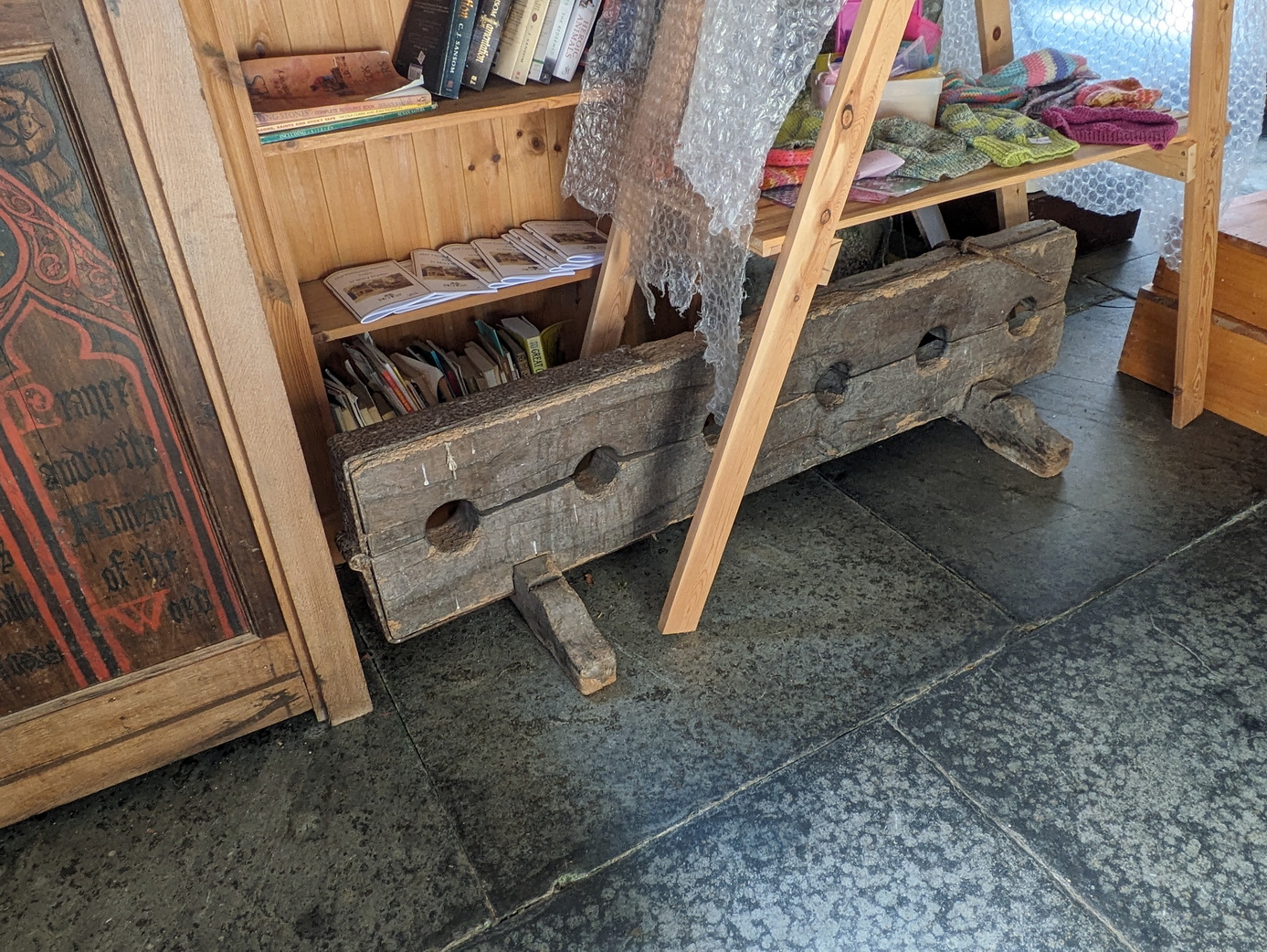
As to the use of the church: it is hard to imagine a space that feels more vibrant. Some churches have children’s artwork on display, some have tables and chairs for rest and discussion, some have things to help you look at the church. Often, they fight with the building or look as though they are barely tolerated. This had them all and more, with no pretence.
There was evidence of bright ideas everywhere. Cardboard angels watched over us from the roof – eat your heart Suffolk churches – and messages attached to netting around a prominent pillar. At the back of the church was a portable belfry for use at shows and exhibitions. Here, unlike in so many larger churches, the solemnity of the building did not constrain a sense of community. Braddock had won that battle long ago.
The outside space was dedicated to ecology and we were all invited to sit in the churchyard for ten minutes and count the number of birds we could hear, or to count wildflowers. What a wonderful place to sit and think.
One final joy was the tiny wren’s nest on a pillar close to the chancel. The little birds had ‘stolen’ moss from the Easter flower displays and were merrily raising young. It was typical of the spirit of the church that they did not throw out the wrens but welcomed them, covered everything with plastic sheeting, and waited patiently for nature to take its course.
Some small, remote churches may have out-lived their practical use and may need to be ‘moved on’. While Braddock is loved as it is, then it must not suffer that fate.




 A Cornish Journey