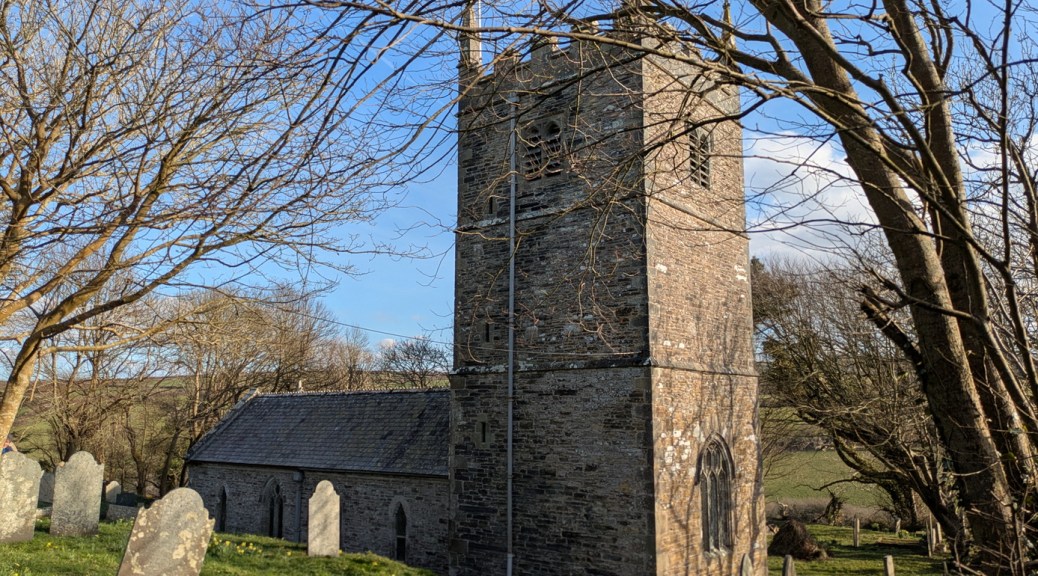
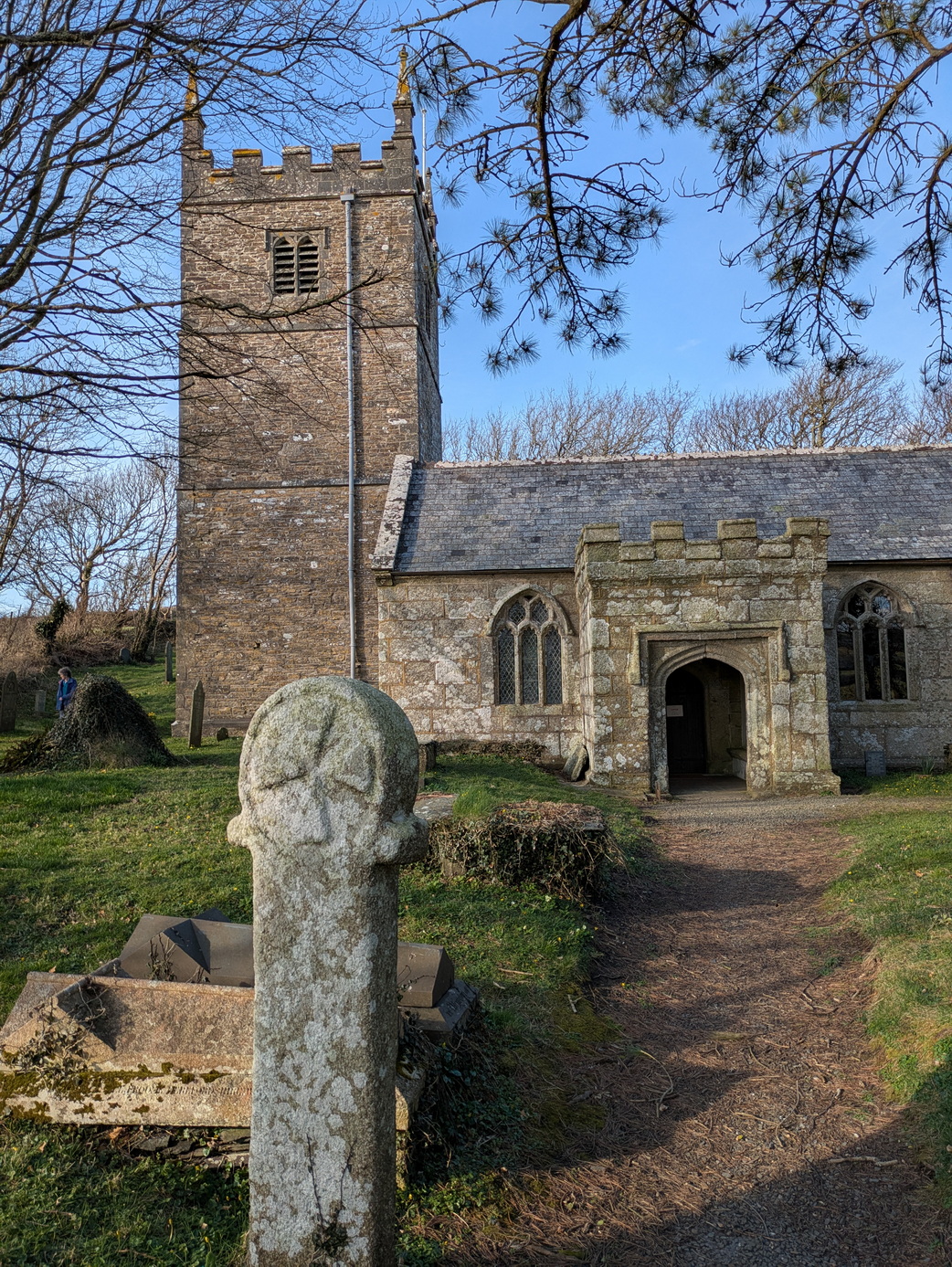
St Juliot (Julitta, Gilt or possibly Juliana, sister of St Advent) is one of those remote Cornish churches with nothing but a few farm buildings as neighbours. Close to Lesnewth and Minster churches, it nevertheless feels very remote.
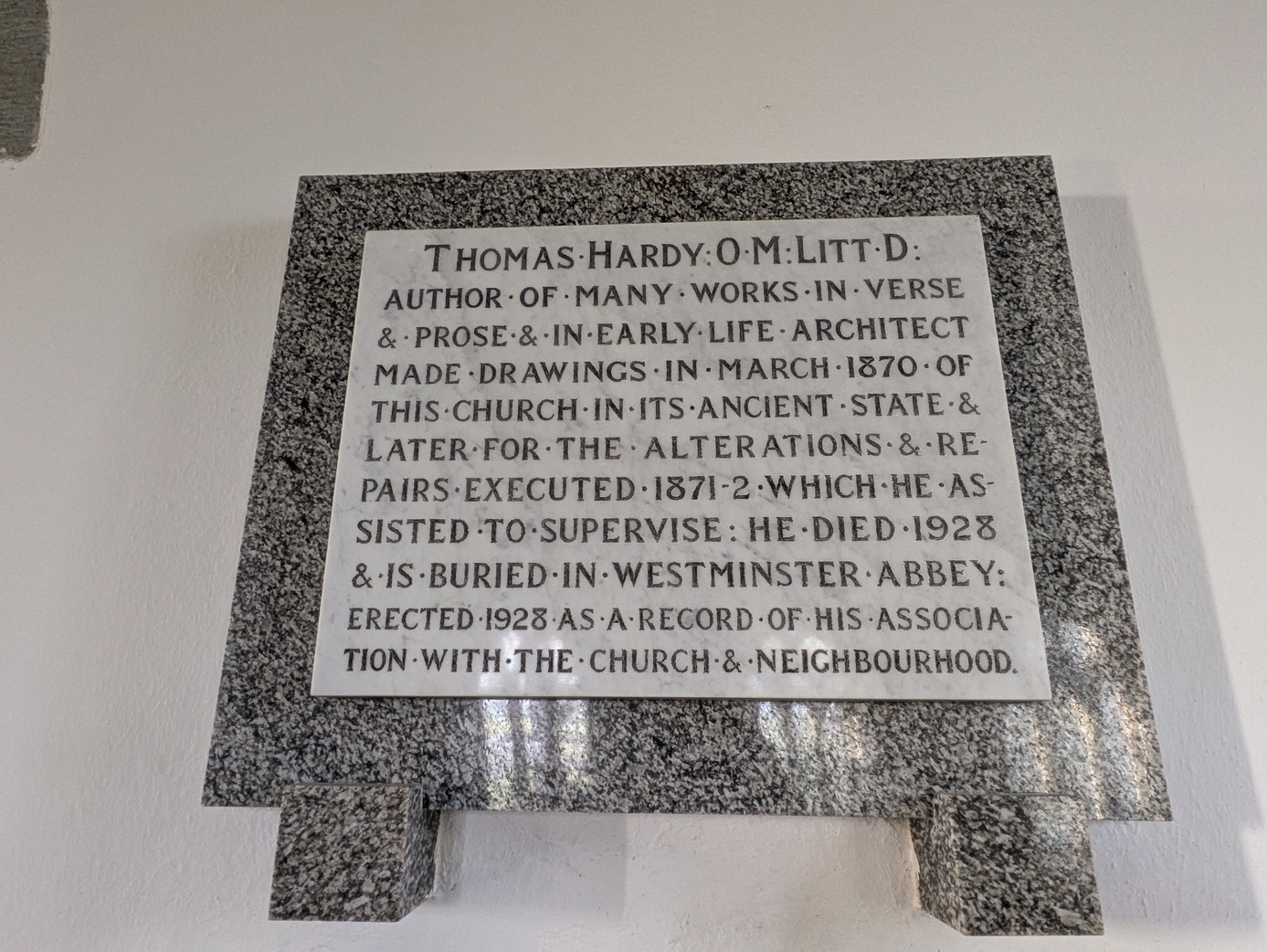
Its main claim to fame, however, is its connection with Thomas Hardy for it was here that the young architect met Emma Gifford, sister-in-law of the rector whose church Thomas was commissioned to repair.

His work was effective. The original church must have been very narrow with a wide south aisle. His solution was to remove the old chancel and swap the functions of the two aisles so that the south aisle became the nave and the nave the north aisle. As a result, the tower, which he re-built, is at the end of the north aisle.
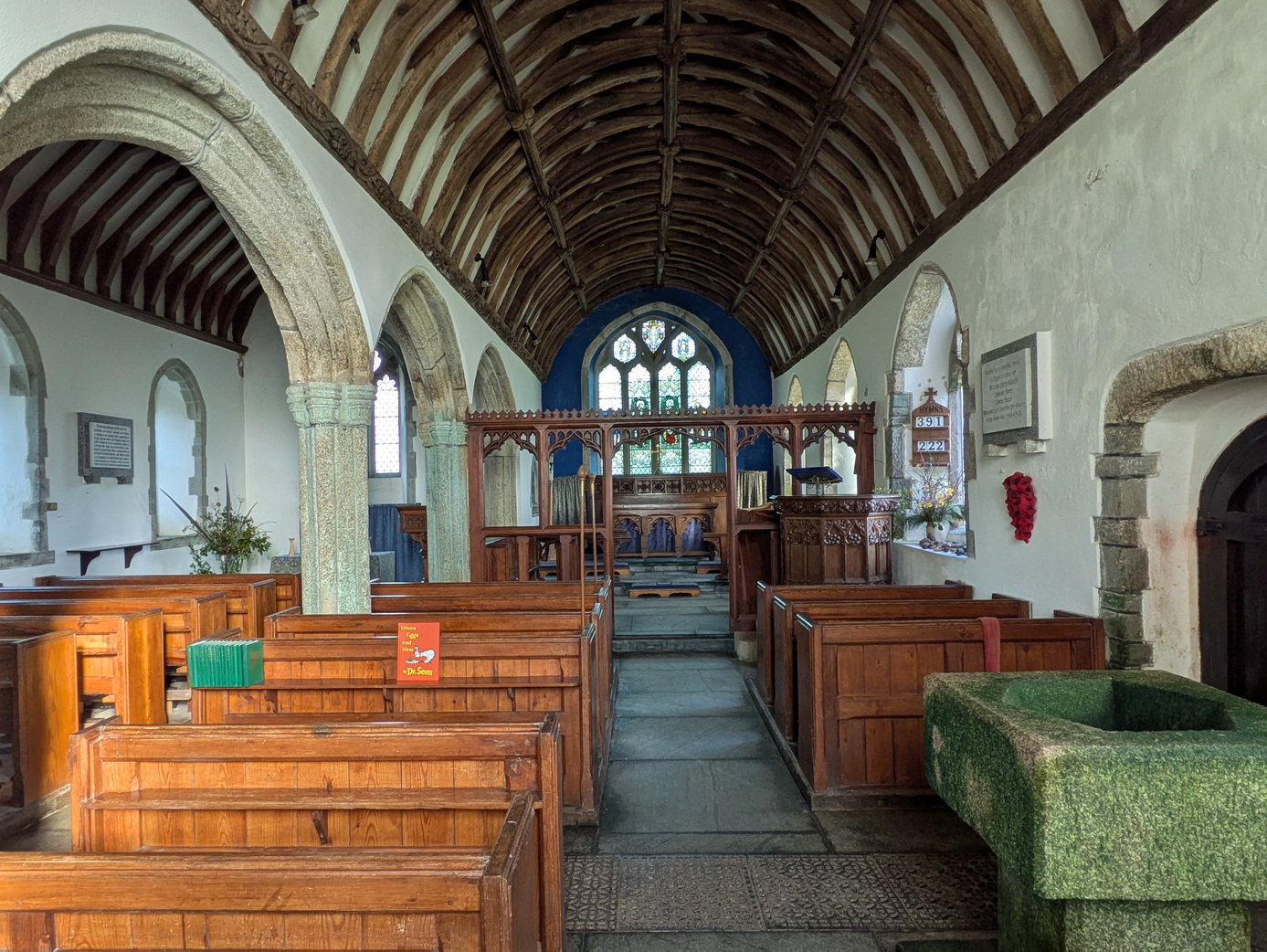
The result is lop-sided, as any church with two aisles tends to be.
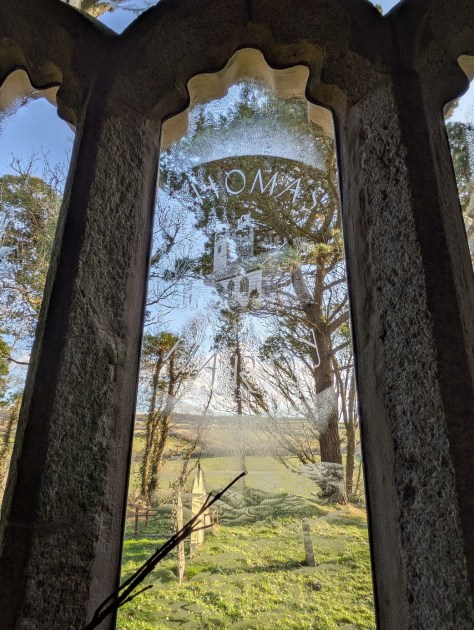
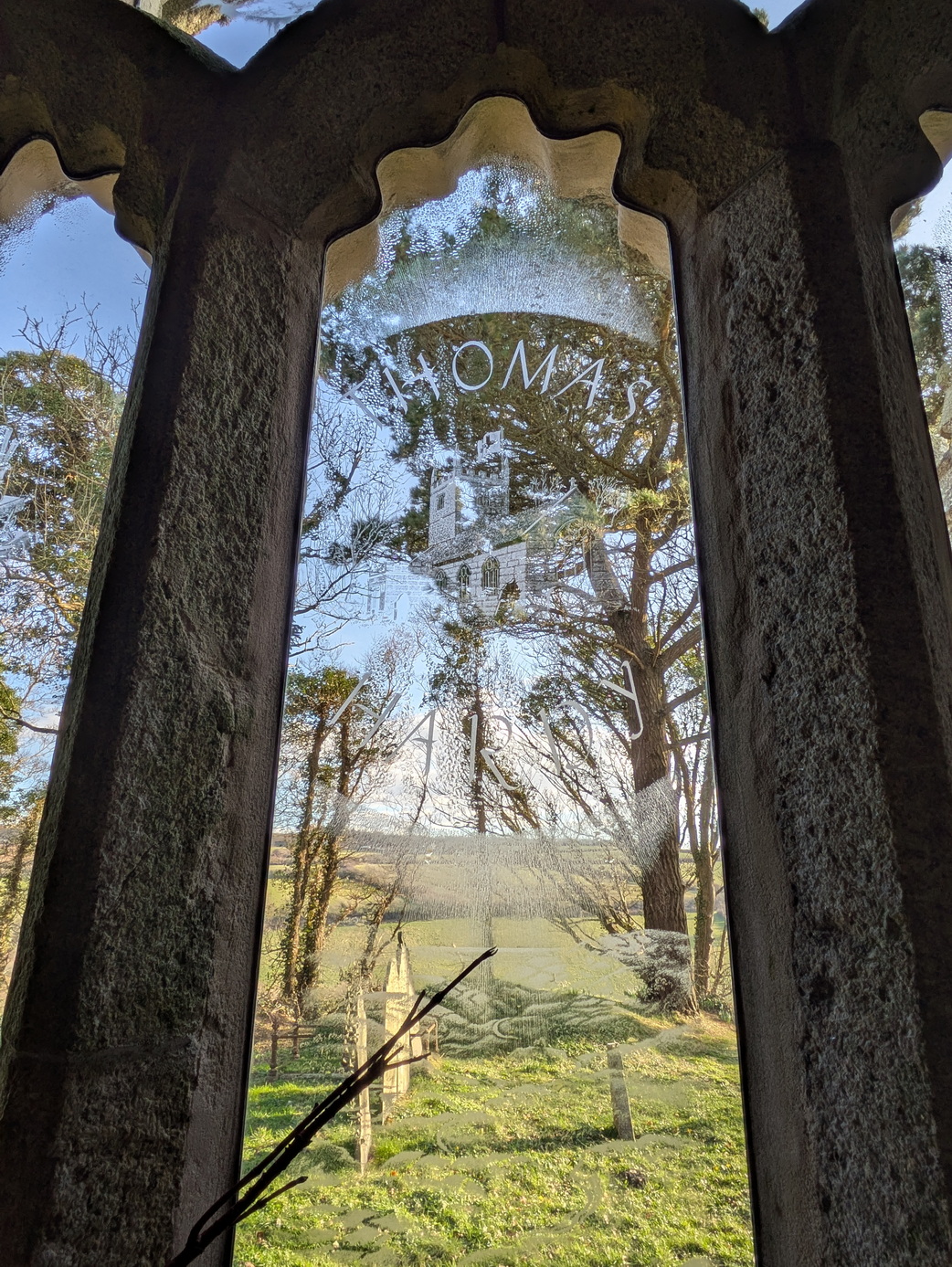
The font is a solid slab of granite – rather green with verdigris which is a hint about the church’s atmosphere – and there are monuments to both Thomas and Emma. A simple glass window, engraved in the style of Whistler, has also been added by the Thomas Hardy Society.
Outside, the churchyard has three notable wheel-headed crosses and a large table tomb dedicated to Joan Hatchcott (?) d1685

Under the circumstances, it seems appropriate to quote the epitaph as young Thomas would have walked past it, and perhaps was inspired to ‘improve’ on its rhyming scheme:
if virtue could have priviledgd from death
the envious fates had never stopt her breath
but as the eagle casting of her bill
[un]nerves her age; soe thou hadst lived still;
o blest change, which hath but remov’d thee
[to] earth below, to the societie
[…]ntes above; where you in consort sing
[…]ise of god: heavens almighty king.
But for the connection to Thomas and Emma, it is hard to see much justification for this church continuing to function. Even after his amendments, its size must dwarf any regular congregation. However, in deference to the author and poet, we leave you with an extract from one of our favourites of his: Beeny Cliff, written after Emma’s death, about her and the neighbouring cliff.
O the opal and the sapphire of that wandering western sea,
And the woman riding high above with bright hair flapping free
The woman whom I loved so, and who loyally loved me.
The full poem is at Beeny cliff.




 A Cornish Journey