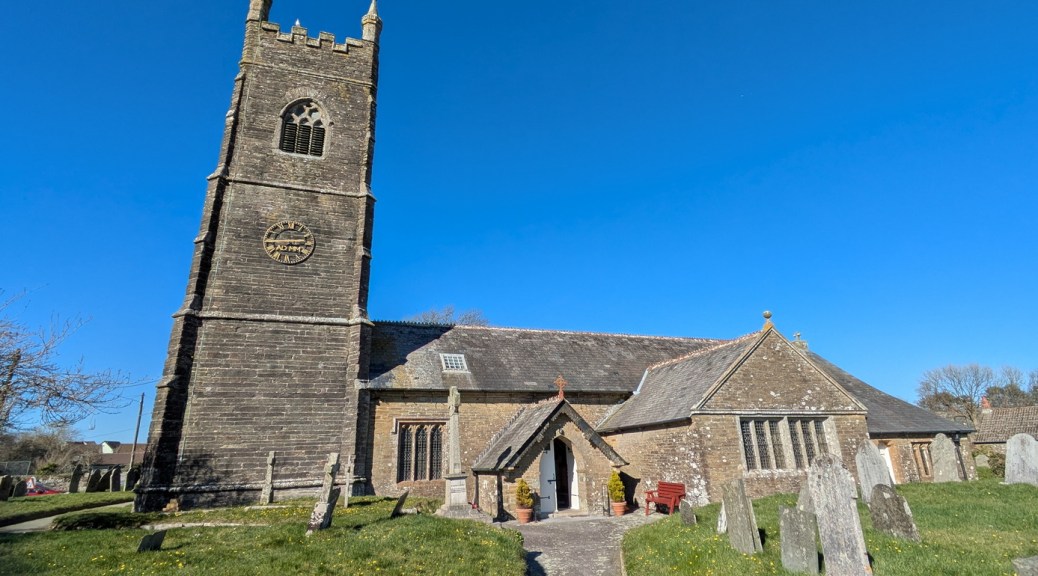
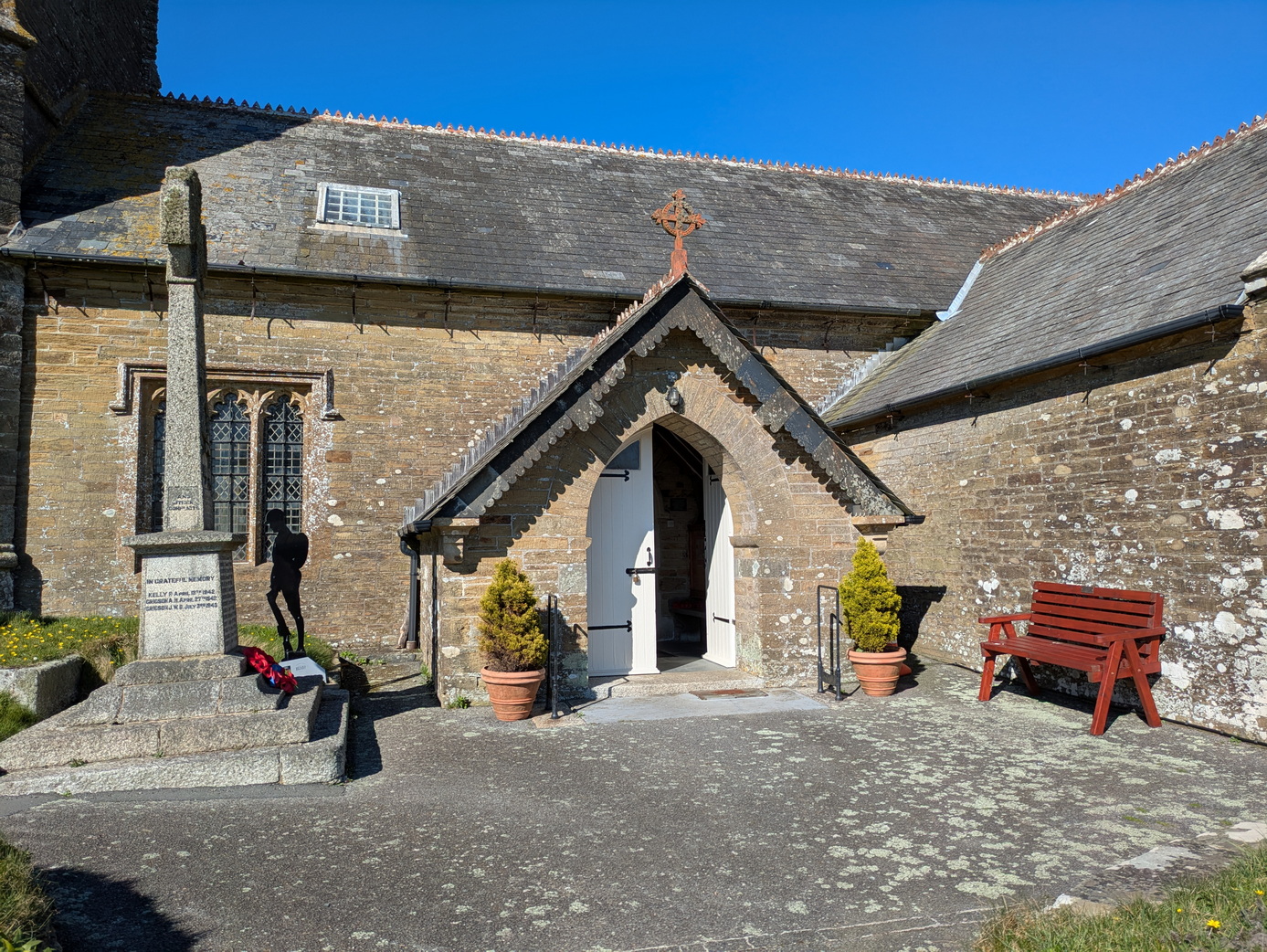
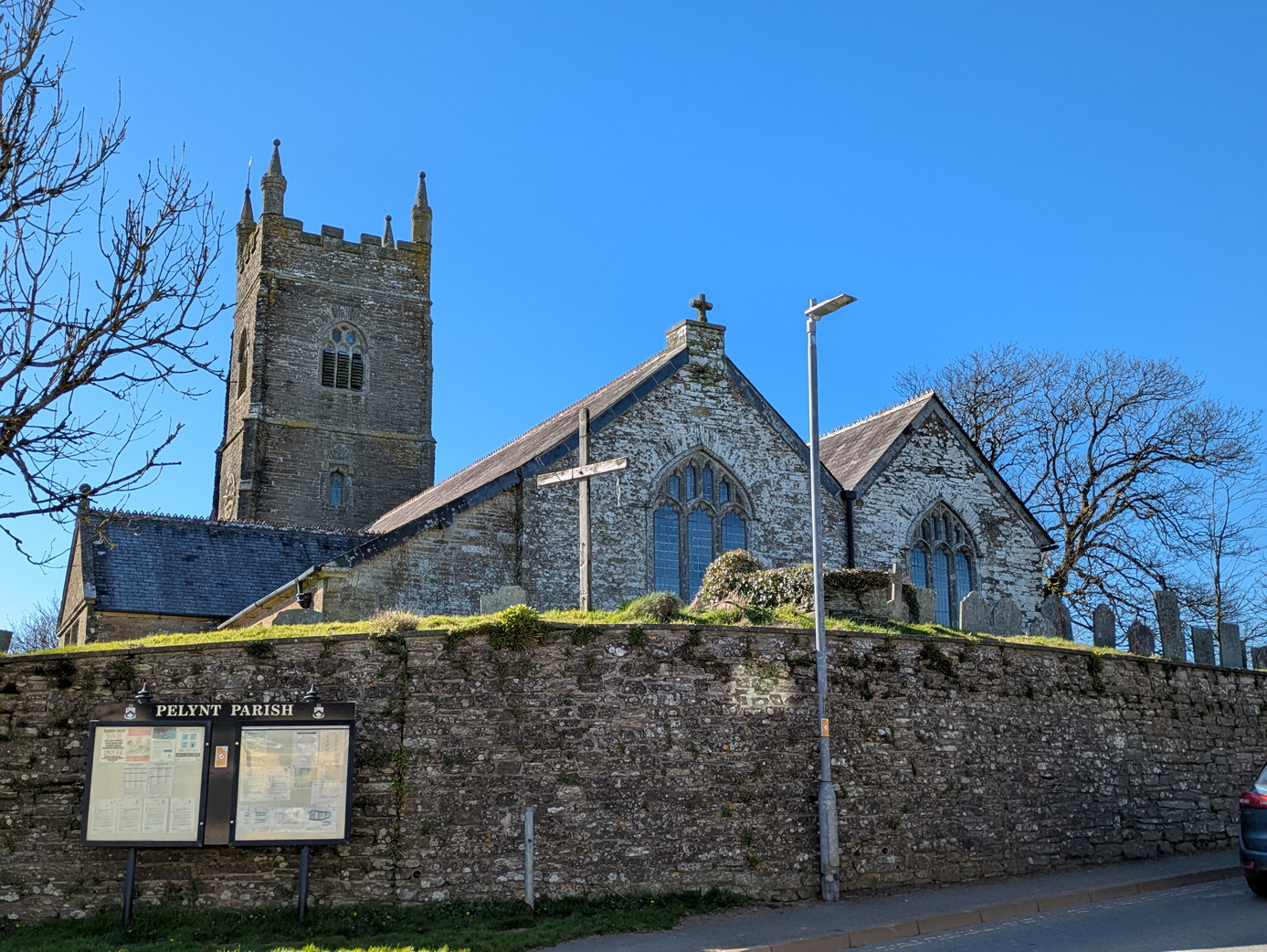
St Nun (Nonna – see Altarnun) stands high on a platform in the middle of the village of Pelynt. We were nervous as Pevsner had warned us that the church had suffered a ‘harsh’ restoration in 1879 under JP St Aubyn, but were pleasantly surprised by the result.
St Aubyn re-built the south transept, leaving us with a slightly lopsided-looking church with a wide nave and north aisle separated by some solid and curiously out-of-place-for-Cornwall doric granite columns. Above, St Aubyn avoided his usual dark wind-braced wooden roof and produced a rounded vault with a series of large wooden bosses. Unlike many churches, it felt dry and almost warm.
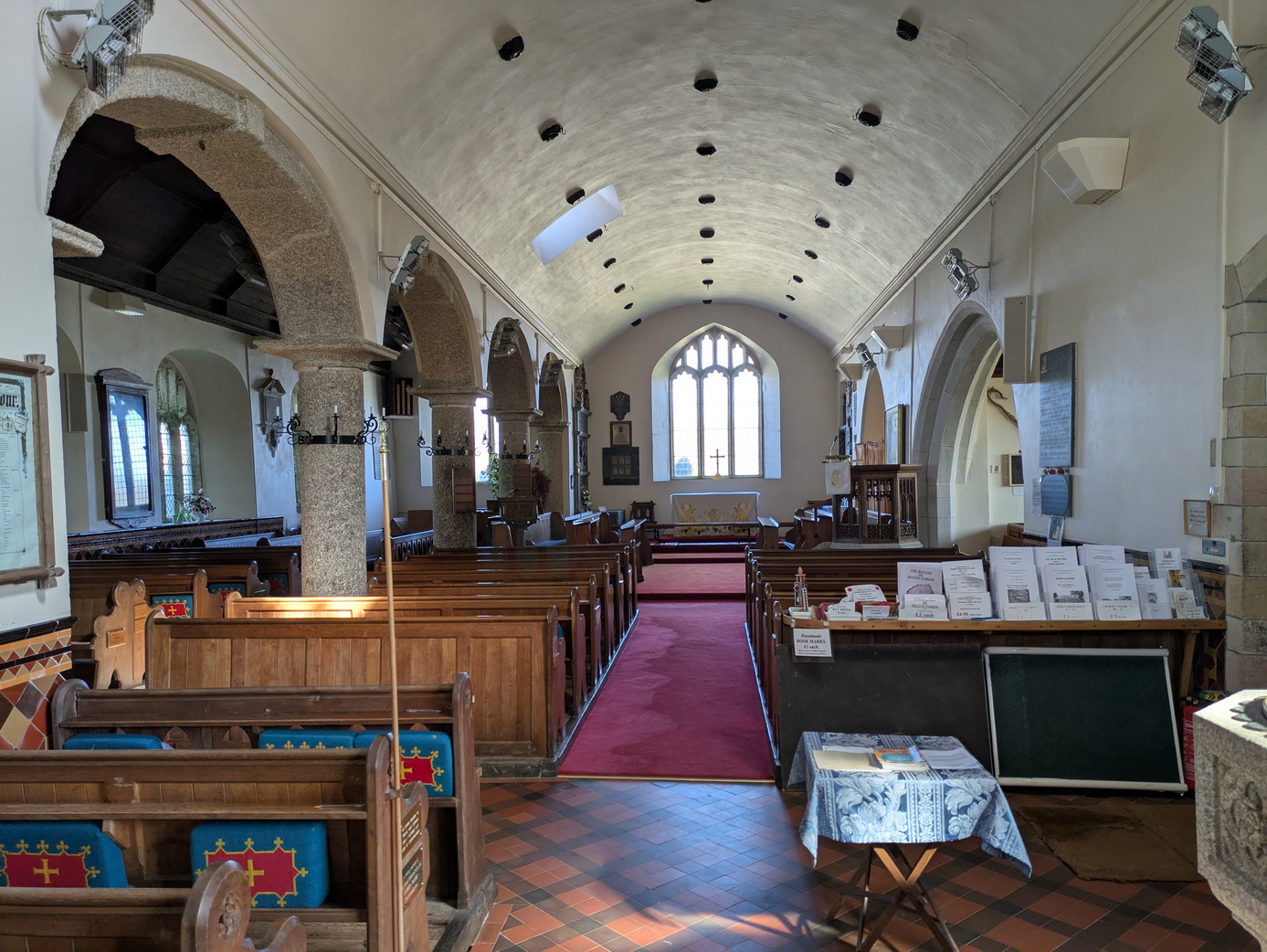
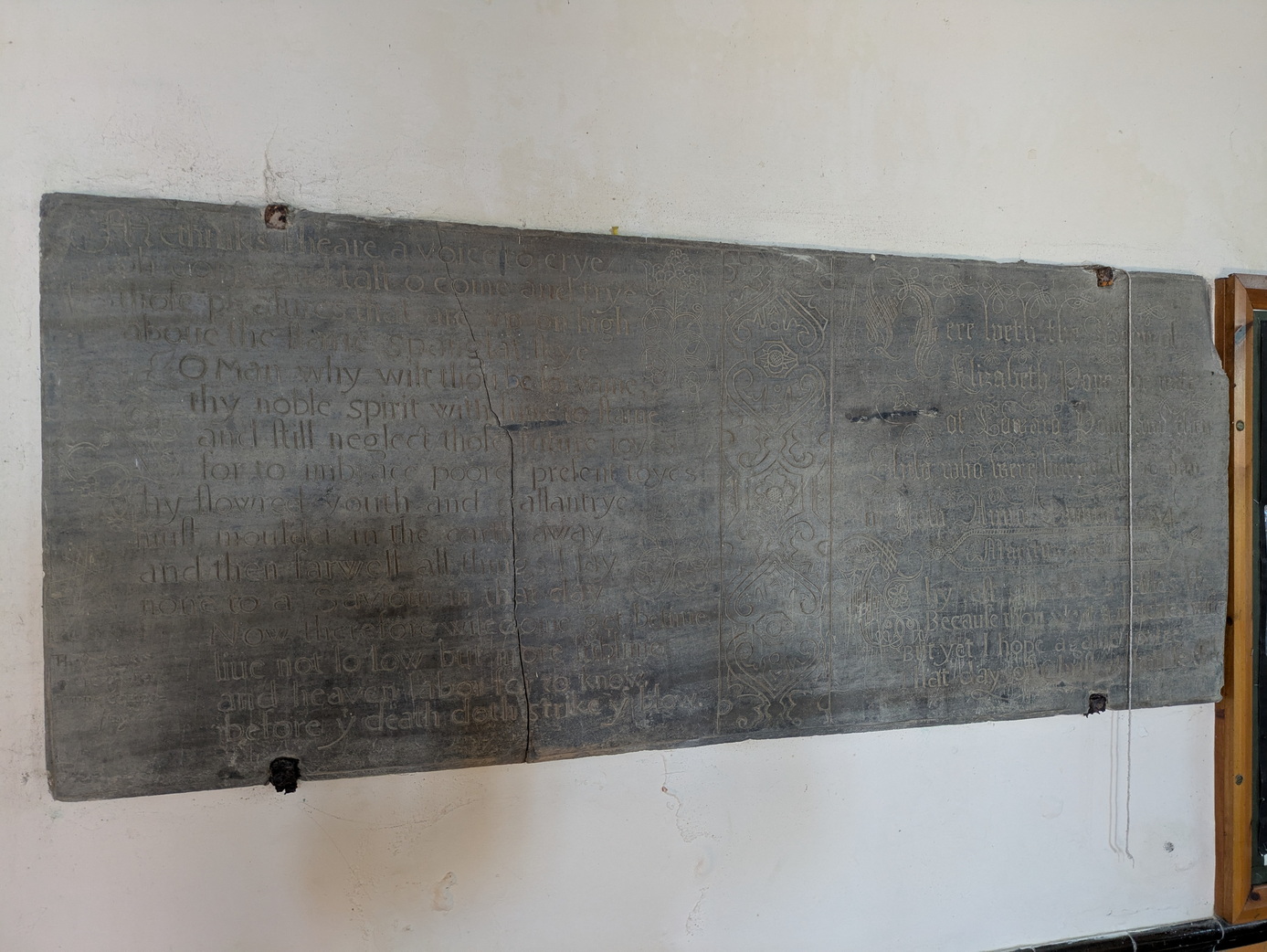
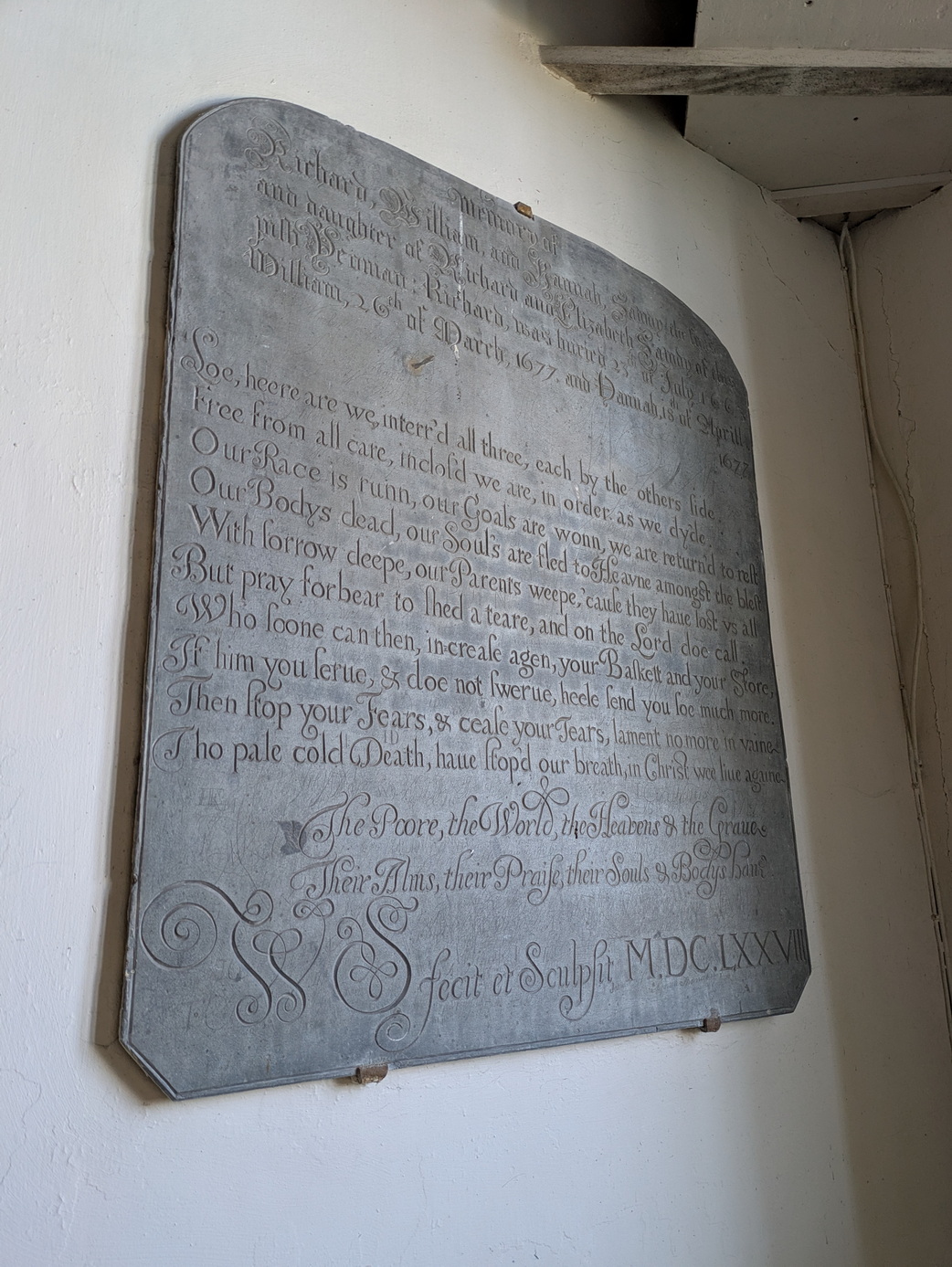
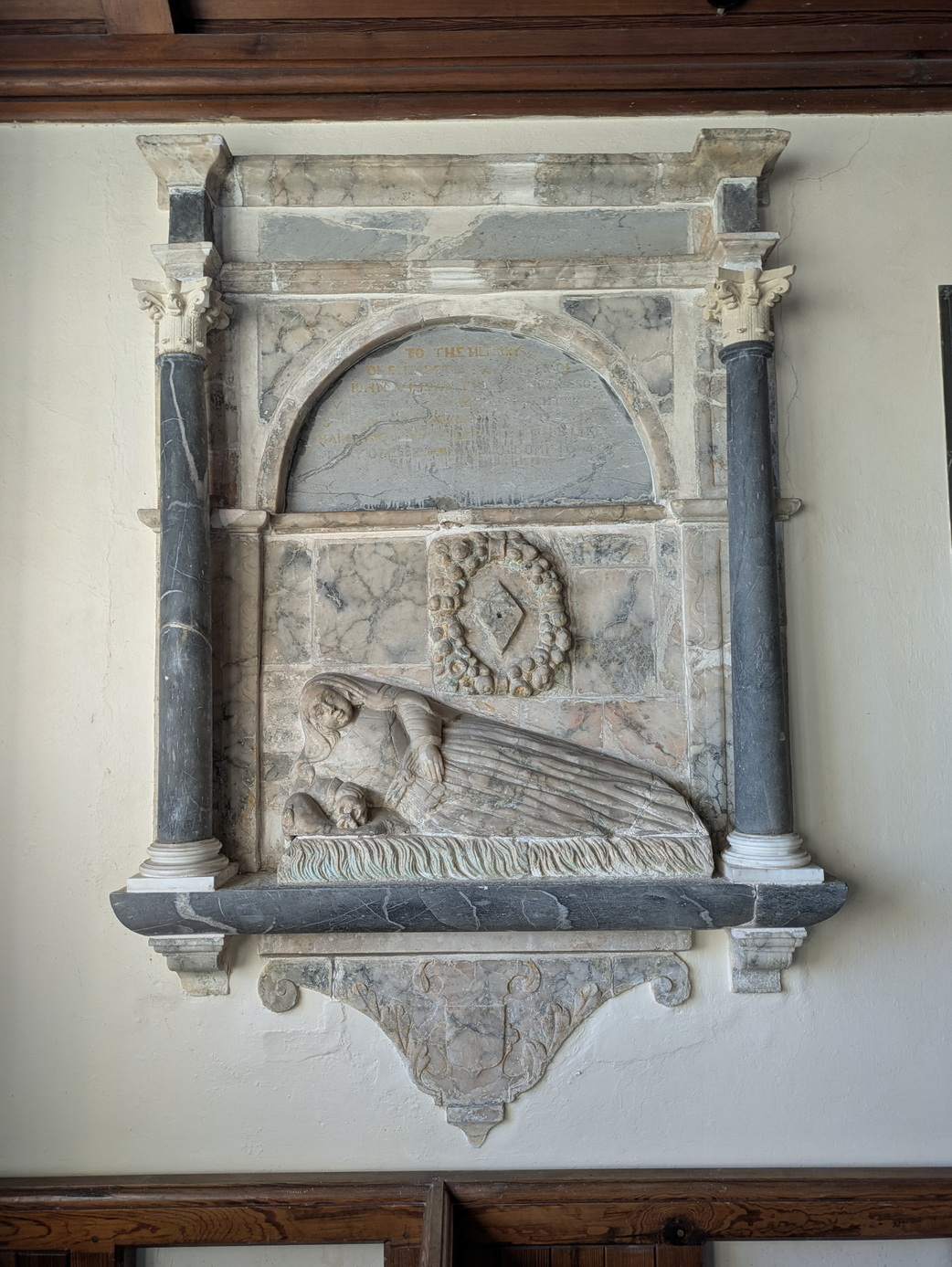
Given that the fittings are largely Victorian – thank goodness no heavy stained glass of the period – the main interest is in the many memorials and monuments which St Aubyn gathered together in clusters. The Bullers, William Achym and Edward Trelawny in the chancel; more Trelawnys and others in the transept, all providing enjoyment disentangling the ancient script and ‘verse’. For once, we began to distrust Pevsner on some of the details.
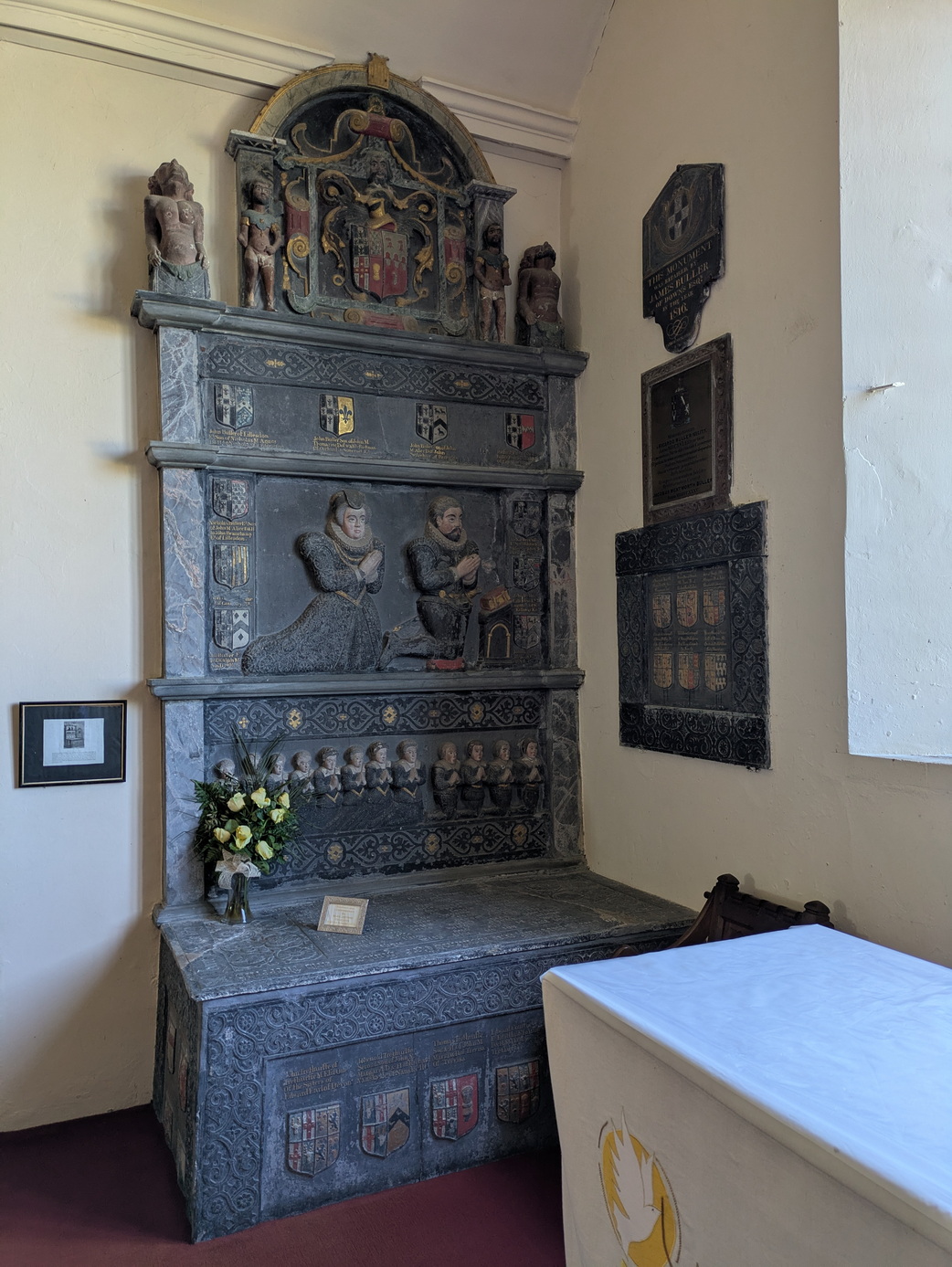
The most elaborate monument is that to John Buller of Regarrick: a large tomb chest and accompanying monument. A panel alongside tells us that the tomb chest is dedicated to Francis Buller (d1615) while Pevsner has it as John Buller (d1615). It may well be one Buller and his grandson, plus a dozen – yes, twelve – kneeling children, all set around with armorial shields demonstrating their lineage.
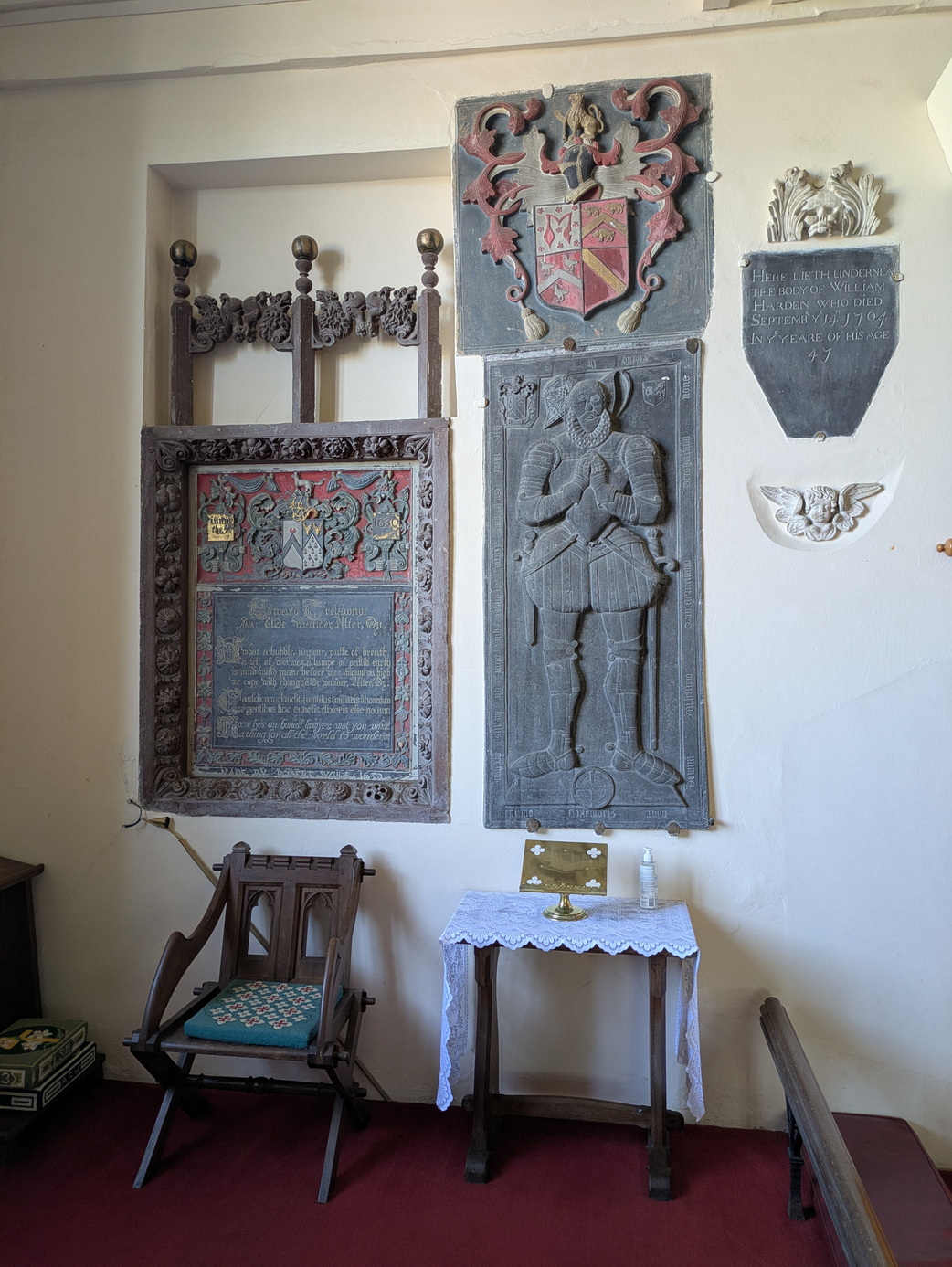
On the south wall of the chancel is another array featuring Edward Trelawny – carved 1632 not 1639 as Pevsner has it – and William Achym. The Trelawny memorial records:
‘What a bubble, vapour, puffe of breath,
a nest of wormes, a lumpe of pallid earth
is mud-wald man before we mount on high
we cope with change, We wander, After Dy.
‘Heere lyes an honest lawyer, wot you what
a thing for all the world to wonder at.’
No doubt at the time, an honest lawyer would indeed be wondered at. History does not record whether everyone agreed about Edward.

The big name in the church is Bishop Trelawny, the subject of the ‘Song of the Western Men’ in the Cornish national anthem. His chair and bishop’s crook are on display in the South transept, and the words of Hawker’s song are displayed in a tapestry alongside members of the family and others.
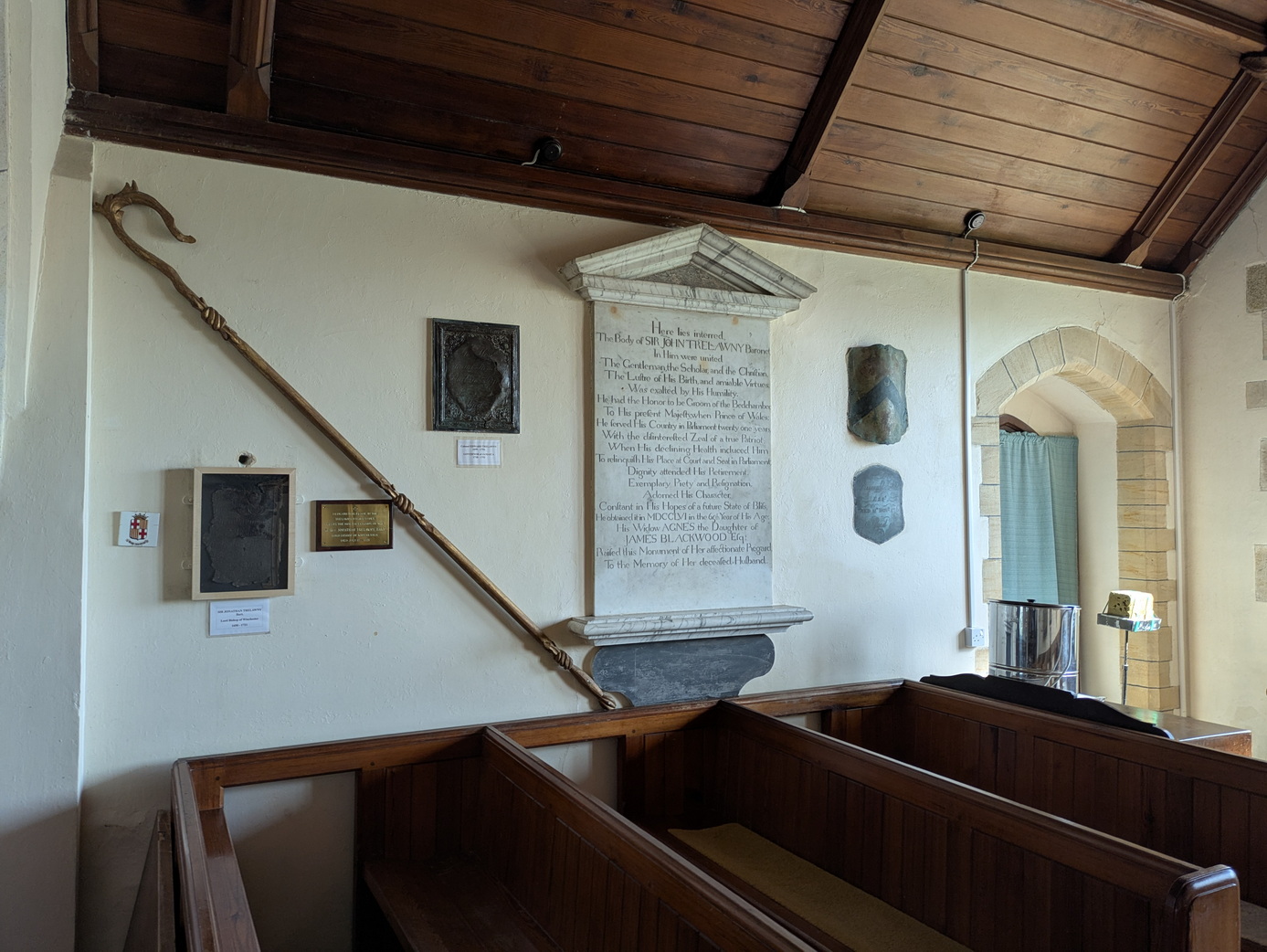
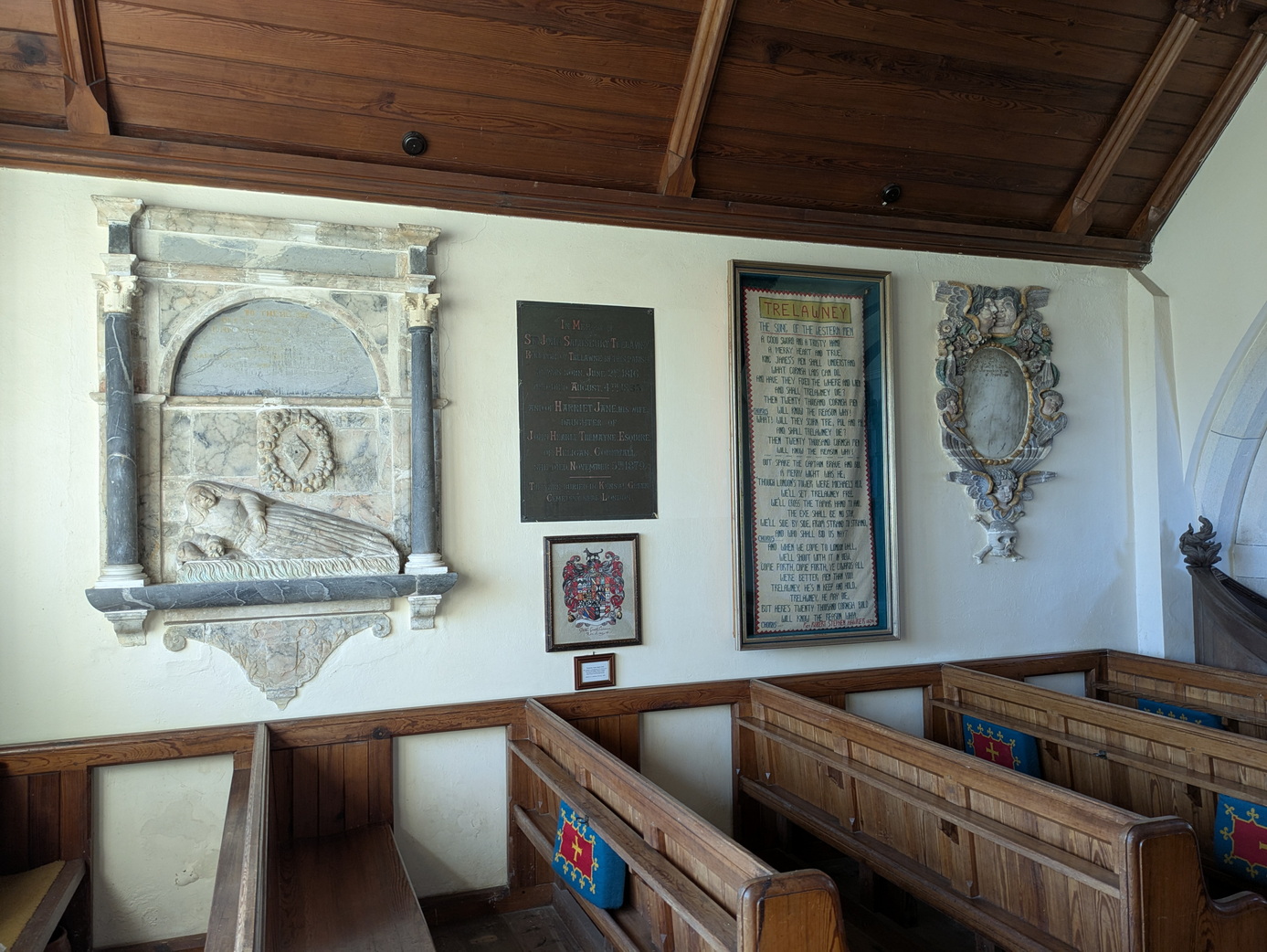
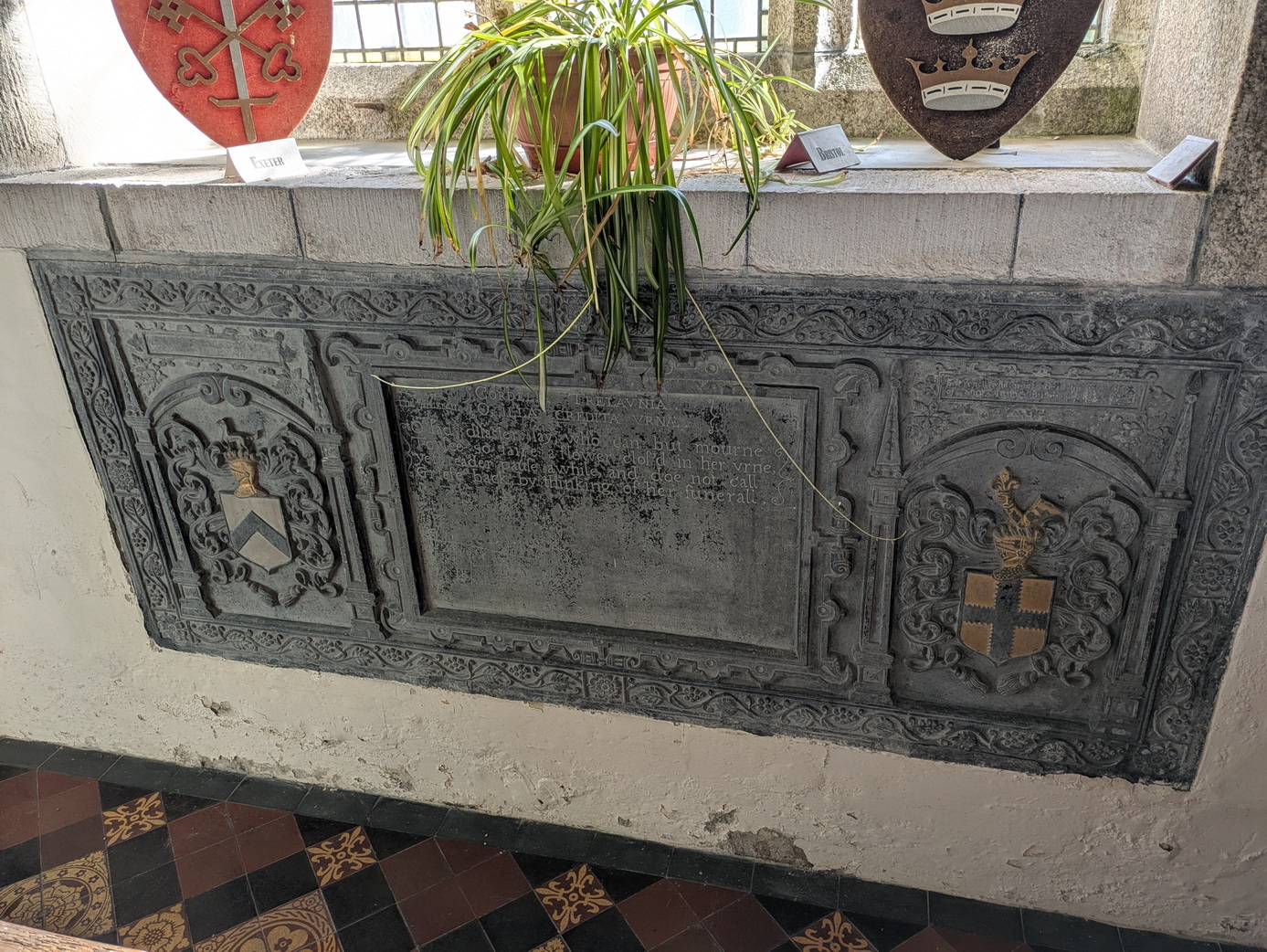
Two other memorials caught the eye – even if one of them was hidden away behind a plant display. The first is to Cordelia Trelavnia whose name is used as an anagram to produce ‘O illa credita Vrnae’ – ‘Oh she believes’. How many hours did someone work away to arrive at that.
The other is to the unfortunate Grigson family, possibly carved by Eric Gill. The poor vicar and his wife lost six sons, leaving only one surviving.
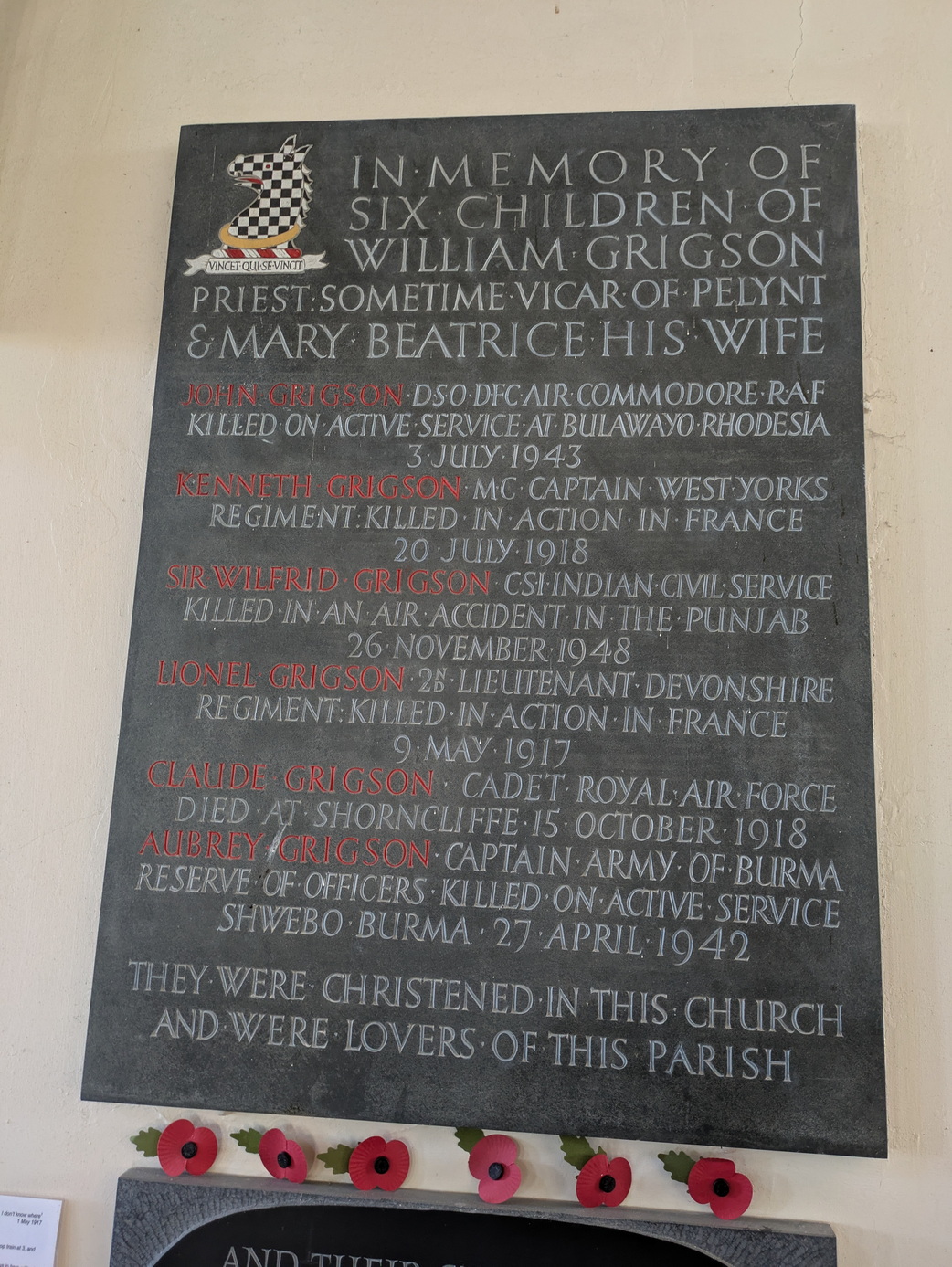
We did not find the headstone to the vicar which is said to lie NW of the church.
One final feature, which we noted had been replicated at neighbouring Lanreath, was a plethora of information about the local area and the community, most of it the work of one Carole Vivian. A series of booklets about other local churches, a guide to the town of St Austell, a perambulation of the parish, names of former residents taken form censuses … all gave a sense that the church really was at the heart of the community. In other places, such records might be stored away by a local history group. Here they were very readily available to all.


 A Cornish Journey