
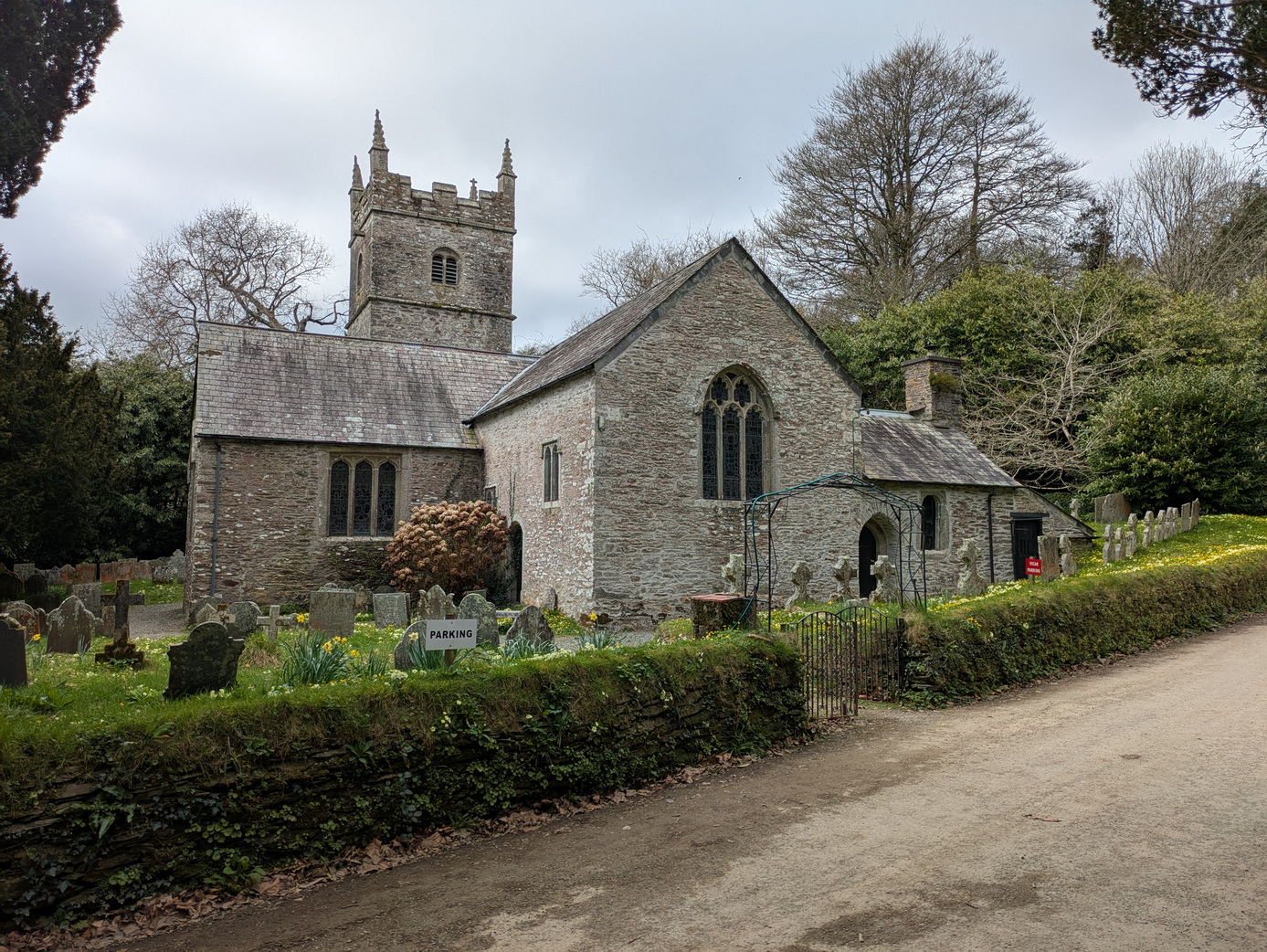
St Wenna stands in a tiny churchtown on the edge of the Morval estate. Most of the houses nearby display a distinct architectural style, typical of estate cottages. We saw it on a bright spring day when the lesser celandine and primroses were competing to paint the grass yellow.
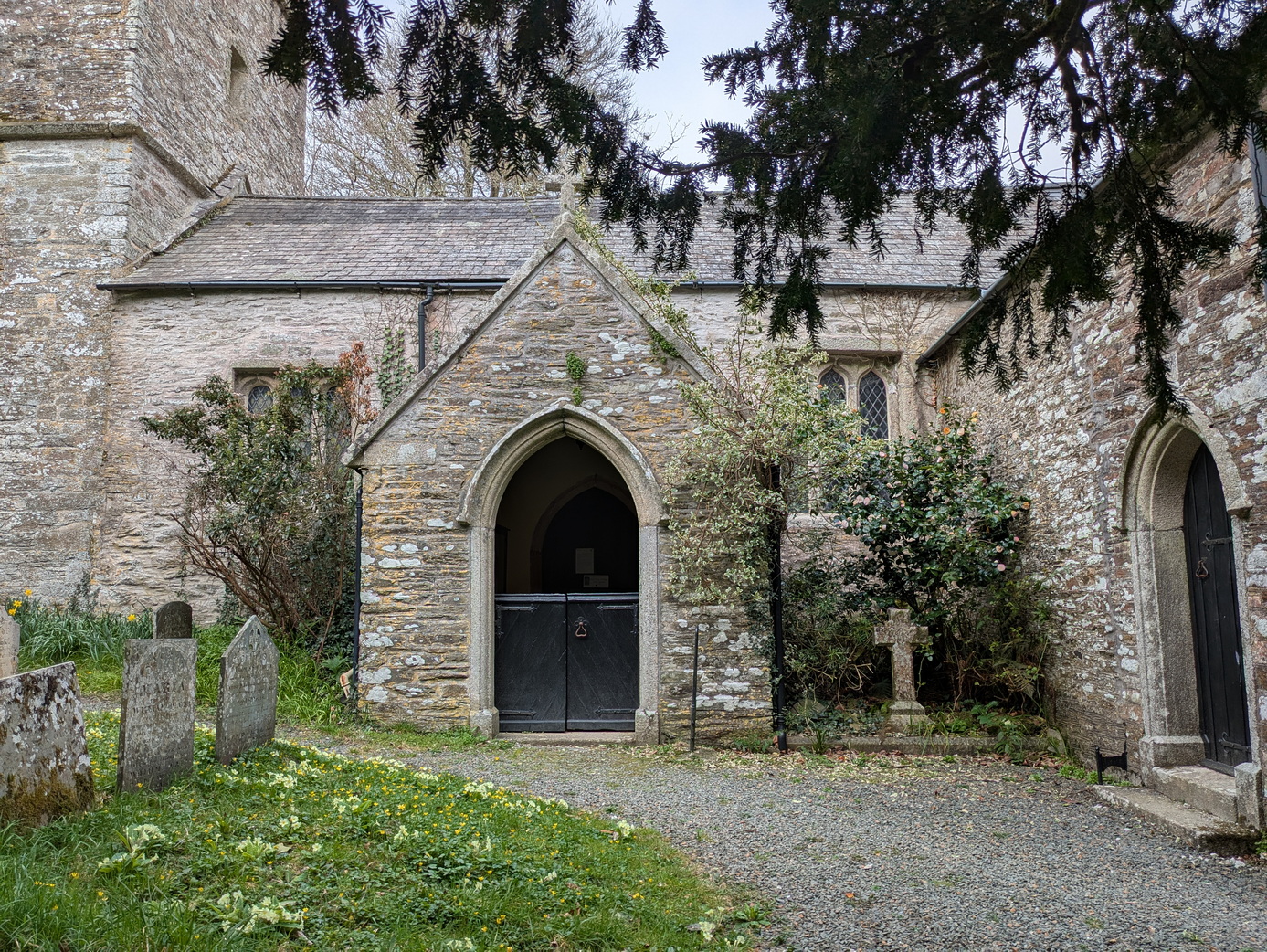
The church dates back to a dedication of 1318 but bears the unmistakable signs of JP St Aubyn’s C19 handiwork, starting with his usual foot-scraper at the porch door. Inside, the church has a north aisle, nave and large south transept which was taken over by the Buller family (see Lanreath and Pelynt).

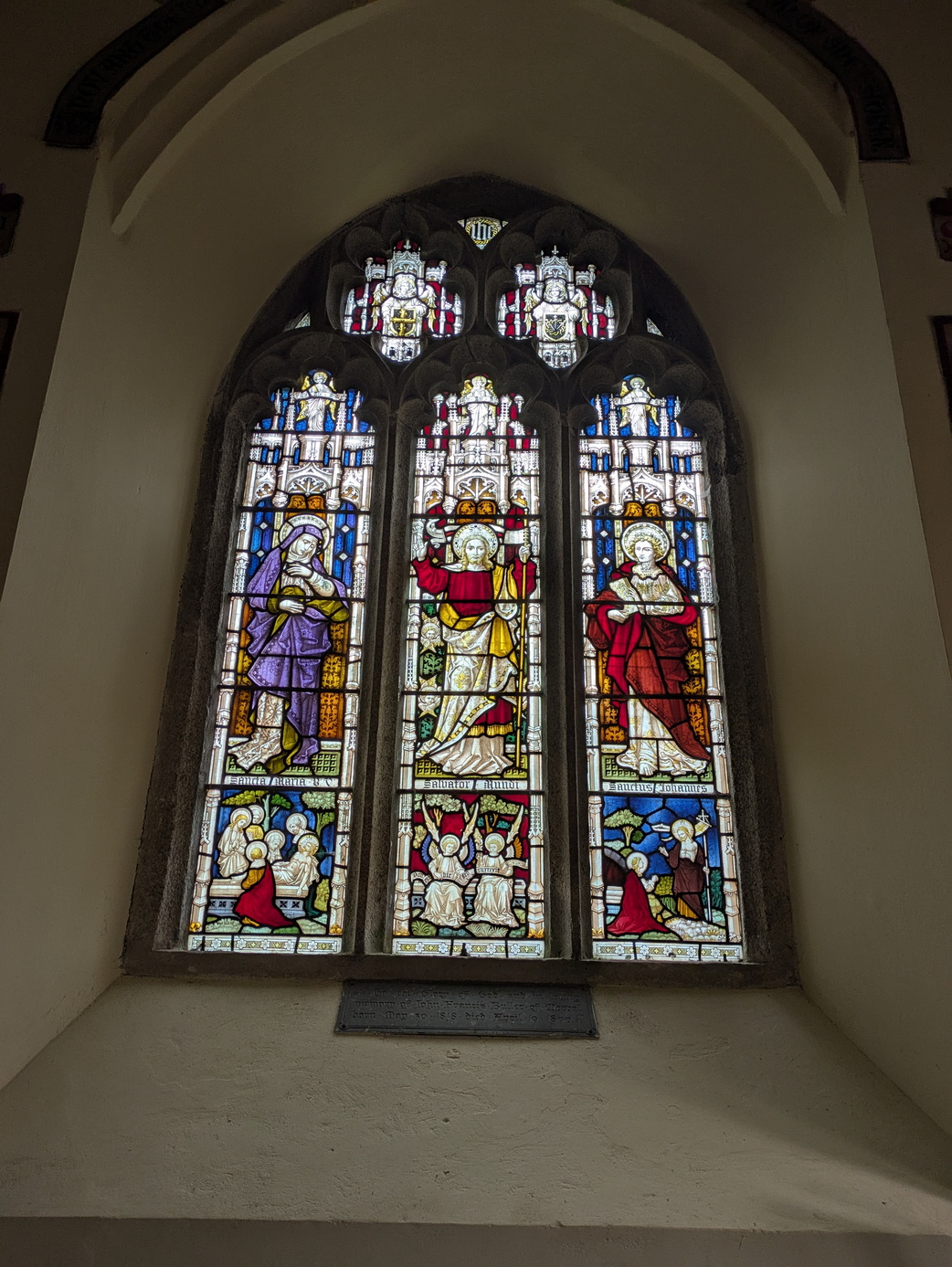
The interior is tidy and Victorian – pews, pulpit, choir stalls – but retains a fine original wagon roof. The main windows are filled with Victorian glass (Clayton & Bell) contemporary with the work in Truro cathedral while the floor has the usual C19 tiles.

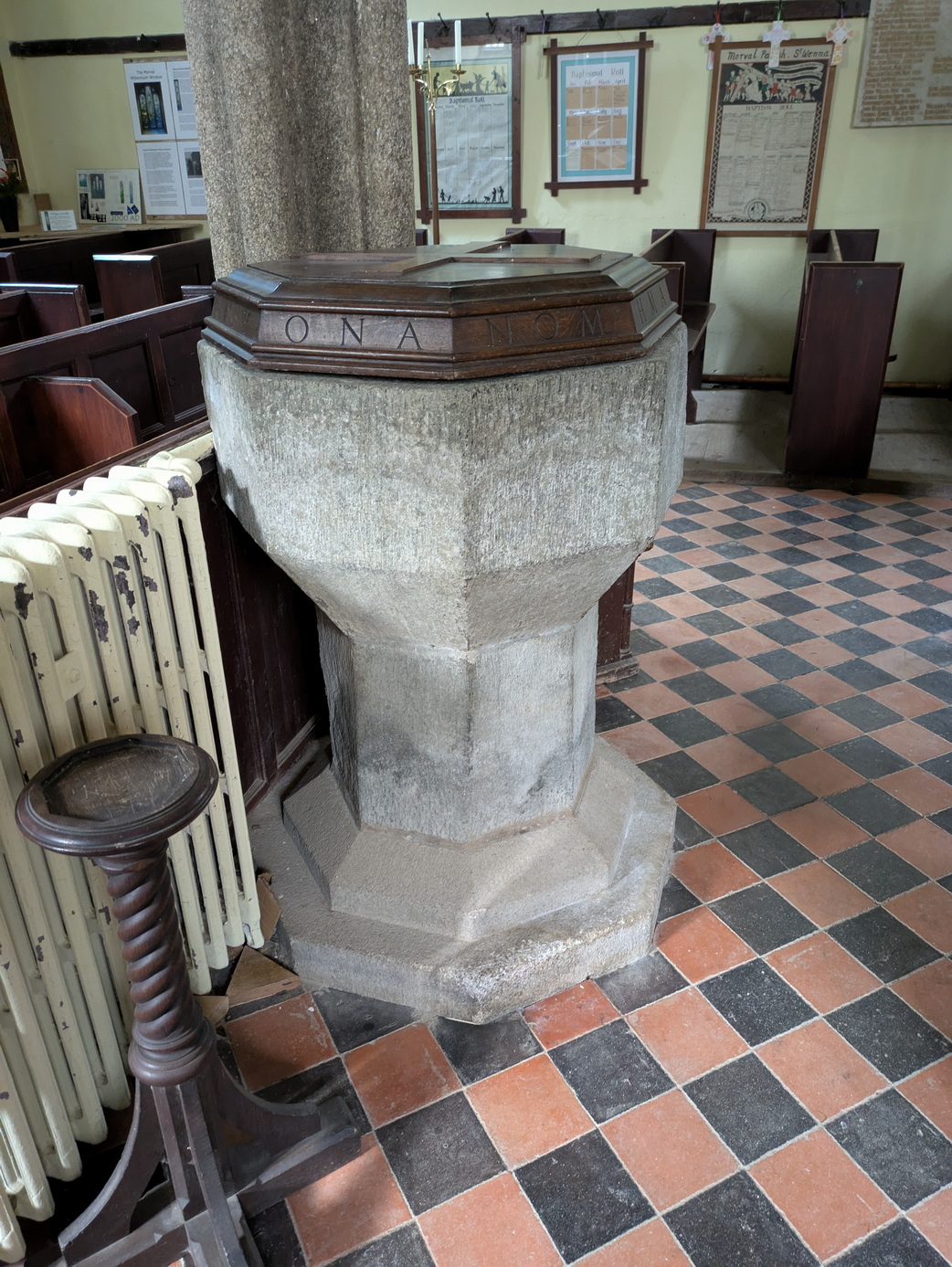
The font is a simple, C13 octagonal lump of granite. One unusual survivor is a C17 alms box on a pedestal with plenty of ironwork to keep out the inquisitive.

Tucked away in the south transept – where building works were taking place, was an interesting slate plaque to Walter Coode d1637. It looks as though he had four sons and four daughters who all died before he did. A Coode lived in the big house and married a Buller. This family established the transept as their private chapel with a separate entrance. In a later generation a Buller married a Tremayne of Heligan fame and Tremaynes also feature on some memorials.
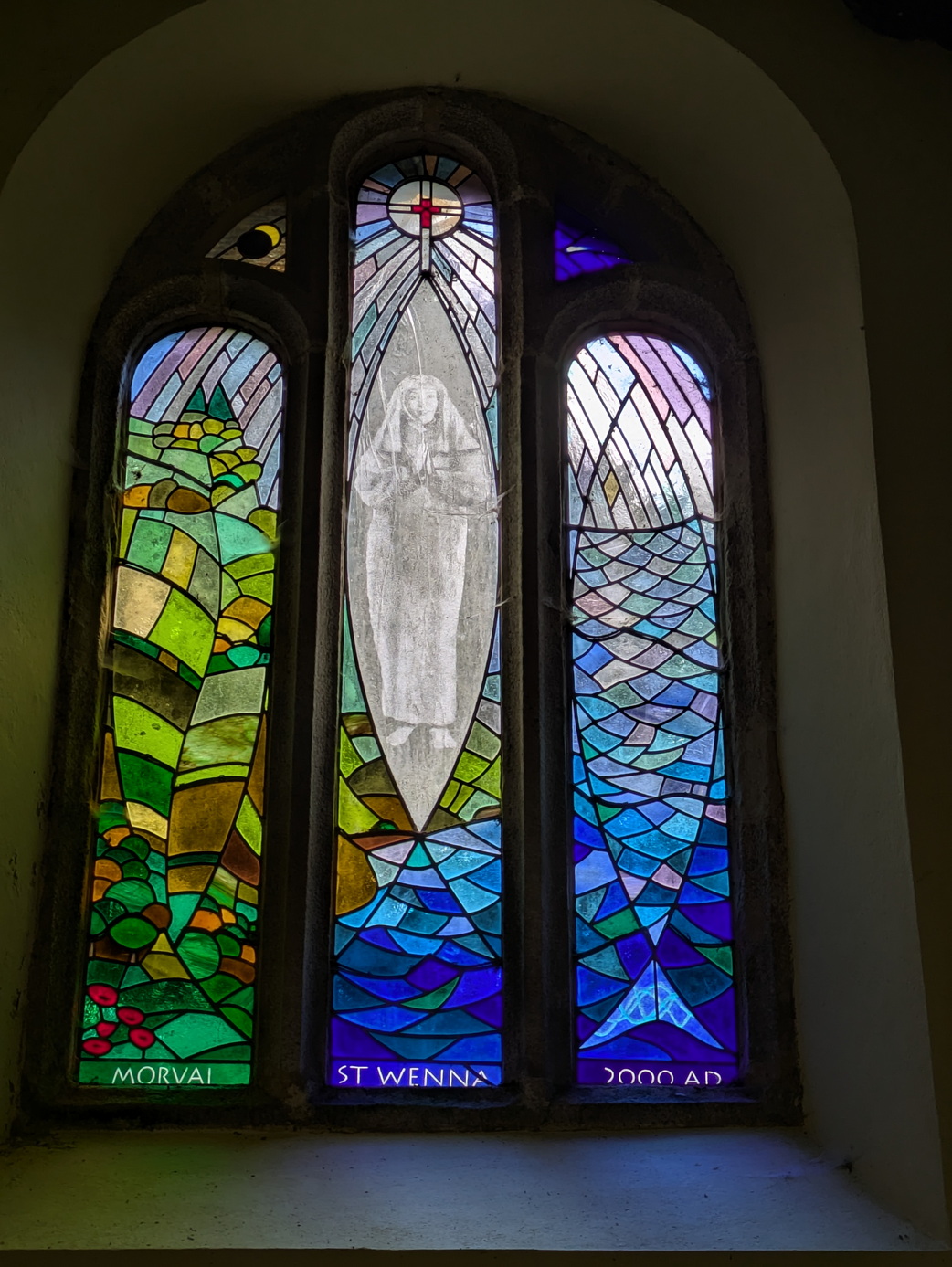
The main glory is actually a 2001 window in the west wall of the north aisle, by Julian George. This features a stylised Morval , St Wenna and a fish (whether mackerel or sardine). In the top two lights are memories of the eclipse and the Hale-Bopp comet.
Notices told us all about the dedication event including the news that there was a ‘superb spread of food, provided as usual by the ladies of the parish (past and present)’. Were there some ghostly caterers, we wondered.
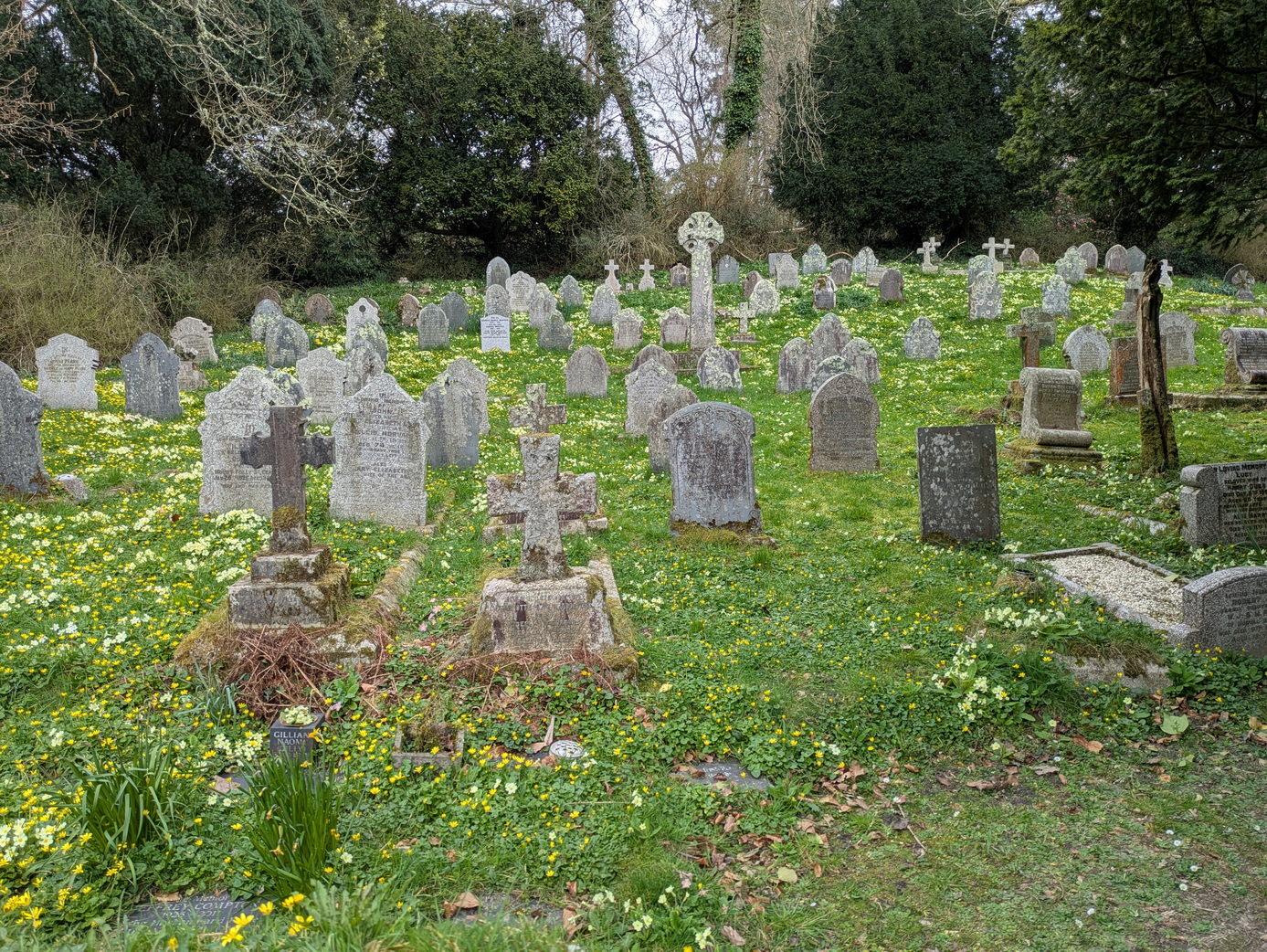
The churchyard was a delight and we sat and ate a picnic with a Collings family. Beside us, a run of gravestones stood in a row like so many mini-moai. Poor Richard and Harriot lost two children in their thirties. Roda’s stone assures us that:
Mourn not for me my parents dear
To grieve it is in vain
God is our hope we need not fear
We all shall meet again.
Morval is probably so far out of the way that it should be declared redundant and the congregation moved to a neighbouring church such as Duloe, but seeing it on a spring day … Close by is the lovely-looking Morval House, its south facade visible from a distance.




 A Cornish Journey