
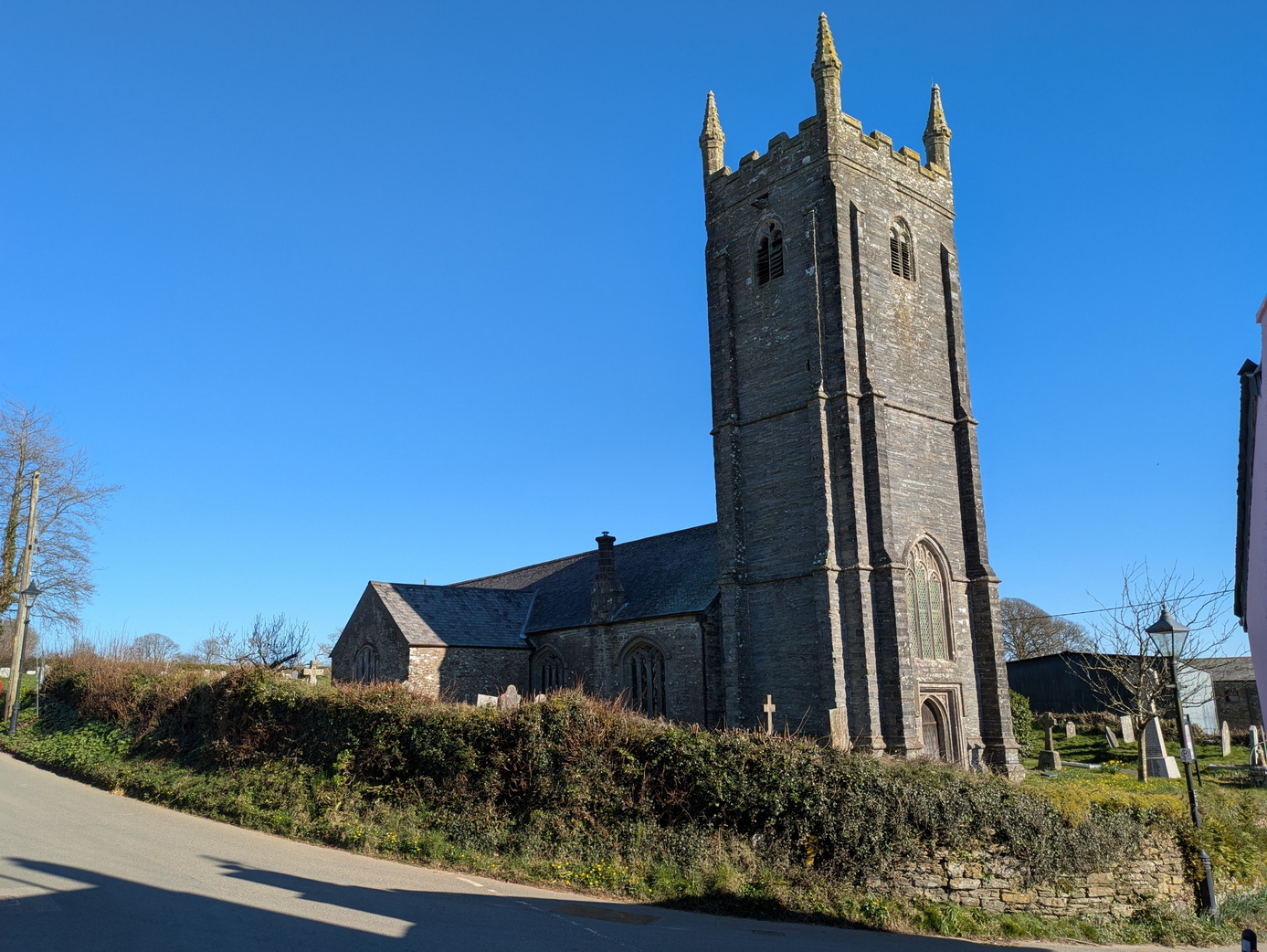
St Marnarch (Manarck/Marnacle/Mankeu) and St Dunstan’s stands in the remains of a lan on the edge of the village, close to some farm sheds associated with Court House. Its tall three stage tower is very similar to that of neighbouring Pelynt church and some of the names involved – the Bullers, Grylls and Bere families, some of whom lived in Court House – overlap with those of its neighbour.
We had been warned in advance that the restoration of the church by GF Bodley in 1887 had been ‘sensitive’ and we were inclined to agree.

Consisting of a nave with a fine exposed wagon roof, a north transept converted into a vestry, and a south aisle, the church has a slightly lopsided feel but the whole is unified by the fine rood screen which stretches across both aisles.

The first delight is the fine Norman font with its Jacobean wooden cover. Little faces grin out at the top of the cover. Close by, the tower lobby is given over to a celebration of the art of bell-ringing with a charming historical piece on the Articles for Ringing: ‘Aloud let silence first Proclaimed/And by Content Let’s make it our decree/And fix such Laws in our Society/Which being observ’d will keep Sobriety …’ A wealth of certificates recall past changes.

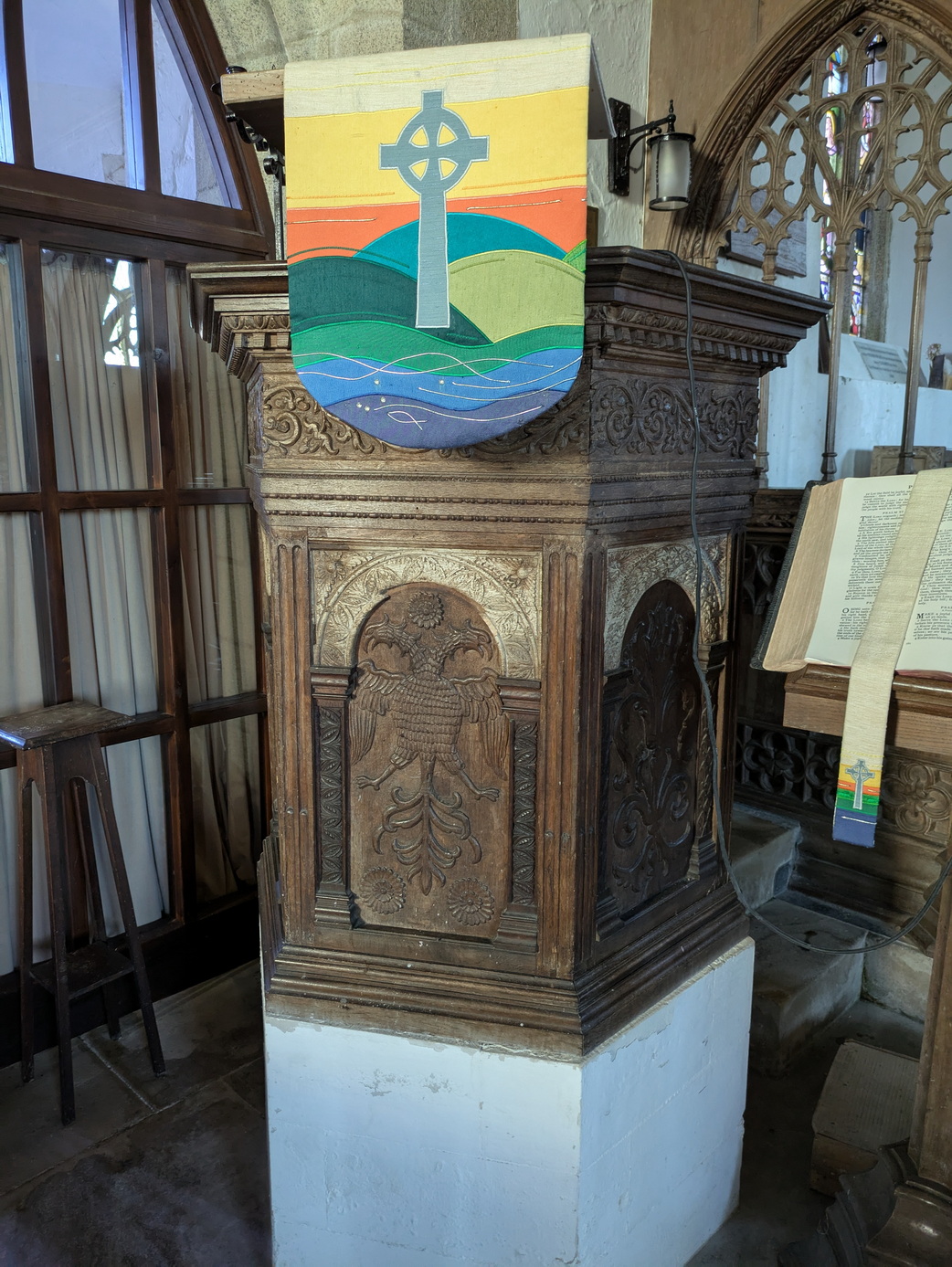
An Elizabethan pulpit stands on the north side of the nave, while on the south side, by the rood screen, stand two large clergy stalls which have obviously been moved from their original locations. Bearing the Grylls and Bere arms, these may have been donated by Sir John Grylls and his wife, Grace in the early C17.

The chancel contains the most striking monument, to the Charles Grylls (d1611), his wife Agnes (d1607) and their eight children. Two charming figures kneel in the centre with the children in relief below.
Of the children, the inscription tells us that:
‘The last died first, the first and all the rest
With children store, the living God hath blest,
Who praise his name, that blessed hath their store,
And hope in bliss, to bless him evermore.
‘One died a child, the rest all childless died
And yet with child in childbirth, heaven denied
Base earth their souls or issue should detain,
Rare things are show’n, but straight shut up again.’
(We would not wish to be tested on the precise chronology)
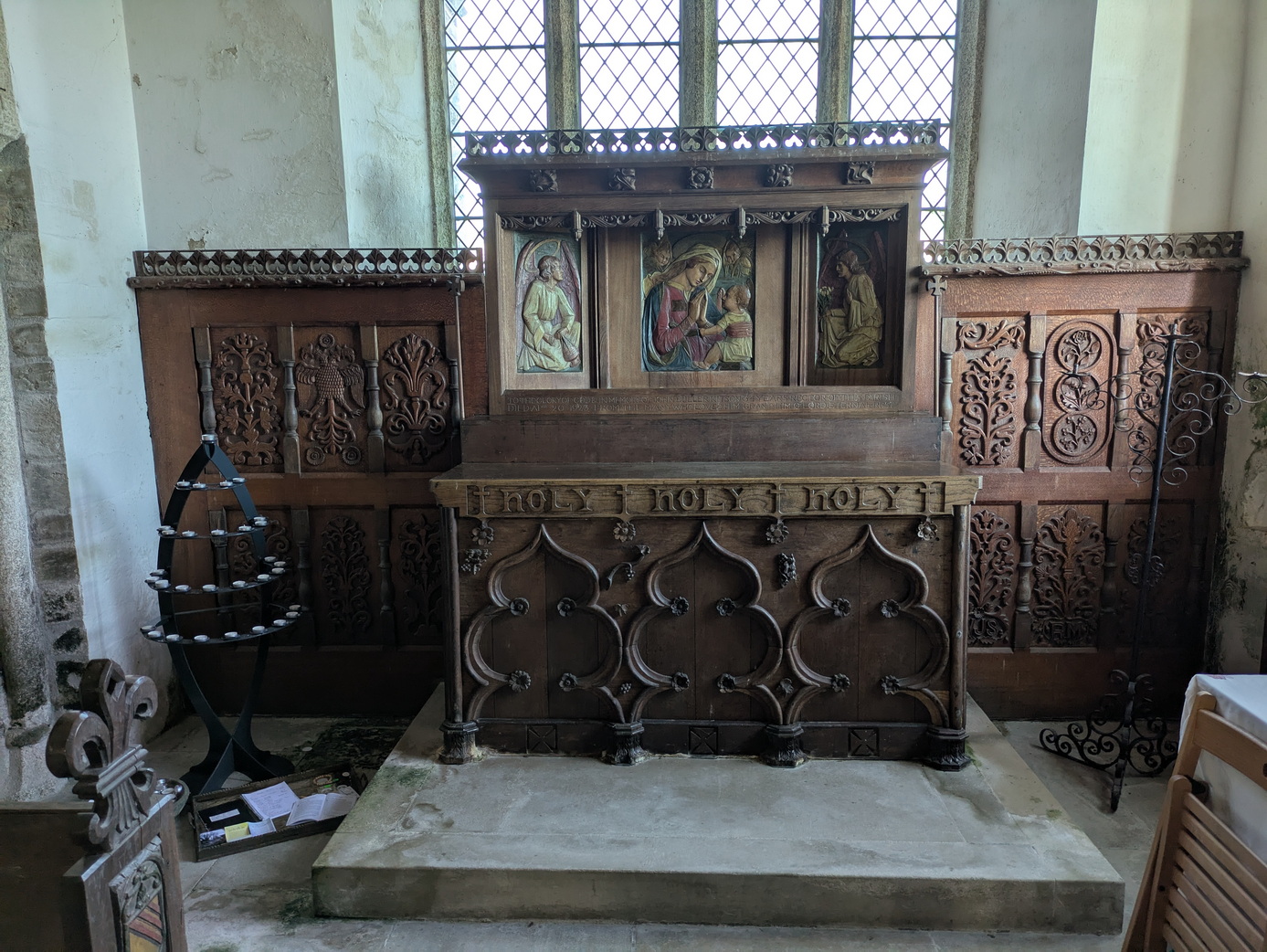
In the Lady chapel in the south aisle there is a large slate ledger stone to William (d1648) and Margaret (d1650) Dandy and, close by on a window ledge stands half of a former stone altar complete with its incised crosses.
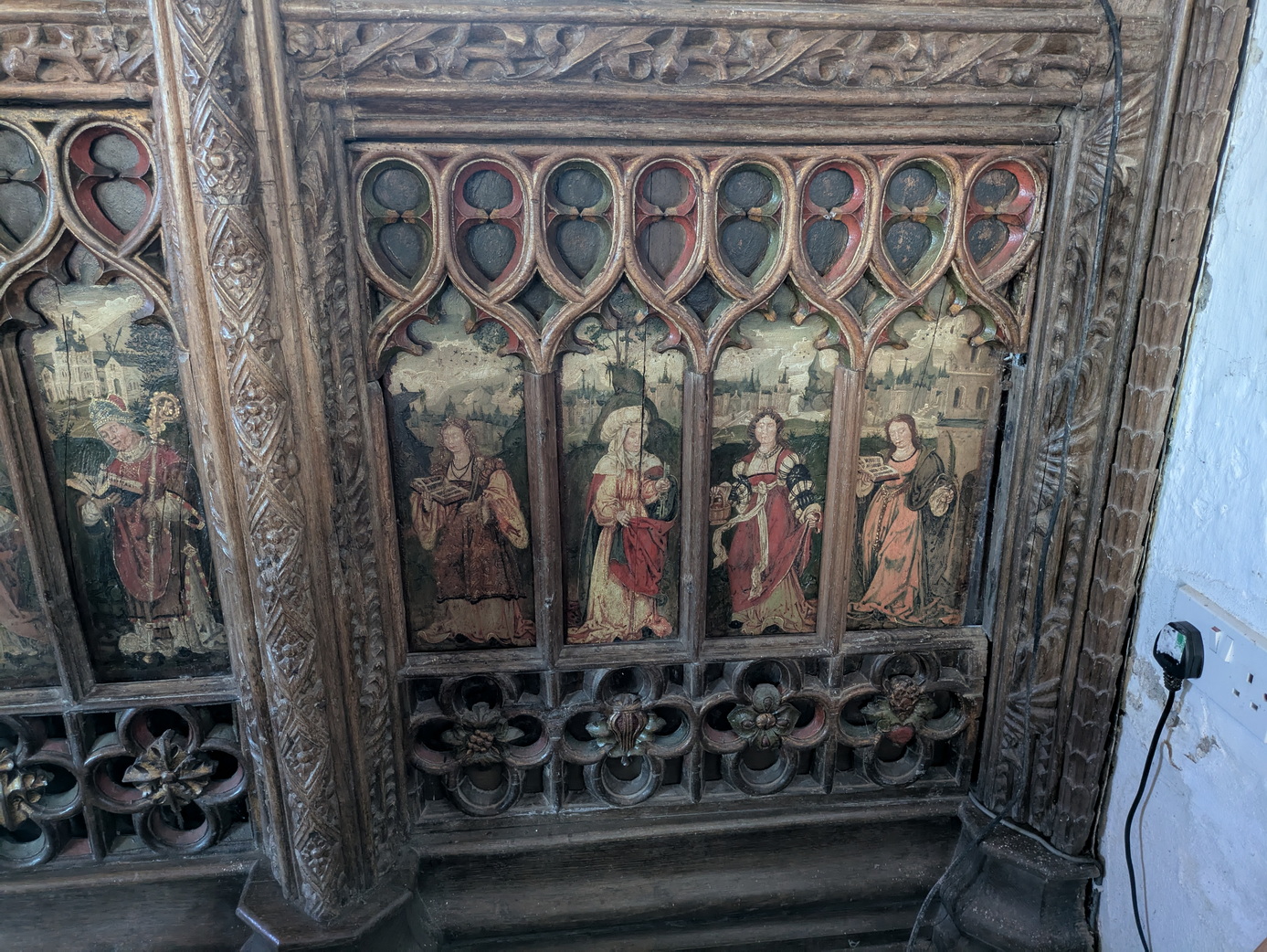
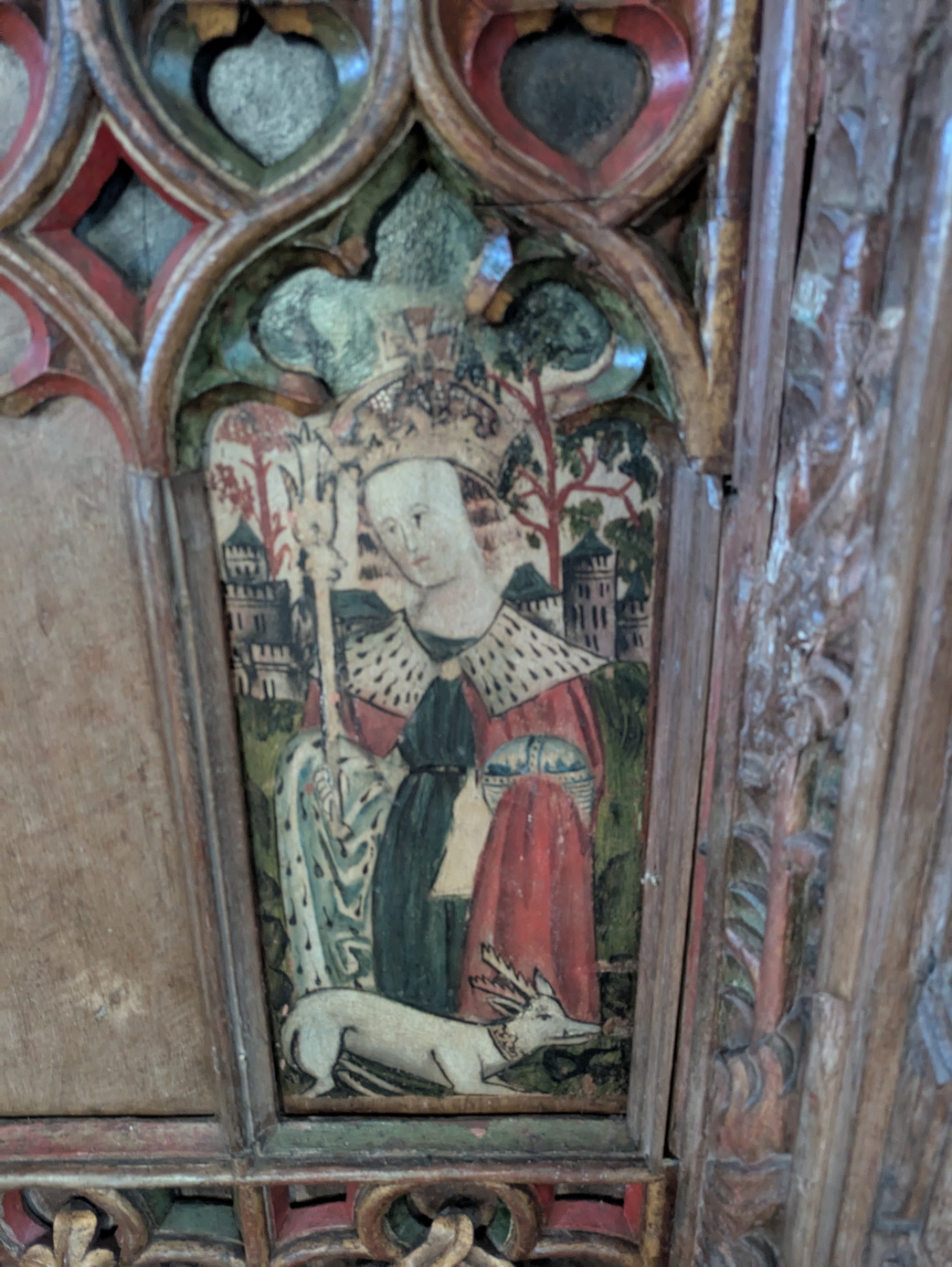
The wide rood screen has somehow retained some of its original richly-painted images, which survived the iconoclasts’ axes after the Reformation. The details are lovely and give a good insight into the imagined costume of the time.
As at Pelynt, we were pleased to see copies of the censuses for the parish on open display, helping to emphasise the role of the church within the community. There was also an excellent (and readable) guide book.







 A Cornish Journey