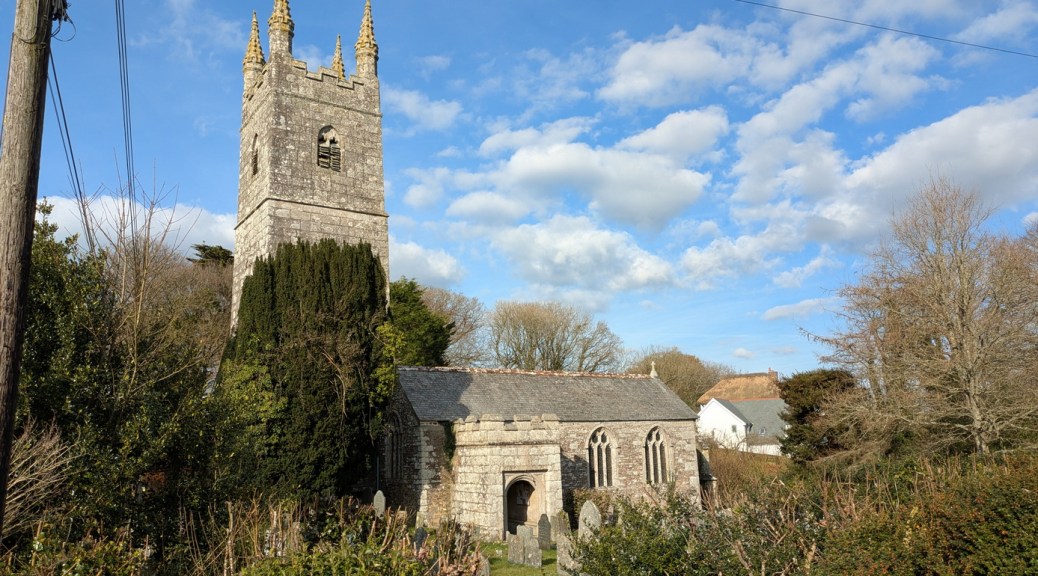
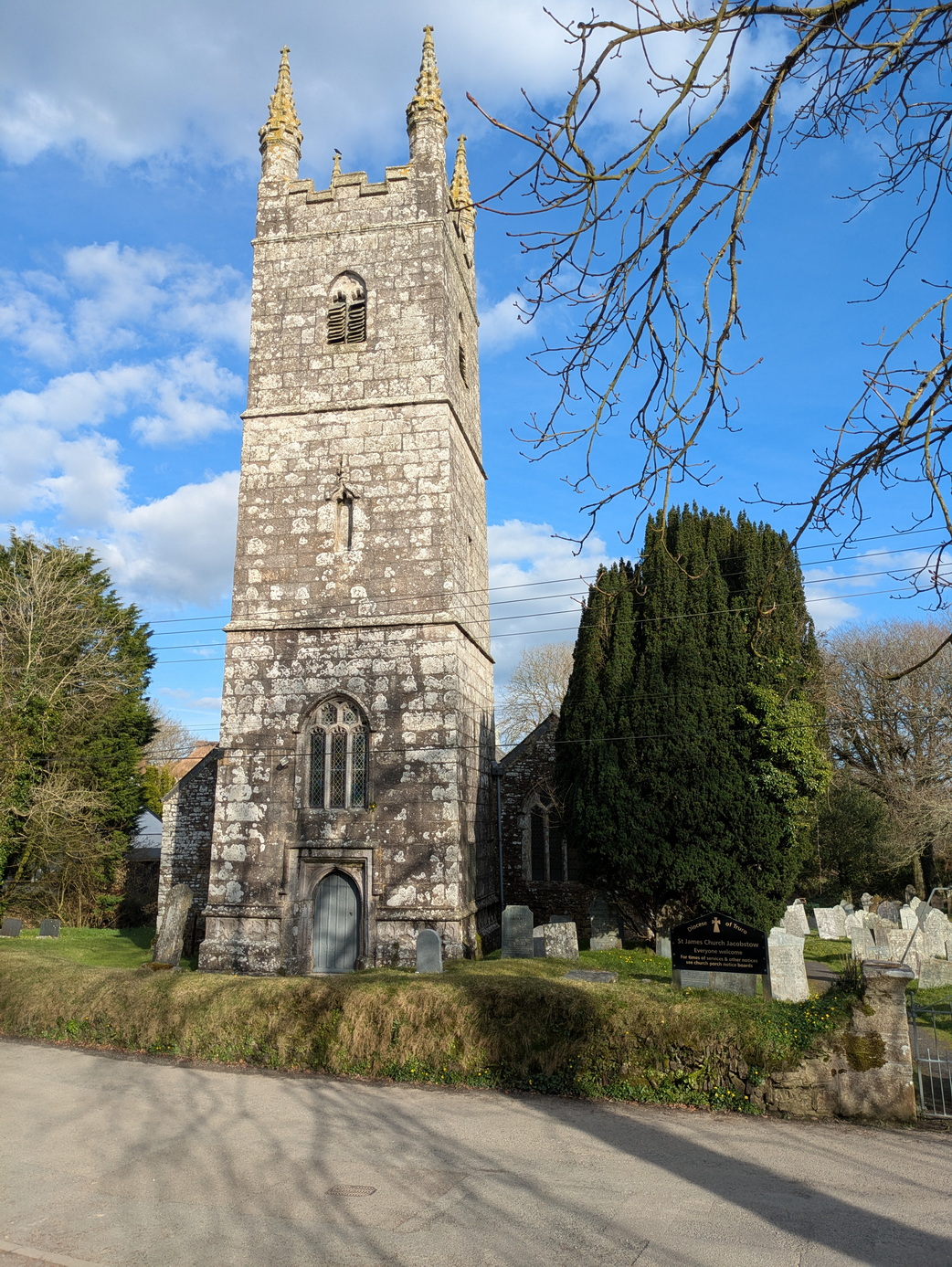
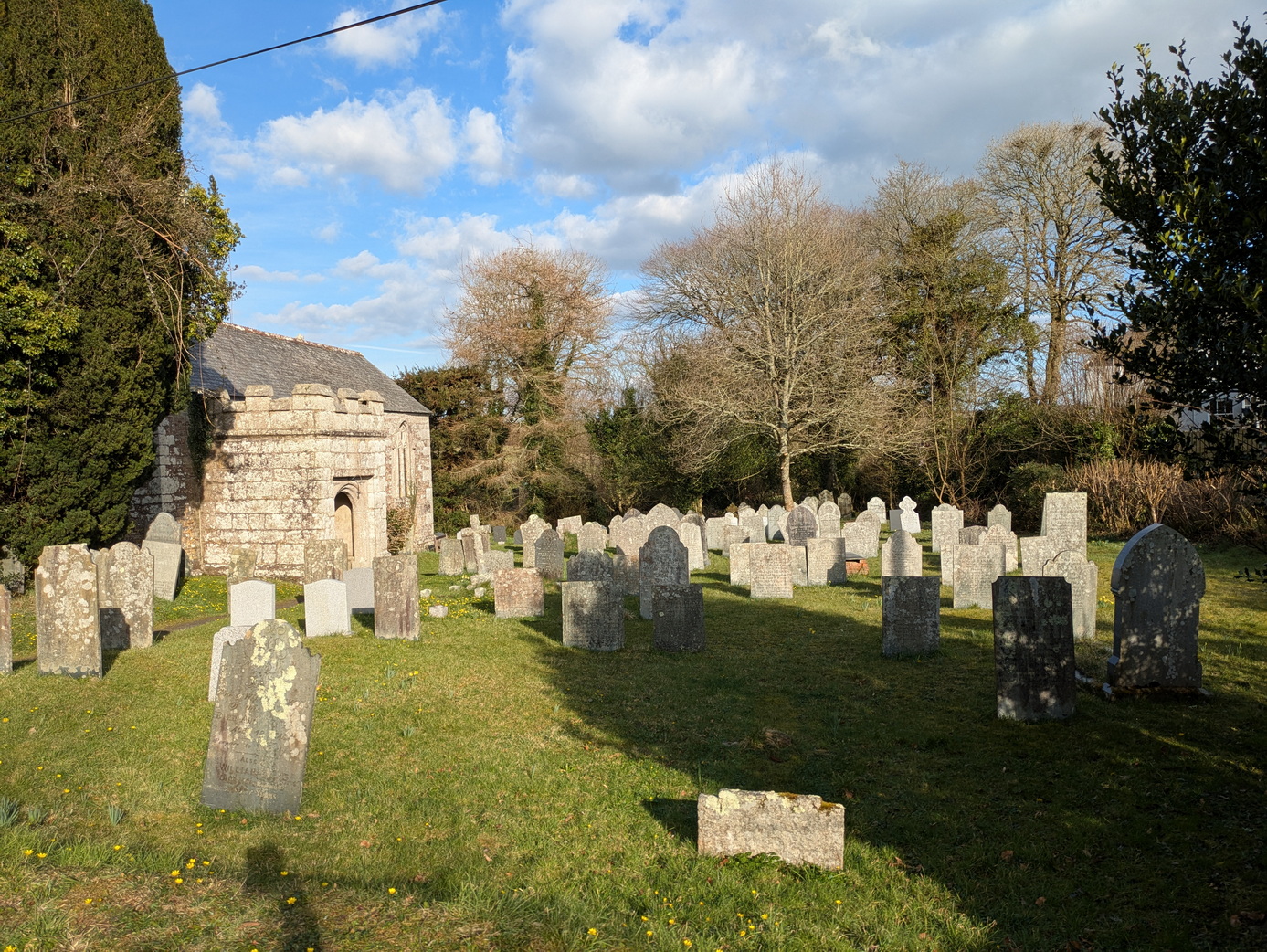
St James stands in a curve in the road, in a dip in the middle of the small village of Jacobstow, surrounded by the graves of former parishioners.
First impressions are of the height of the tower: at 85ft it claims to be the second-highest in Cornwall – 19.8m (65ft) compared with Probus’ mighty 38m (125ft). It certainly dominates and gives the feeling that the tower is higher than the church is long.
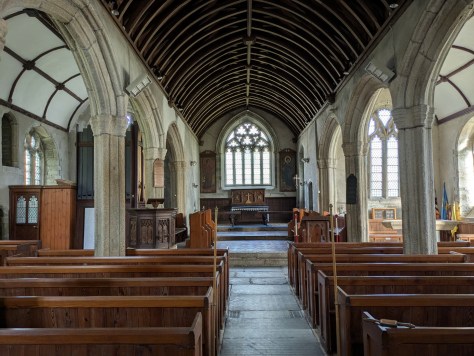
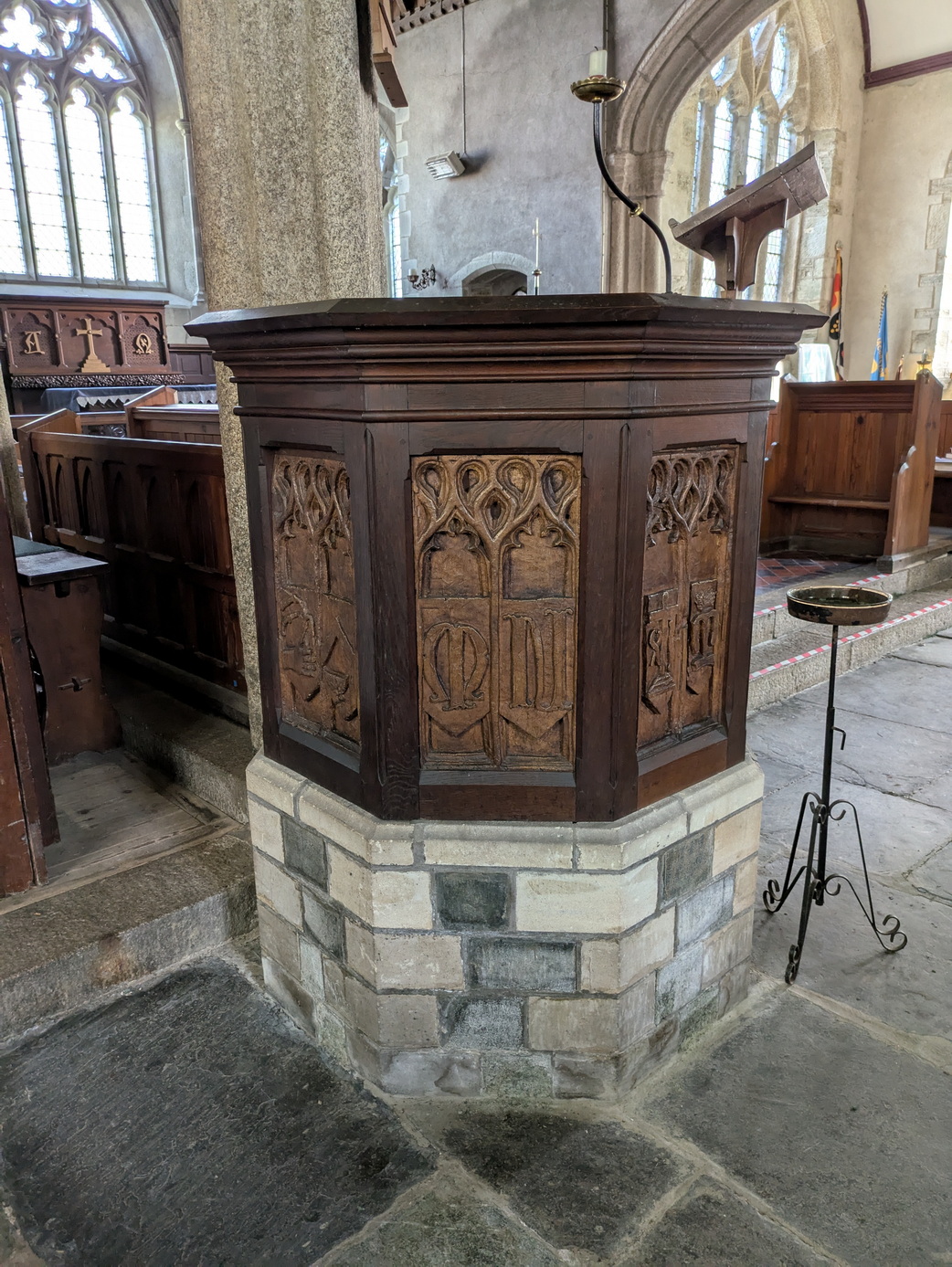
Restored in 1886 by one Ortho B Peter, it feels coherent: the windows are identical, the rebuilt ceilings are harmonious and the bright spring light flooded through the plain-glass windows. His deft hand also created a simple pulpit, constructed from old bench-ends bearing the familiar symbols of the Passion.
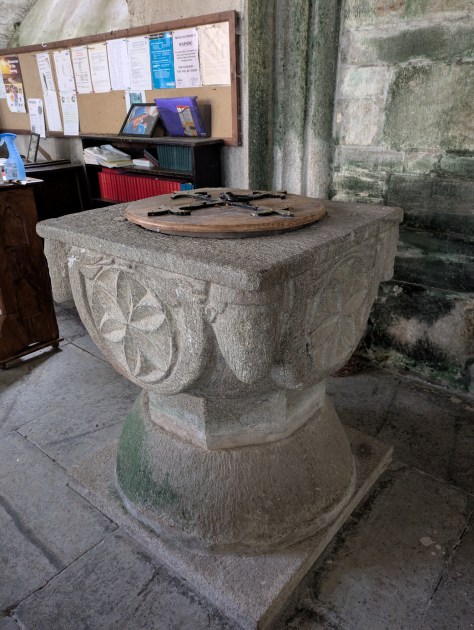
The Norman font is of the Altarnun type with large faces at each corner, although less well-detailed than at Altarnun.
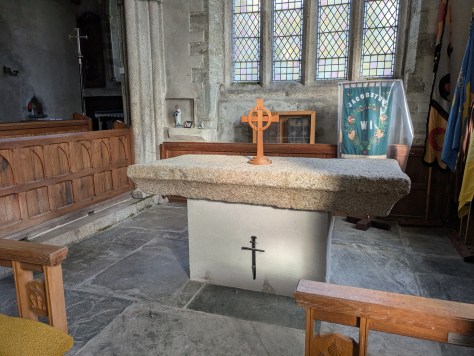
The most elegant space is the sanctuary in the south aisle. Here, the architect has installed a very simple altar with a large granite slab as its top, in a simple slate-floored space. The remnants of a blocked-up squint hinting at a previous use as a congregation space.
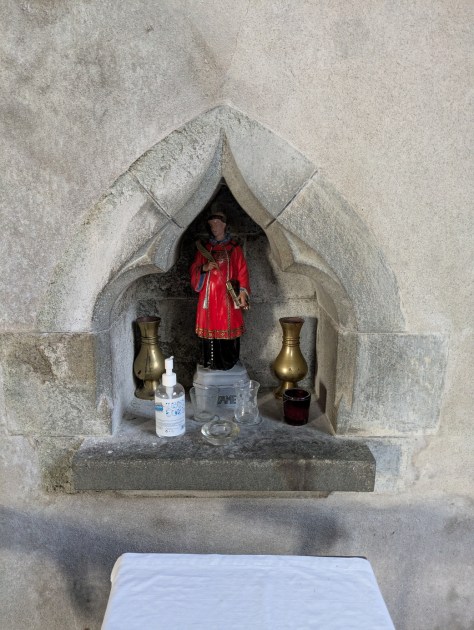
The south aisle’s gain is the high altar’s loss for there a simple wooden table serves. A small niche has been re-purposed as an aumbry with a small figure of St James keeping an eye on the vessels.
Outside, our attention is drawn to a large slate on the chancel wall: a monument dedicated to Susannah (d1745) and Mary Clark (d1748), daughter and wife of the then rector.
The dedication to St James, associated with others in the neighbourhood – Kilkhampton to the north and St Kew to the south – suggests that Jacobstow might once have been on a pilgrimage route to Compostela which perhaps joined up with the modern Saints’ Way from Padstow to Fowey, or even took the other putative route ending at St Anthony’s Head.



 A Cornish Journey