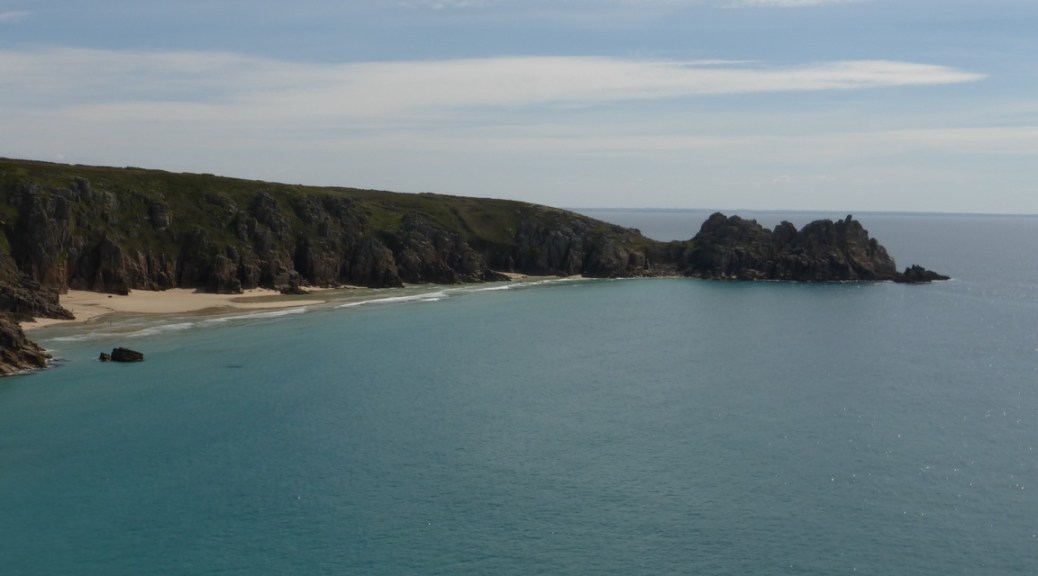
There are some sections of the coast path that are so familiar that it is like walking home: each step brings more memories, more delights. This walk was one of those.
We walked it again in September 2016 and some additional notes relate to that visit.

We had ‘reached’ St Loy Cove beneath Boskenna in an earlier walk and simply needed to fill in the missing piece to Porthcurno: a short stretch of about 3 miles. The books advise a half day trip from Porthcurno to Lamorna but doing a circular walk made a single car possible.
You have to enjoy steep ups and downs on this walk. The book says ‘Strenuous’.
St Loy Cove is a gem: wooded and with mature gardens running down to the sea of the sort you might expect on a river bank further east. It is probably a very different prospect in a winter storm but today it was a delight. There was a small well alongside the path which we christened St Loy’s well since all wells are named after Cornish saints and thus holy.

St Loy’s is very unusual cove as it consists of very large rounded boulders, scattered across the ‘beach’. there are two sorts: plain ones and others made of the usual golden stone of Penwith, familiar from Laura Knight’s pictures. How were they formed? Is this a particularly stormy beach where the stones have been rolled around and smoothed over the years? If so, how is it that the houses that cluster around the cove edge, directly facing the prevailing winds, have the most wonderful green gardens which have a luxuriance seen nowhere else along this stretch of coast? [Sept 2016]
 Reaching the top of Merthen point we were delighted to see the wit of a local farmer who had erected a standing stone which reminded us of a monkey: perhaps a Japanese macaque or proboscis. [Sept 2016]
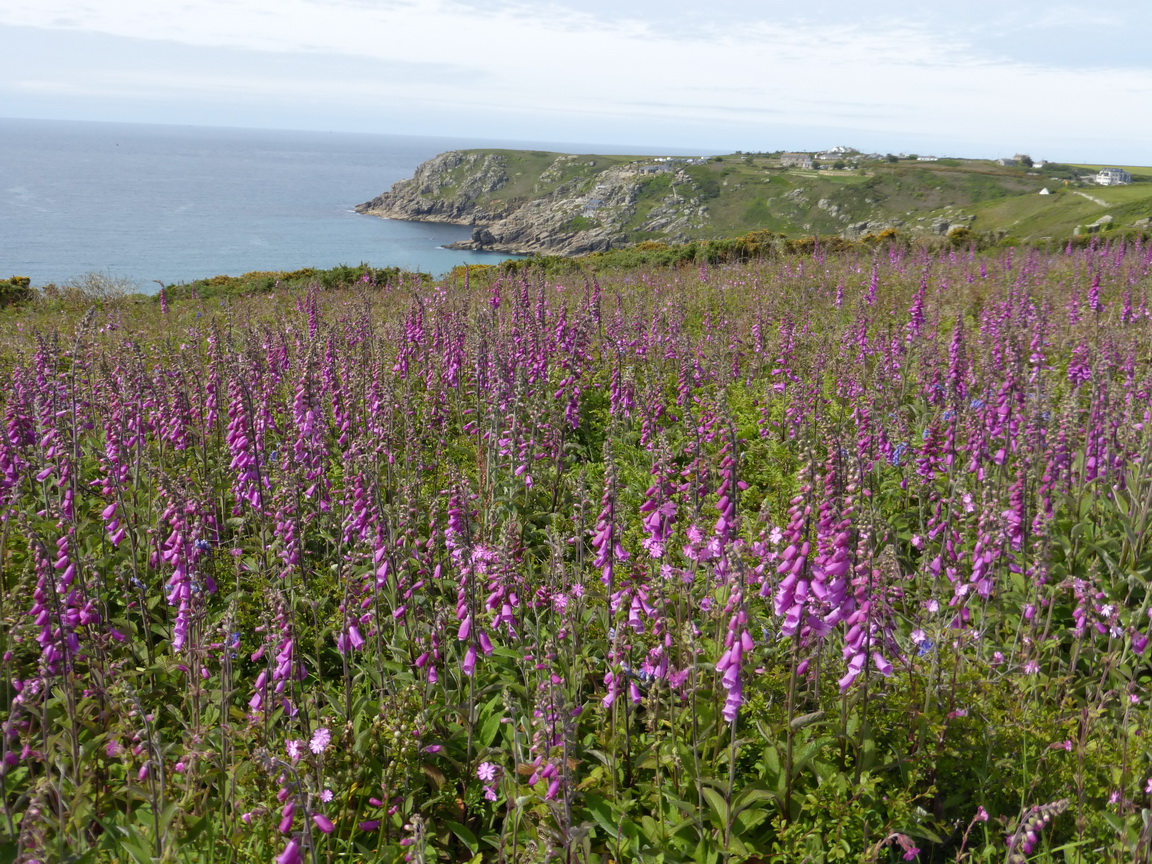
Walking on the cliff tops was easy and a sheer delight for the range of flowers. The bluebells were well past their best but the vegetation was turning to pinks and red. Thrift was joined by white, pink and blood-red campion. The foxgloves were in full flower and in places the dodder covered the top of the gorse like mat of red spiders’ webs.
Walking up to the cliff tops was another matter for the coves of Porthguarnon (especially) and Penberth had steps to test the fittest of legs.

Penberth is a delight, perhaps verging on National Trust ‘Model A – A Cornish fishing cove (with signs)’. It, and Porthgwarra further west, are the most evocative of the small fishing coves that must once have dotted this coast. Thankfully this one is still working with four cove boats drawn up on the slipway.
By now we had spotted that the colour of the water over the sand had changed to that clear azure which is completely transluscent and invites searches for glimpses of passing mermaids.

Climbing Cribba Head we came to the great C3 BC Iron Age fortress of Treryn Dinas and its famous Logan rock. The fortifications stood out clearly showing that it must once have been a mighty fortress indeed.
Very tame and proprietorial ponies were grazing the vegetation as we made our way to the rock itself. We eschewed the opportunity to set it rocking – it has never been the same since it was replaced in 1825 – and ate our picnics watching others attempting the feat.
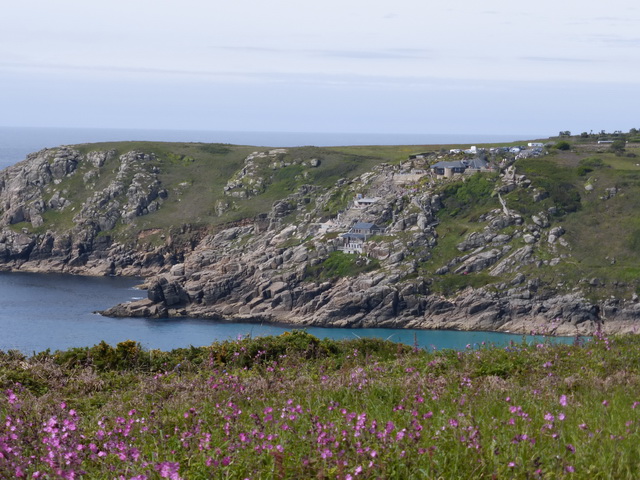
In the distance the next great landmark was twinkling at us beneath a darkening sky: the wonderful Minack Theatre. Each step invited another glance and another photograph of Rowena Cade’s incredible creation which appears to sprawl down the cliff towards the great rock which gives it its name.
The beach below was uncharacteristically empty. Now one of the most famous and popular beaches of the peninsular, it is loved by all. In the distant past it was shunned by the local who knew all too well that the sewage outfall for the valley was on the right hand side of the beach, encouraging good fishing but making the water less enjoyable for swimming. How times change.
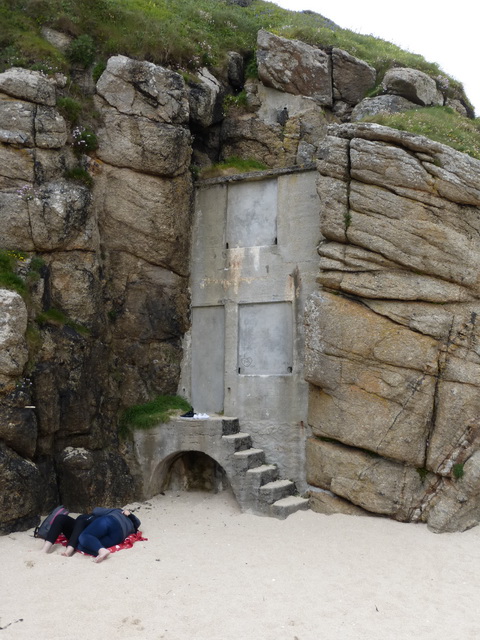
We passed the little shed where the trans-Atlantic telegraph cables come ashore: a wonderfully prosaic little shed for such an important task. The romantic names pinned up on small signs are all that hint at its importance.
The little beach house, also constructed by Rowena Cade, and one of the few follies of Cornwall, is sadly neglected and cemented up. It was once open and damp like a deserted pillbox and a wonderful playground for children.
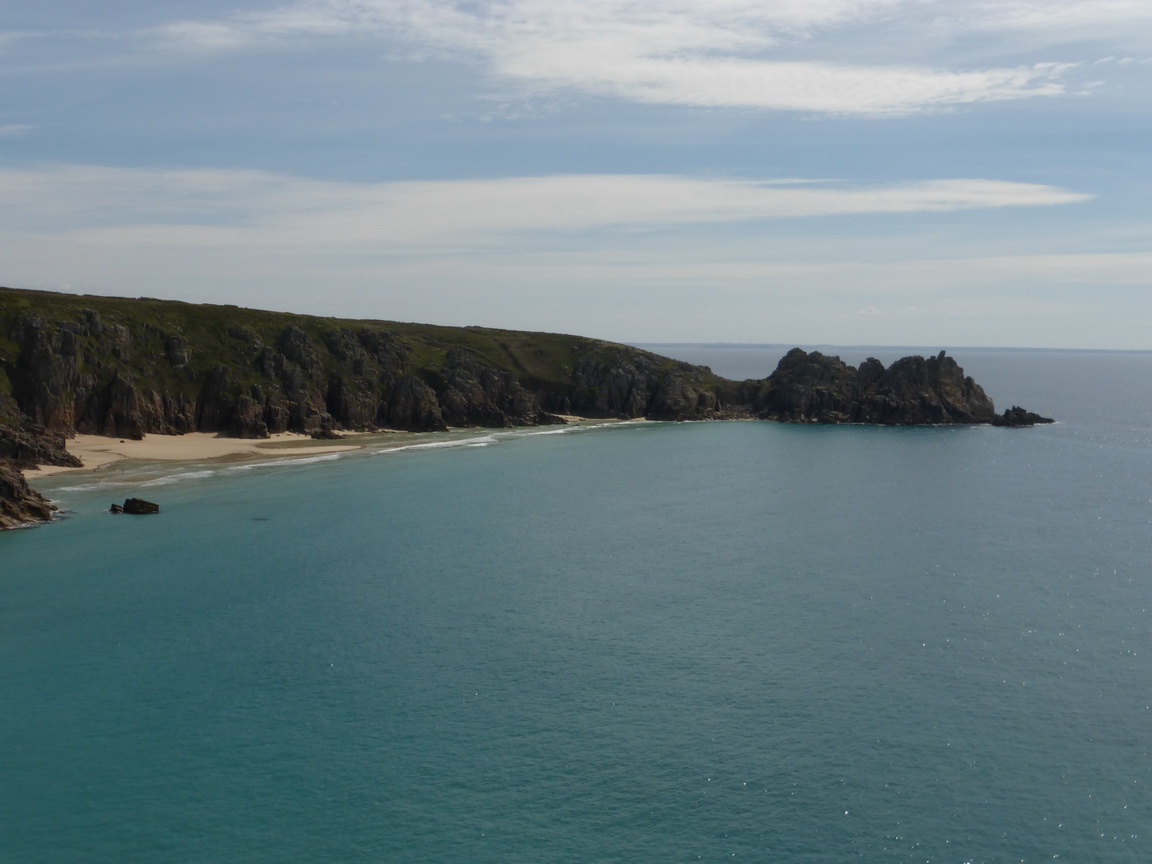
The steep steps up to the theatre provide one of the greatest coastal views anywhere: the Logan rock, an azure sea – no basking sharks today – and the clear clean bright sand of Porthcurno and Pedn Vounder beaches.
 And finally, because it is always impossible to refuse, we added a few yards to our trip by wandering through the theatre itself where a performance was in rehearsal. ‘Behold the head of a traitor!’, ‘We are such stuff as dreams are made on …’ Echoes of past performances came flooding back. A home-coming indeed.
We walked about 7 miles in four hours and re-visited St Levan and St Buryan churches, the Merry Maidens stone circle and Boskenna cross on the way home.


 Walking through a town like Newquay was never going to be our ideal for a coast path but we were pleasantly surprised at some stretches. The route attempts to follow the coast through the town following a litany of famous beach names: Fistral, Tolcarne, Lusty Glaze and Porth.



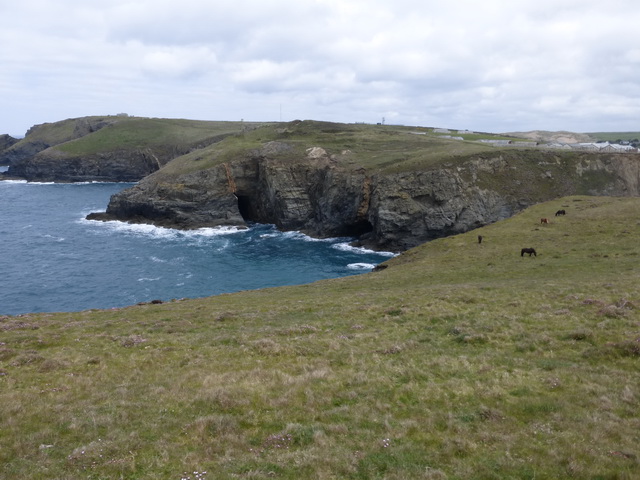

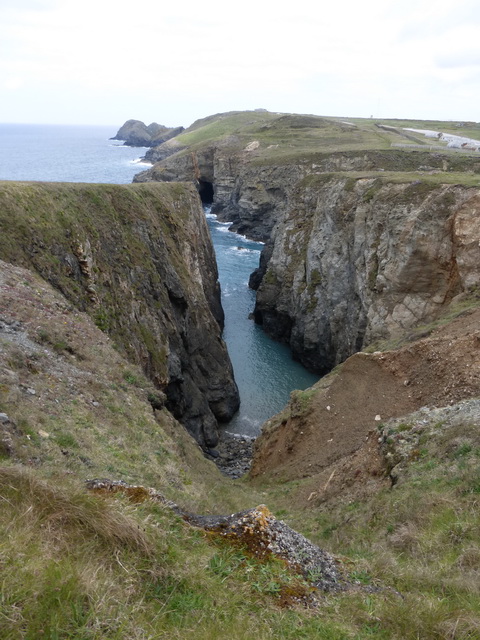

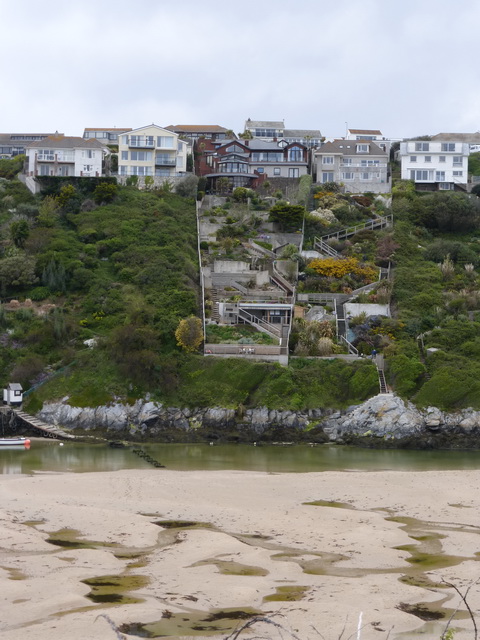
 Emerging on the banks of the Gannel, it was clear that we were approaching civilisation for the opposite – Pentire – bank was filled with smart houses whose estates tumbled down the steep cliff. Different solutions were adopted by the owners: meandering paths through vegetation, smart lined lawns to rigid modernity. We pondered on how often they carried food to the ‘sitting areas’ at the bottom of the hill, only to find that they had forgotten the salt, or wanted another drink.


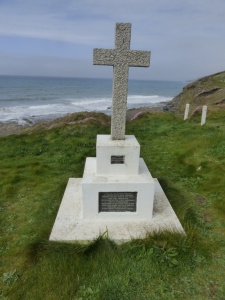 Just out of town, we passed a cross to all those sailors who had been lost on this coast (see earlier posting about
 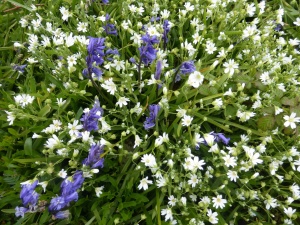 The cliffs here are steep but crumbling. Managed retreat seems to be the order of the day. The beaches below were covered in a multiplicity of differently coloured stone: greenstone, granite and even some unidentified white stone.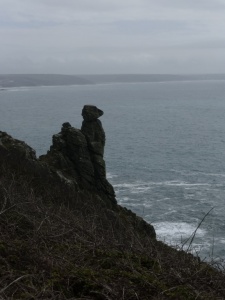
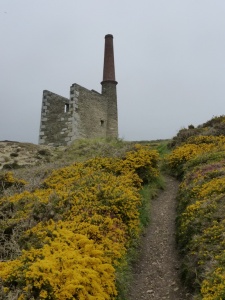 pproaching Trewavas Head, we delighted in the engines houses which rival the Crowns at Botallack for their precarious position on the cliff edge. Signs warned us that choughs were nesting here. It is good to know that they are no longer confined to an unspecified, and deeply secret, place on the Lizard, but are spreading to other parts of the Cornish coast. The black birds that we saw were, of course, simply black birds: not a red beak or foot to be seen.
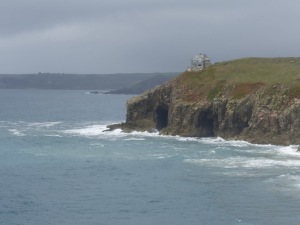 Moving on, after a little snack, we arrived at the familiar sight of Rinsey. This is surely the craziest siting of a house on this coast. Perhaps they thought that if they built any further back from the edge then someone would build in front of them and steal their view. On the other hand, we speculated, with caves below and in a mining area, perhaps the house has an elevator or staircase straight into the cave below to make smuggling easier. The plot for a re-working of ‘The House of Adventure’ started to develop in our minds …


 What was planned as a short walk to ‘fill in’ a gap we had not covered actually turned out to be a rather fuller day than we had planned.
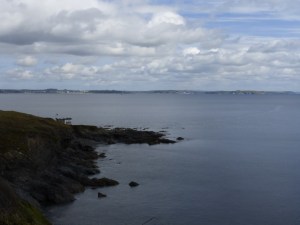 Once past Gillan itself, the going was very easy over springy turf towards Nare Point where there is an National Coastwatch Initiative lookout: surely one of their more remote, even by their standards. Gurnards Head perhaps rivals it and has less shipping to watch.
 During WWII, Nare Point was the site of a dummy village complete with lights turning on and off to try and confuse any enemy bomber into thinking it was Falmouth, an easy mistake to make in the days before pinpoint navigation. In earlier times, the point was even considered for another Henrician castle to match those at Pendennis and St Mawes, no doubt protecting the entrance to the Helford. Perhaps it was dropped for it would be a bold captain who attempted to bring a large ship into the Helford, unless, that is, he was a Frenchman on his way to Frenchman’s Creek.


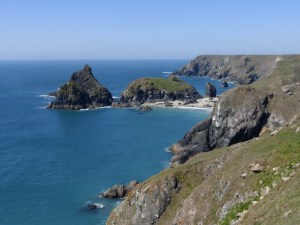 side. The sea was calm and as clear and blue as one could wish.
 stunning view, wondering why we should bother to carry on. But we did.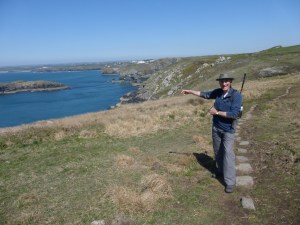
 The going, by now, had the air of a National Trust-cared for estate with stepping stones and helpful advice on signs. We were clearly approaching civilisation again.
 This was a tough part of the walk, involving several descents – which are the easy part – and then steep ups. The first one was the descent below the ‘large white’ Polurrian hotel, down a set of steps which became spine-shuddering as much as anything because of the large drop entailed with each one. We walked them in the opposite direction later in the day and quietly cursed their creator who clearly had longer legs than us.
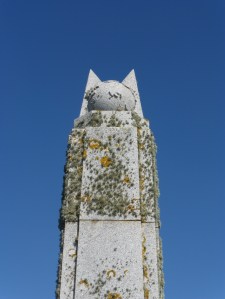 As we approached the top of Angrouse hill, we could see a large monument on its crest. This was Poldhu where Marconi carried out his famous experiments which culminated in the message to America and then to the South Atlantic. A humble field alongside the path was where the aerial had been erected. I looked at the mobile phone in my pocket which seemed a far cry from those early days, just over 100 years ago, when he achieved so much pioneering work from this remote Cornish cliff.

 A couple of nasty downies and uppies tested our muscles and endurance but if a Jack Russell and Labrador could do it then so could we.
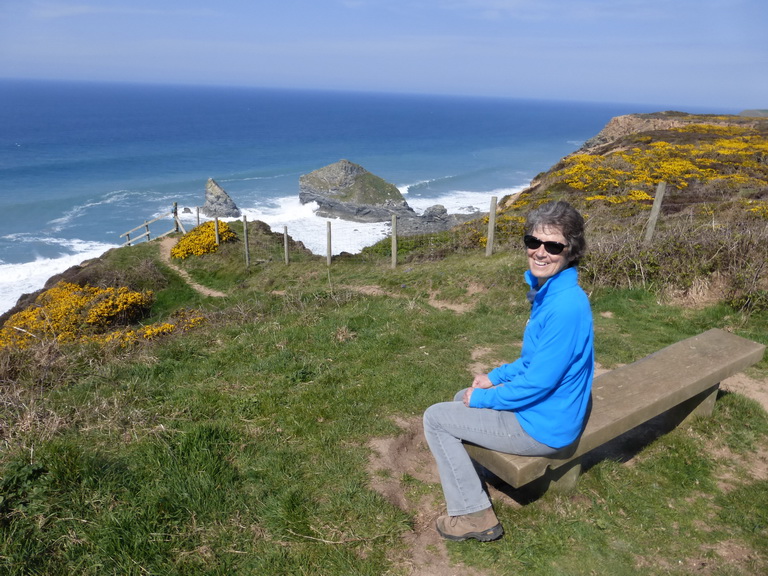

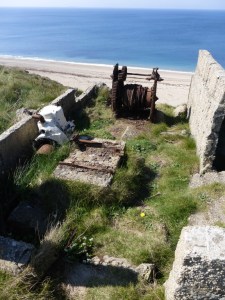 It was the wreck of HMS Anson which moved Henry Trengrouse to invent the ship-to-shore rocket carrying a light line as a precursor to a rope. This technique, so simple in concept, eventually led to the saving of many lives.

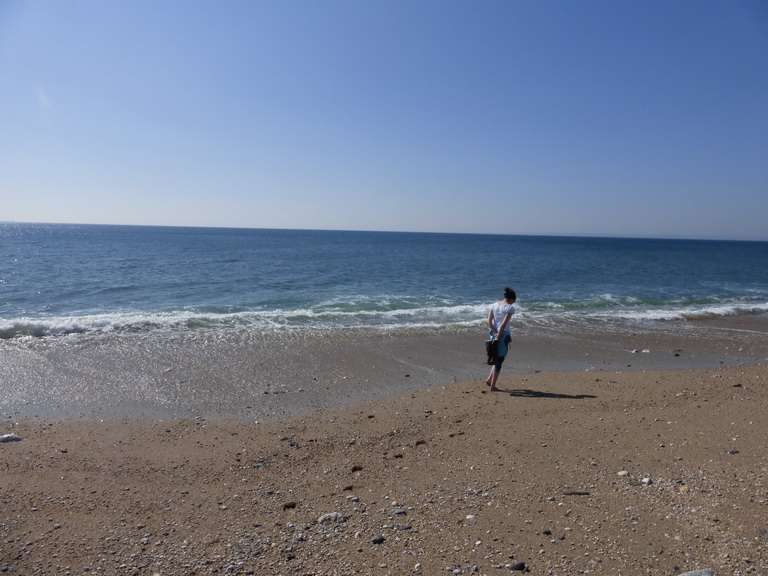


 Our first sign of population was at Cadgwith, surely the most photogenic and famous fishing cove, tucked into a corner facing east: everyone’s idea of a Cornish fishing village from generations of calendars and chocolate boxes.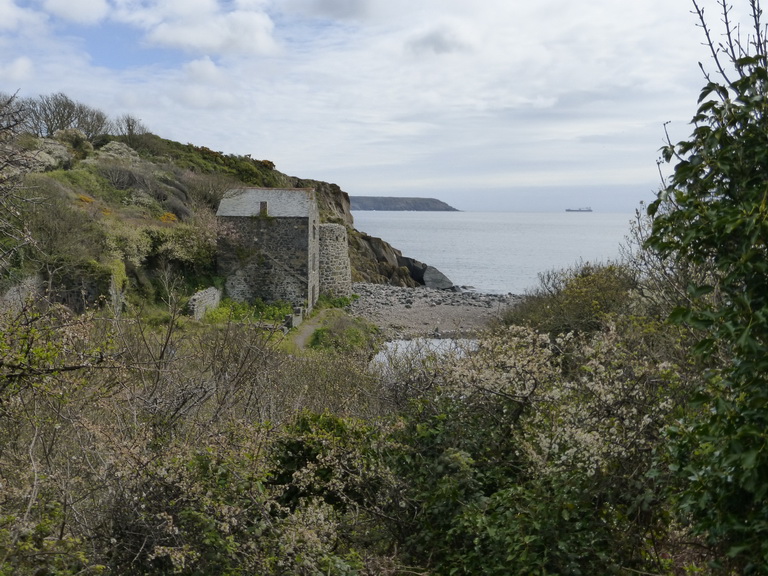


 Approaching Chynalls point we could see yet another large white ‘former hotel’ now converted to some other use, probably a care home. This promoted us to wonder at the way we put our old people in remote places with empty views of the sea when it might well be company and activity that they really desire.


 A Cornish Journey