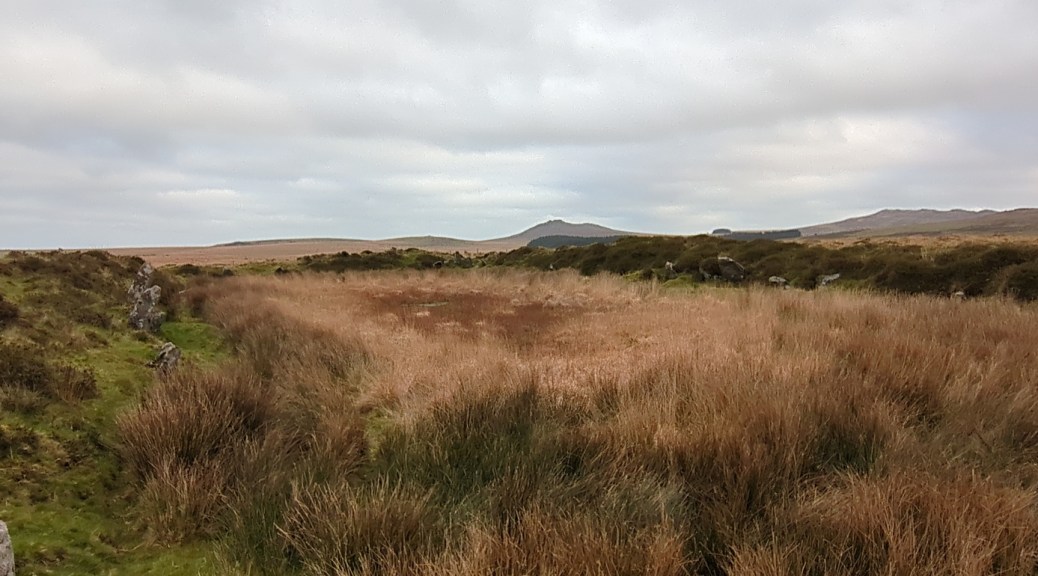
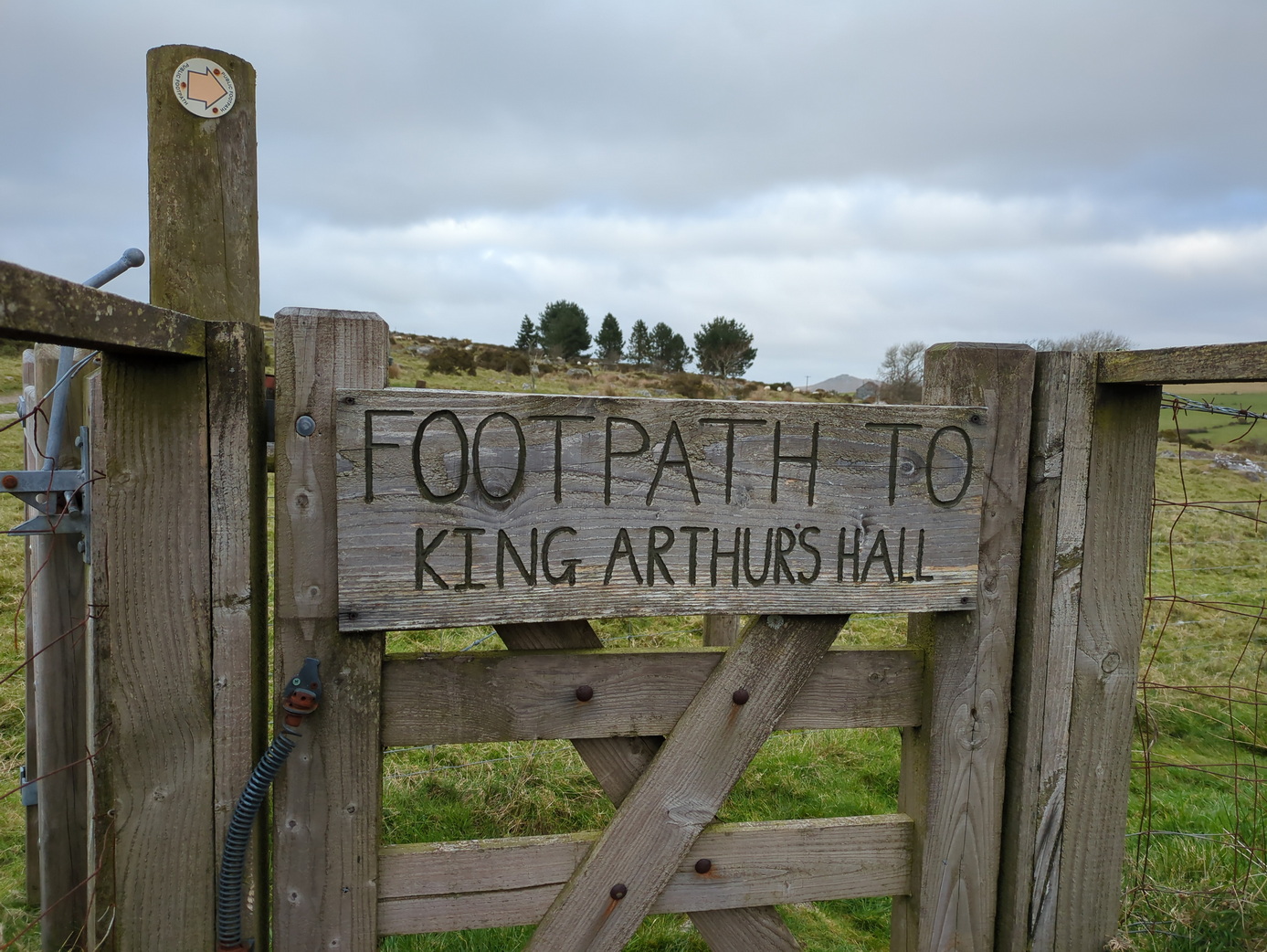
King Arthur’s Hall – spoiler alert, it has nothing to do with King Arthur – is one of the most enigmatic monuments in Cornwall and a source of years of argument and speculation.
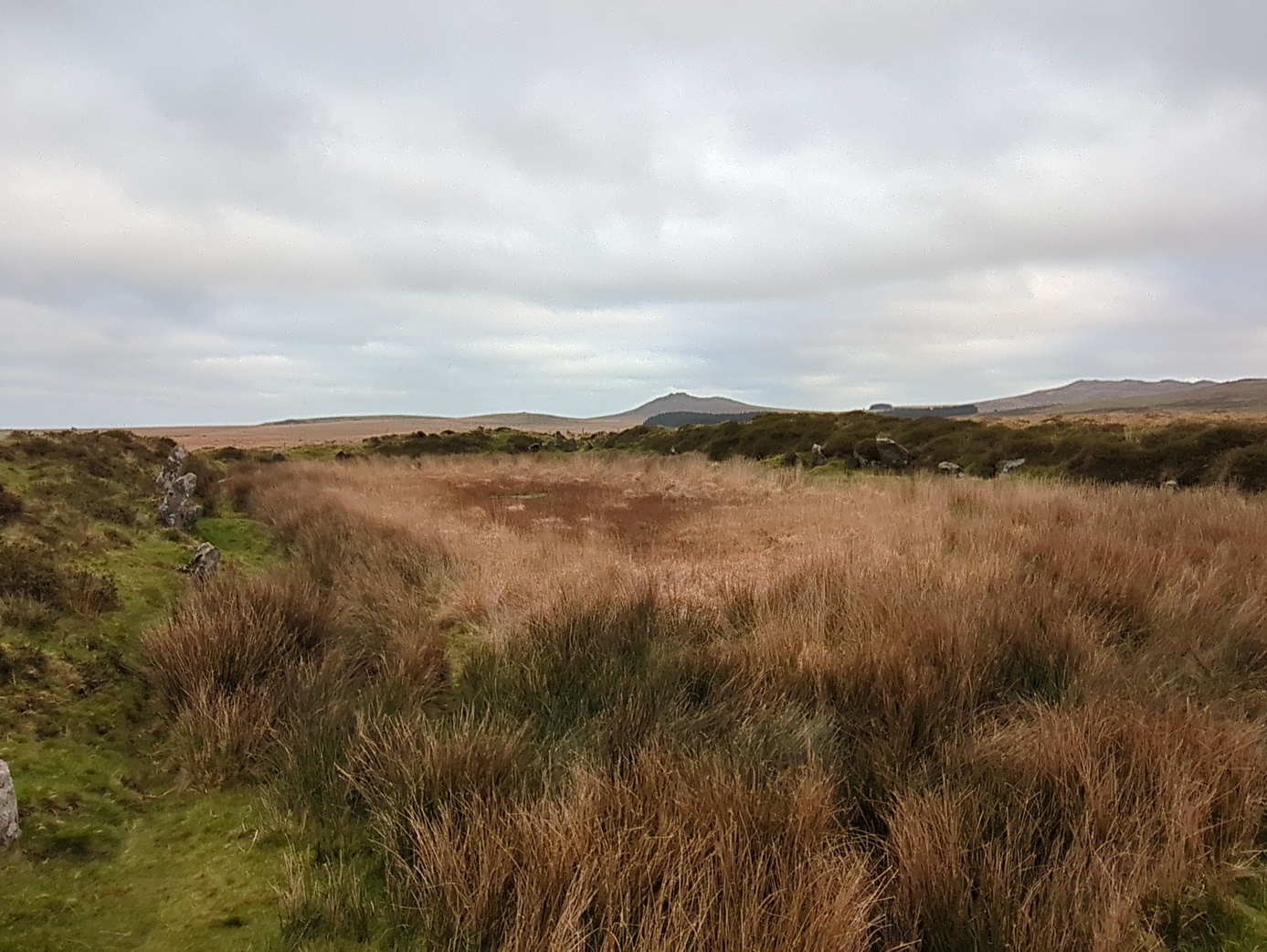
It consists of a 48m long and 21m wide rectangular enclosure formed by a 2m tall bank with a series of over 50 stones on the inside face. The central area is boggy and pretty much a no-go area for much of the year. Oriented roughly N-S, there is an entrance way at the SW corner. To the north east stands the unmistakeable outline of Rough Tor and Brown Willy, so it lies in the area of Bodmin moor which was covered with Neolithic and Bronze Age remains.
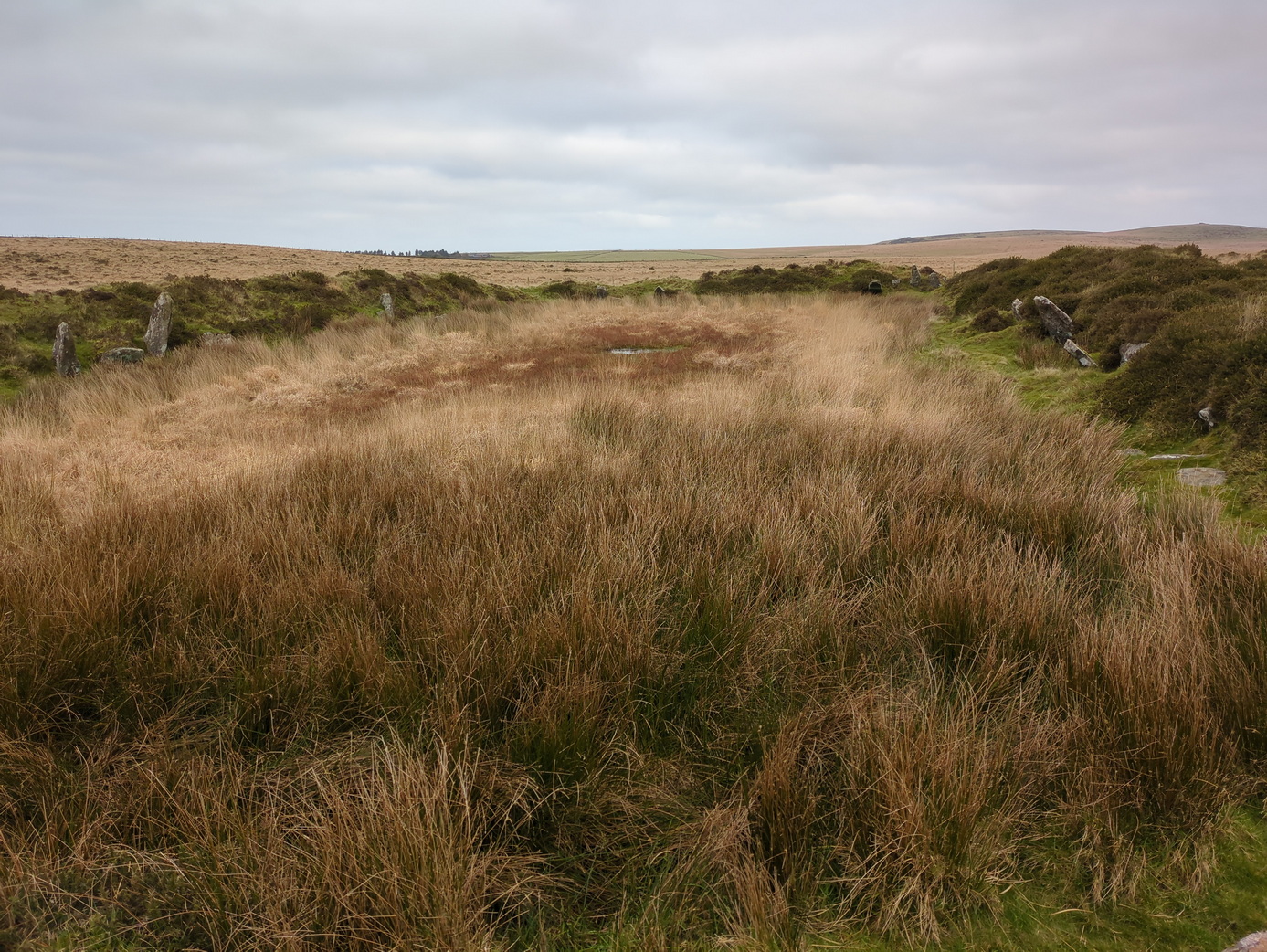
What is it, then? Two similar structures are known about: at Grange stone circle at Lough Gur in Ireland, and Meini Gwyr in Carmathen. Both have a bank immediately outside their stones (as did Stonehenge 1 but let’s not go there) Grange is perhaps the most similar to King Arthur’s but is more conventionally round and has similar legends about sleeping heroes. Meini Gwyr even has an association with Arthur in its alternative name of Buarth Arthur, but it is hidden under grass. Neither is rectangular.
Suggestions have ranged from the inevitable Neolithic or Bronze Age ‘ritual space’ to a medieval cattle pound.
What date is it? No one was sure until recently. A helpful Wikipedia article summarises recent discoveries suggesting that there may be many more major stones hidden in the bank (2013/14). More recent work (2022) has shown that it was indeed Neolithic and not medieval. This also suggested that it may once have been filled with water although, given the entrance way, it cannot have been very deep.
It certainly was not a hall or covered space as 21m seems far too wide for the technology of the time. Some stones in the central area apparently hint at a form of paving. Was it some form of meeting place, assuming that the surface was not as wet as it is today? If so, what was the significance of the stones as they certainly don’t seem to be structural?
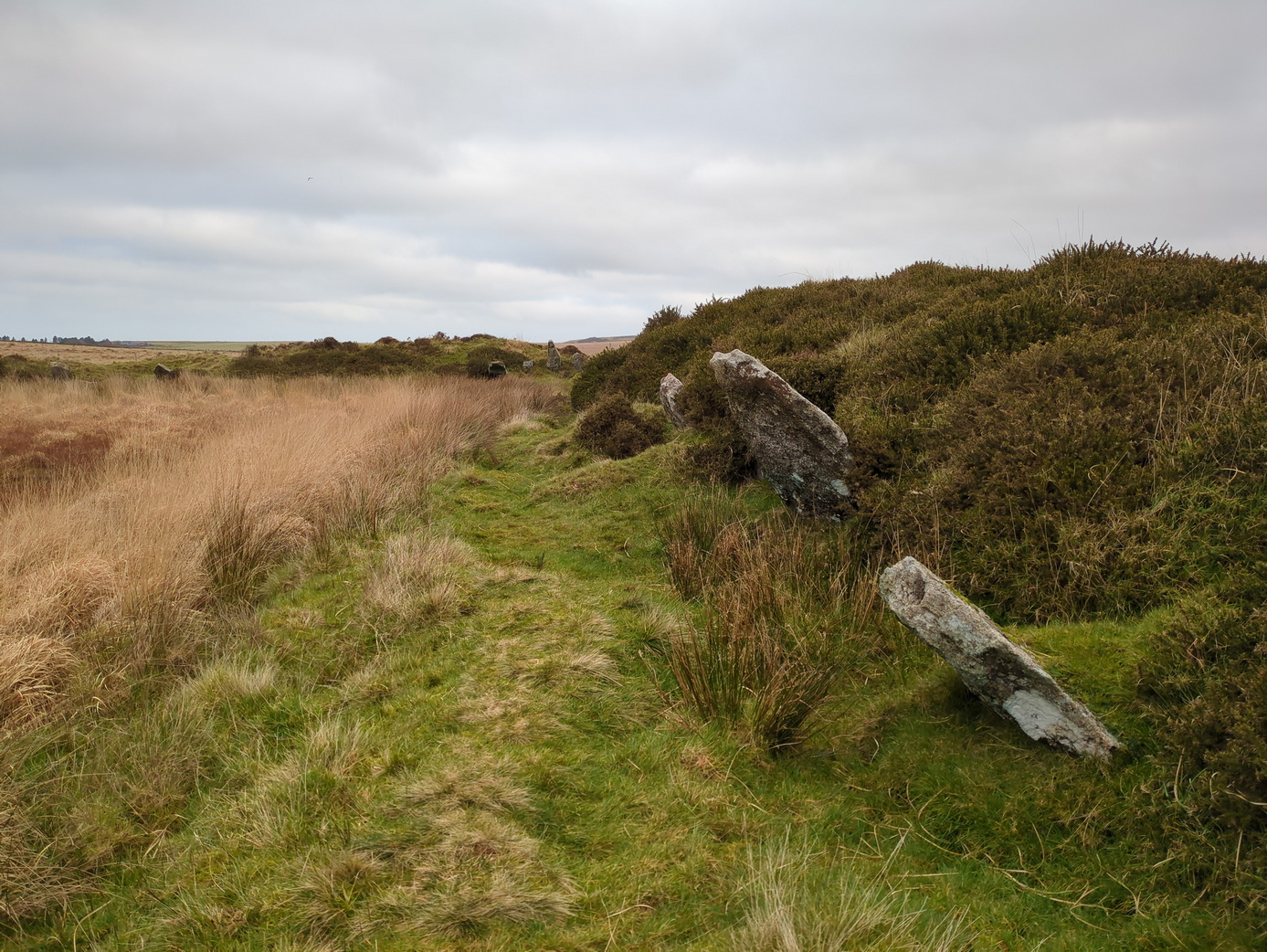
Once we had discarded the idea that it was a swimming pool for the Neolithic Inter Moorland Games (Dartmoor vs Bodmin moor), we were forced back to the conclusion that it was some form of rectangular stone circle, but of a form that simply did not catch on. Could each upright stone commemorate a member of a family or tribal clan?
Not for the first time, we would love to travel back in time for just an hour, to see the space being used for its original purpose. Or would that spoil the magic and opportunity for speculation?
King Arthur’s Downs stone circles
About 500m away, across the moor, are the remains of two small stone circles abutting each other. Such complexes do rather challenge one’s perceptions about what stone circles were for and how they were used. (We visited Beaghmore in Northern Ireland recently where there are five wonderful circles in close proximity.)
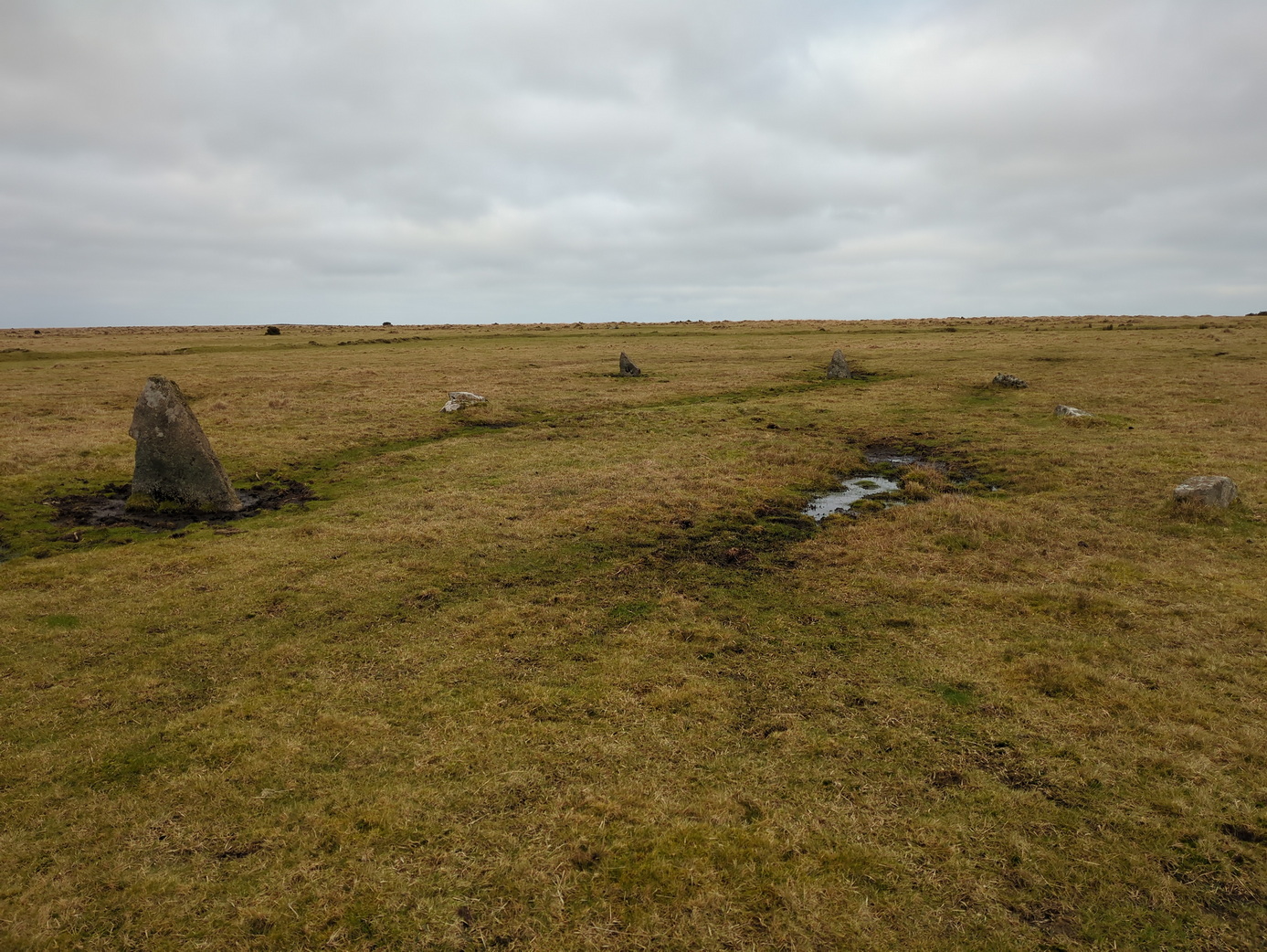
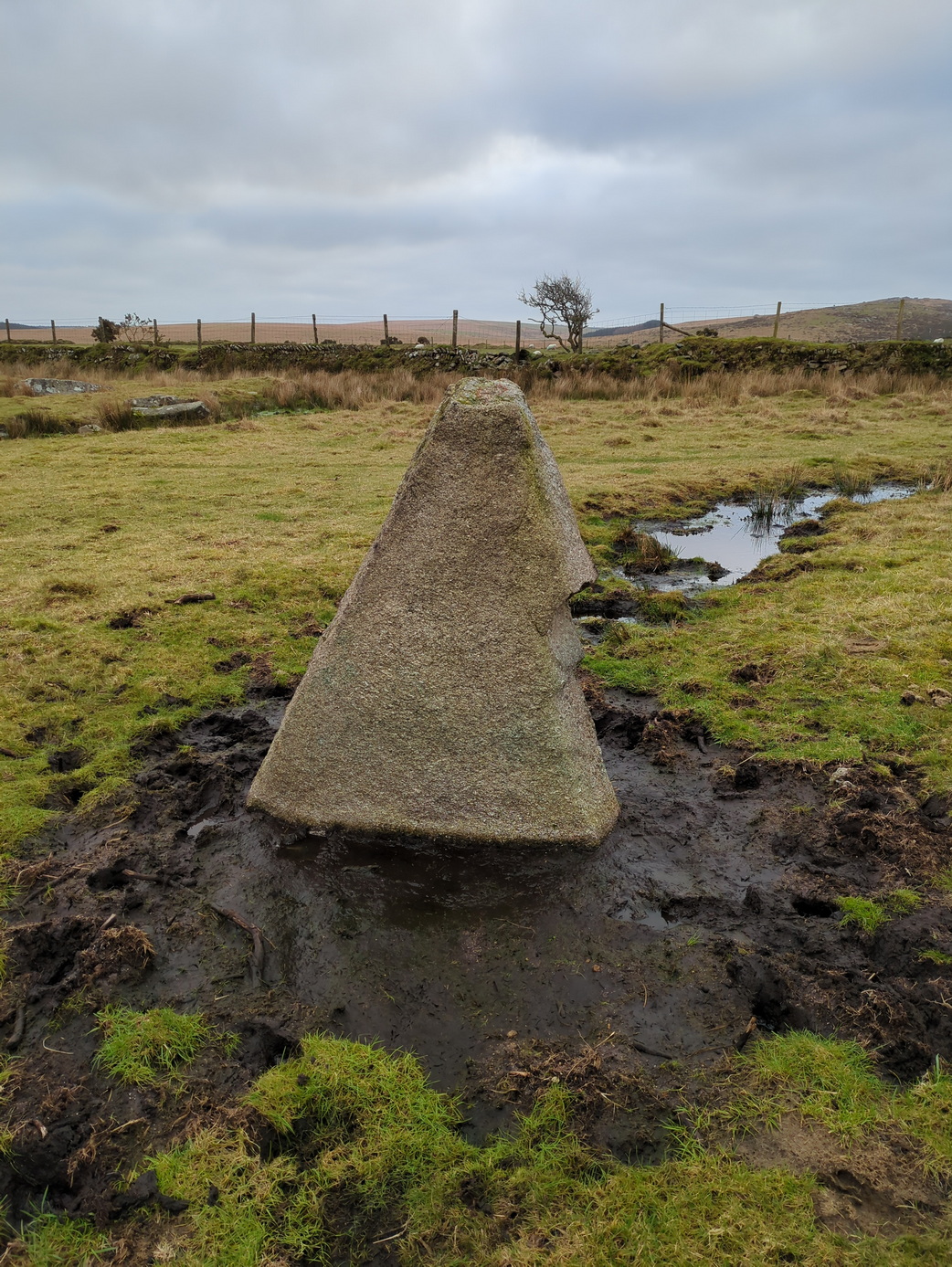
There is not a lot to see: three upright stones and some stumps or fallen stones, two of which lie roughly in the middle.
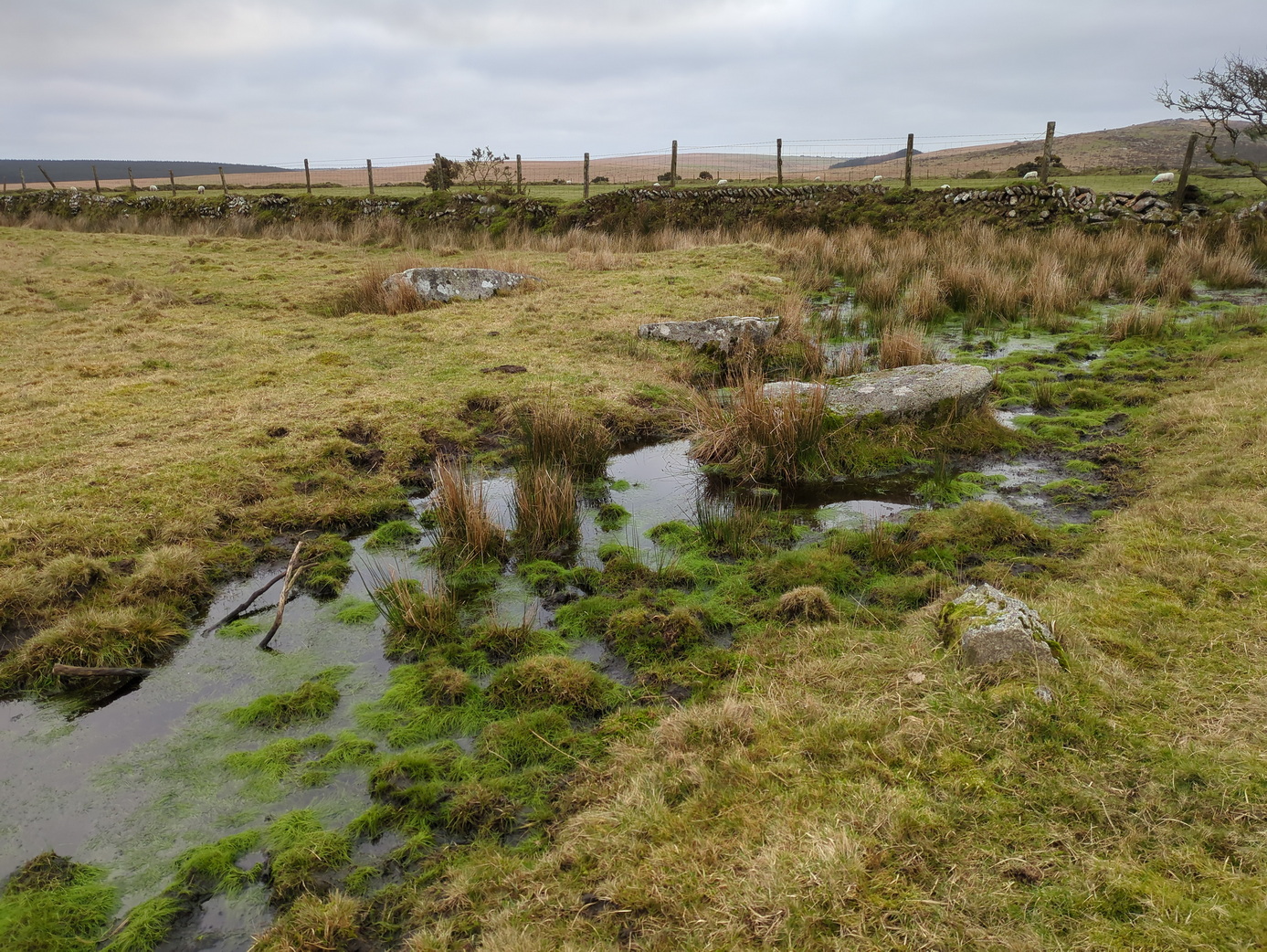
There is even less of the second circle, perhaps half a dozen stones which are all lying down in a muddy patch. Judging by the sizes, this might have been the taller of the two circles.
About 200m away is the Leaze stone circle which, from pictures, appears to be an altogether more impressive circle but it lies in inaccessible fields full of sheep and the landowner’s permission is required. Being in the middle of the moor, there is no sign as to how to find him/her and no obvious farmhouse door to knock. So a return visit will be necessary.
We approached these monuments from St Breward (parking by the Old Inn pub) and of course had to re-visit the church. Parking is also possible on Lady Down from where there is a small signed footpath to get you started.

 A Cornish Journey