
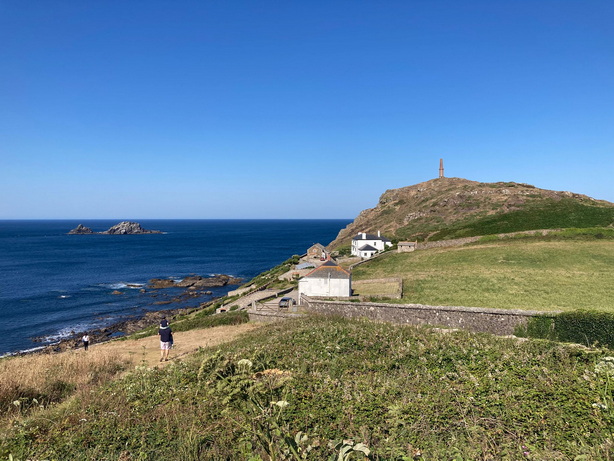
A foraging expedition on a bright sunny day took us back to Cape Cornwall, surely one of the loveliest coastal spots in the Duchy. From there we made our way to the familiar Tregeseal stone circle.
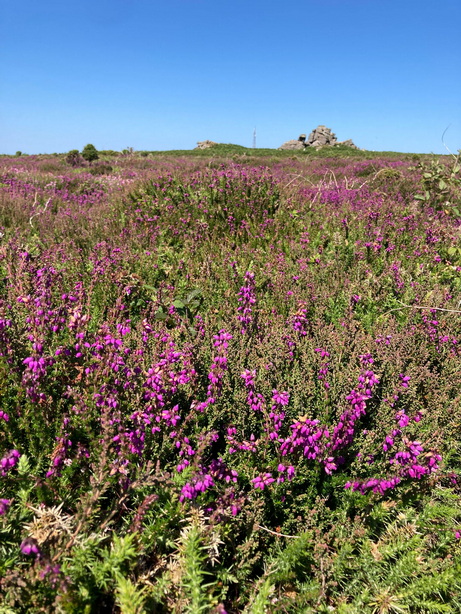
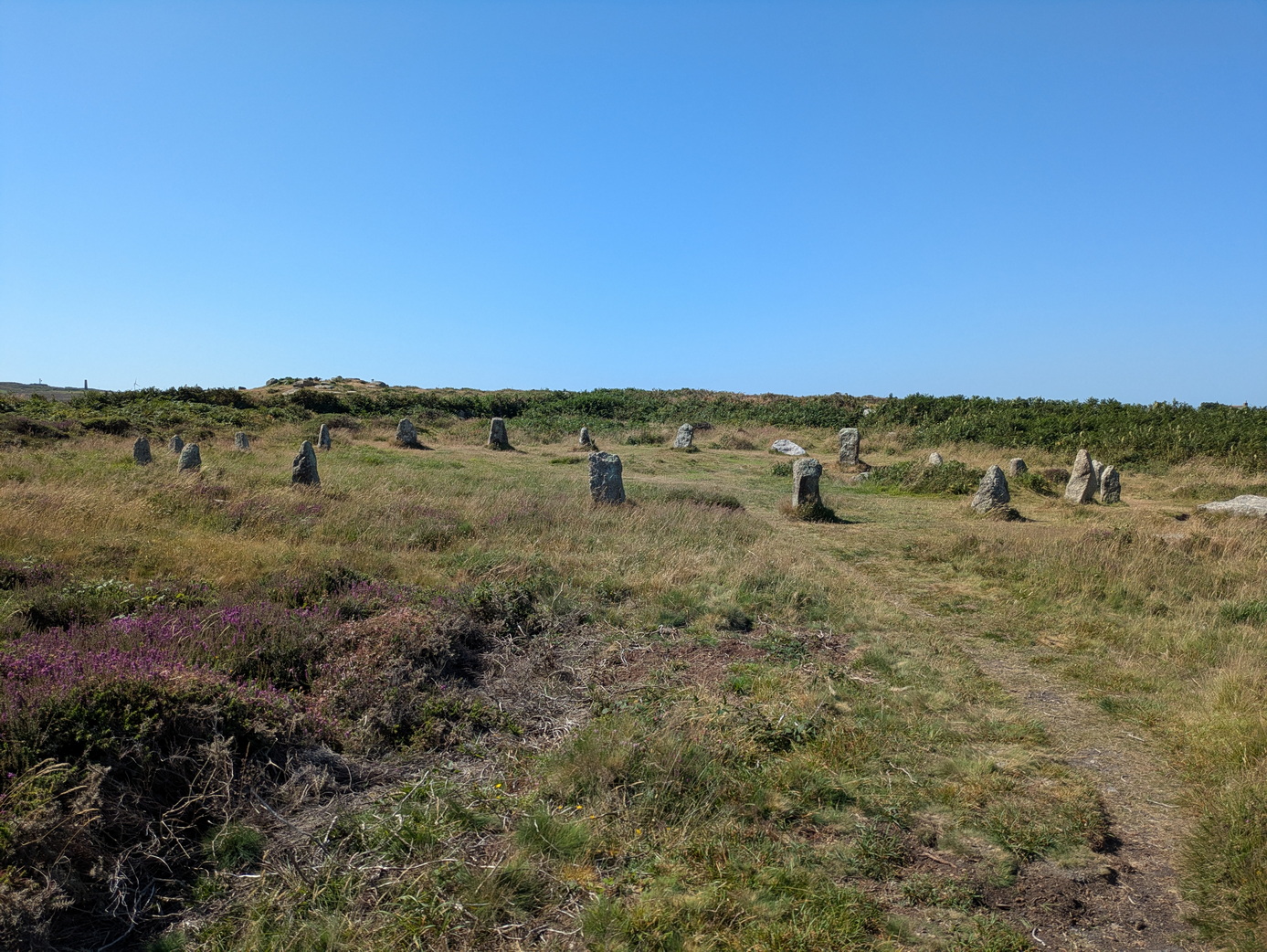
Set on the edge of an area of high moorland covered in the bright colours of flowering heather, Tregeseal is the first ancient monument you meet as you follow the Tinners’ Way from St Just.
The nineteen stones are all that remain of what was once three adjacent stone circles. A few stones from the central circle apparently exist, buried deep in a wall with its inevitable cloak of brambles and bracken. While working out how a single stone circle was aligned or used is hard enough, it is very difficult to imagine how a trio worked.
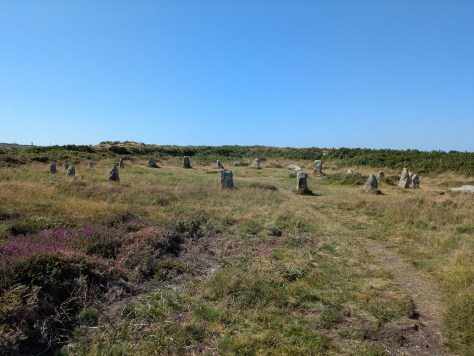

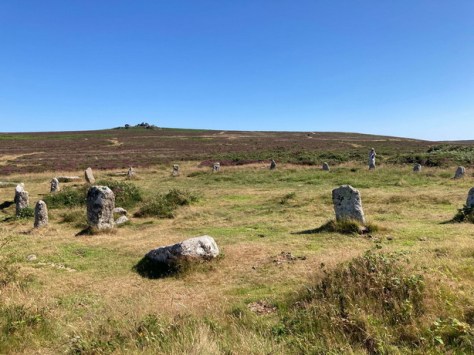

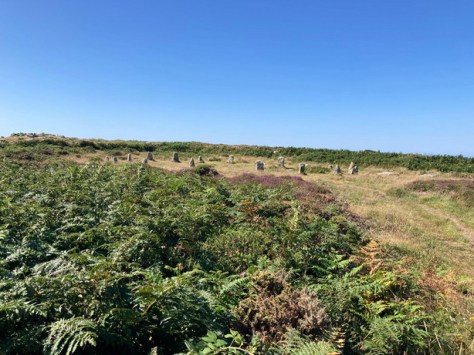
Heading away from the circle towards the distant Carn Kenidjack and looking back, one can see that the circle, which does not stand on the highest point of the hill, might have been given a view of the setting sun settling into the sea at key points in the year, when St Just and a large amount of vegetation did not block the view.
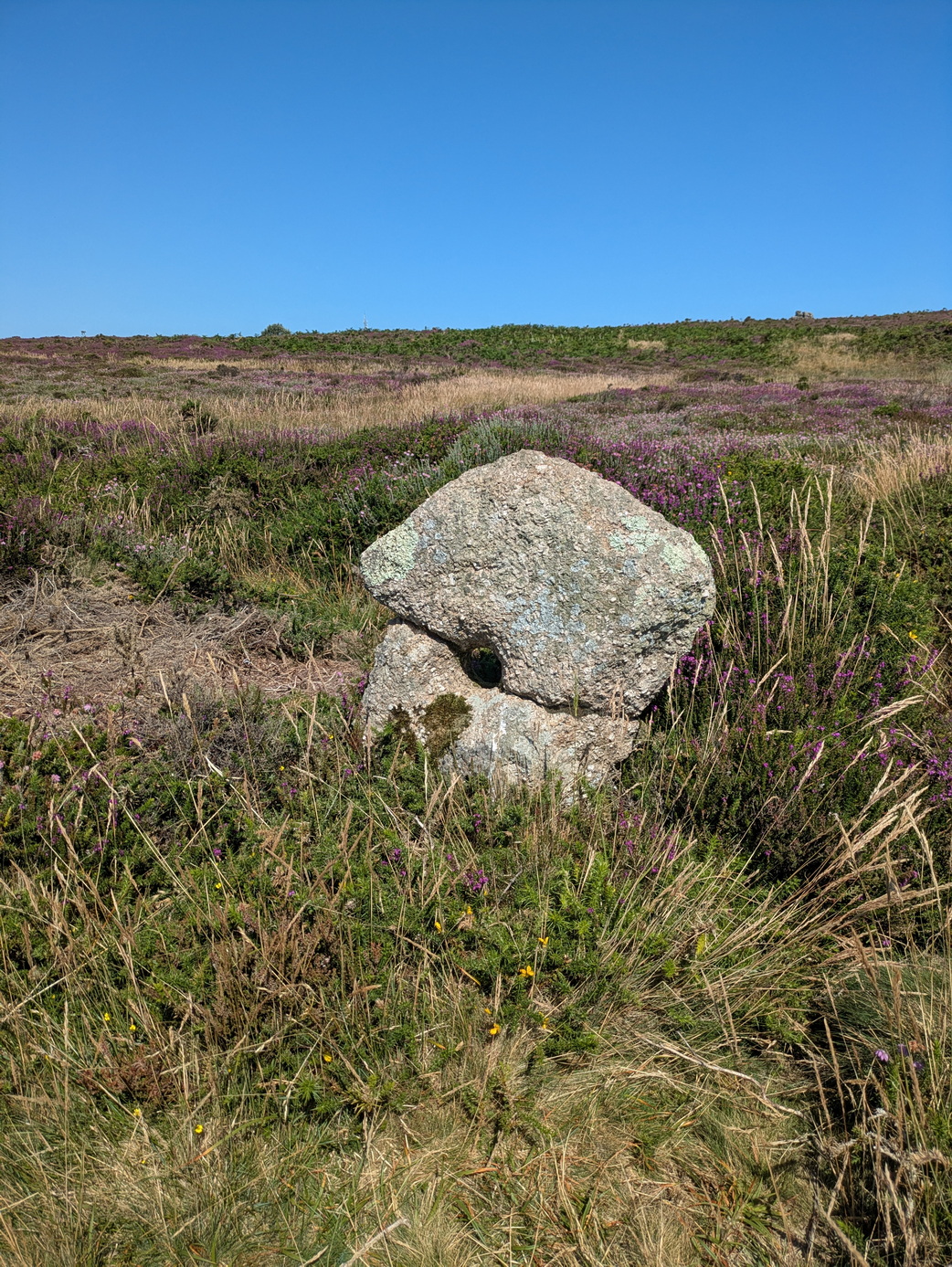
Our next stop was the Kenidjack holed stones. Like many such monuments, these have a habit of moving since your last visit and the advice is to head towards the prominent Carn Kenidjack but to take the path well to the right of the well-worn Tinners’ Way itself, almost following the fence boundary towards a distant ruined house. The stones are not easy to spot from a distance and a degree of faith is required.
We advanced, noting the various low barrows that dot the heathland.
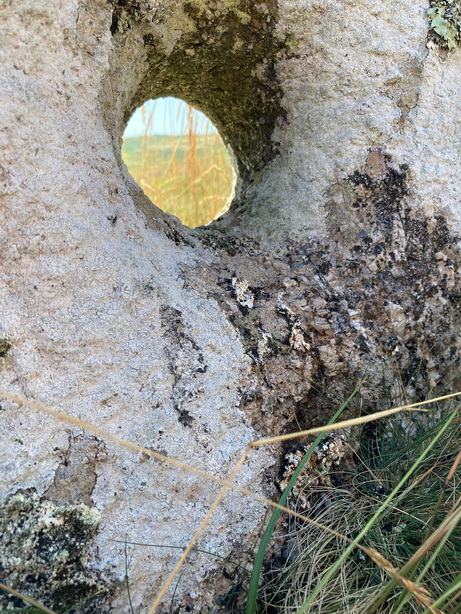
There are five holed stones, each just over a metre tall, with three in an alignment, one prone and one outlier to the north. The word ‘enigmatic’ was invented for such features. The Men an Tol and the Tolven stone are perhaps the best-known holed stones in the Duchy, to which we would add the holed stone close to the Merry Maidens, but these five are unique.

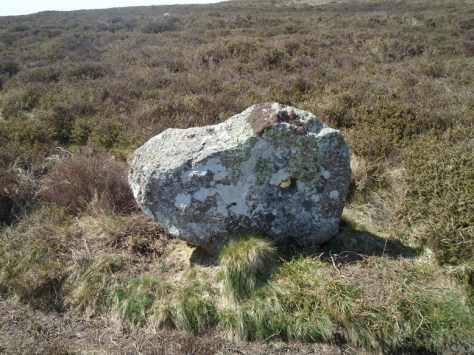


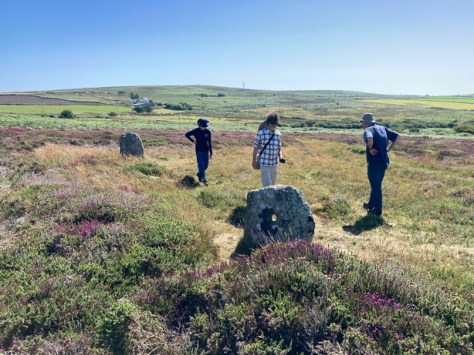
Each hole can just about fit a slim hand up to the wrist, but no more. What they were for is anyone’s guess. In his 1842 book on St Just, the Rev John Buller quotes Borlase: ‘these stones to which the ancients were wont to tie their victims whilst the priests were going through their preparatory ceremonies, and making supplications to the gods to accept the ensuing sacrifice‘. There is nothing like a stone circle to conjure up images of druids and human sacrifice for an enlightened vicar.
He goes on to draw a parallel with holed stones close to circles close to a ‘lesser temple’ in Orkney (lesser: Stenness when compared with Brodgar? but if so, we missed them) and another on Papa Westray.
Time did not allow an extension to check on the nearby Boslow stone and we headed back to the car and to collect our forager.
Eating pasties in the shelter of St Helen’s chapel at Cape Cornwall, we could sit back and admire the natural harbour of Porth Ledden, protected by the cliff castles of Kenidjack and Cape Cornwall, imagining generations of boat from the Bronze to the Industrial Age landing on the sheltered harbour and their crews making their way up the valley to St Just and onwards on the Tinners’ Way. At the foot of Kendijack headland, one of the best rock-cut swimming pools was well-populated by swimmers and sun bathers.
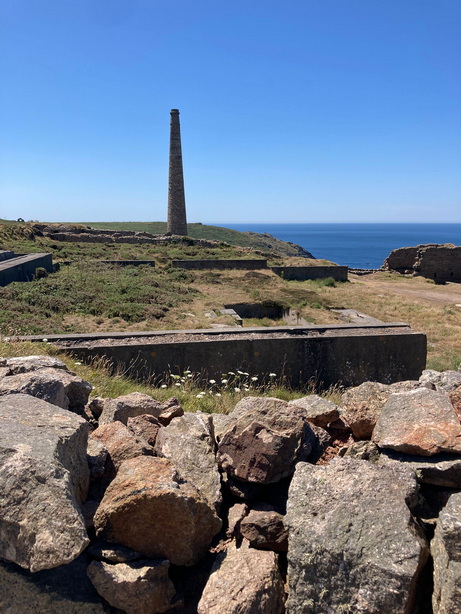
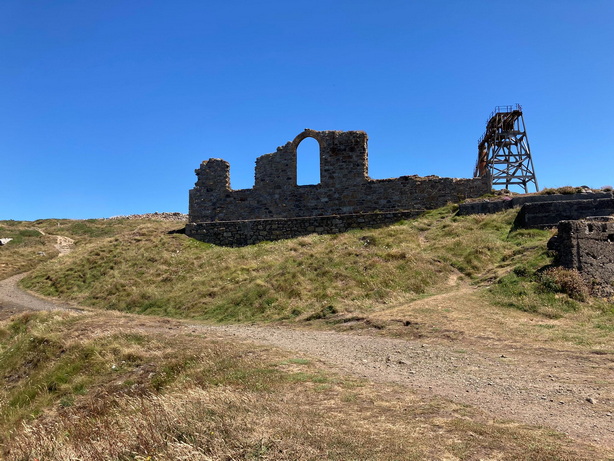
Our homeward route took us to the NT car park at Botallack for the essential visit to the chocolate-box beauty of the Crown Mines, the ghostly echo of Brenda Wootton’s magical voice emanating from the Count House.
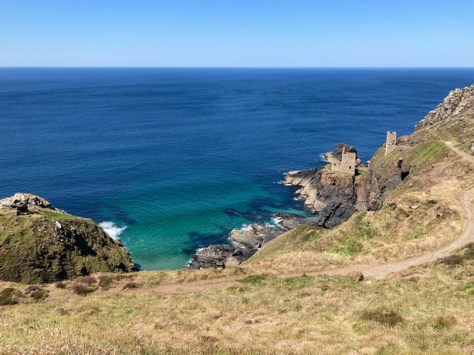

It is not surprising that the Crown mines have inspired stories and literature: the tunnels reaching out under the sea and the miners hearing the sound of the rocks rolling on the sea floor many metres (they hoped) above them. Our favourite remains a short story called the Knocker’s Ballroom.
We returned along the marvellous north coast road, missing out on delights like Pendeen fogou, several rock-cut swimming pools, the mermaid in Zennor, Zennnor and Sperris quoits, and the coffin path, but delighting in the shapes of the Bronze Age fields , little changed for thousands of years.

Getting there:
- Cape Cornwall – NT car park
- Tregeseal stone circle
- Kenidjack holed stones
- Botallack Crown mines – NT car park










 A Cornish Journey