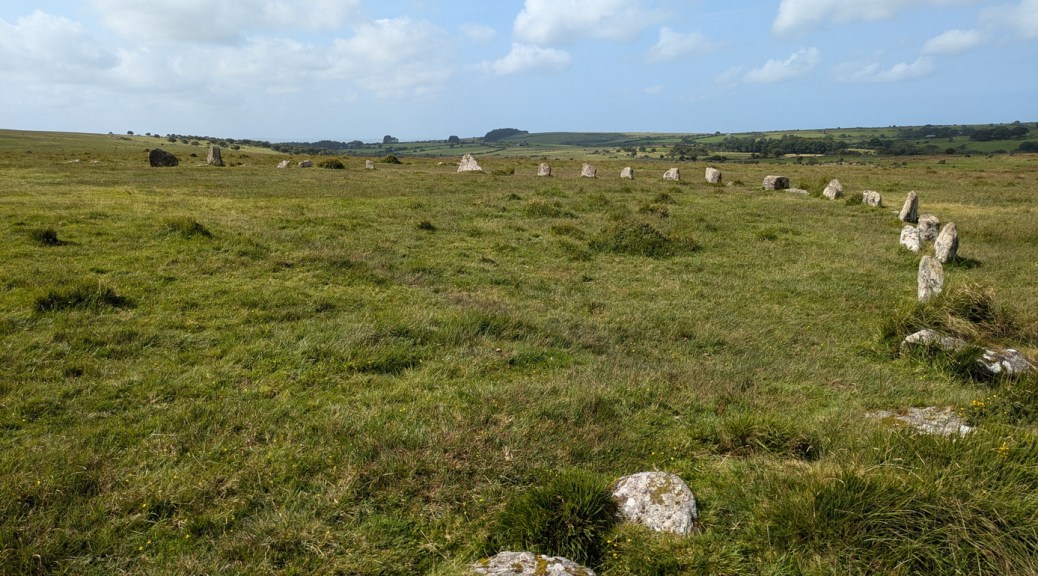
A lovely sunny bank holiday took us on a four mile walk around the Rough Tor area, expertly guided by iWalk Cornwall. Visiting three different stone circles, numerous hut circles, ring cairns and an early medieval cross on one walk was quite something.
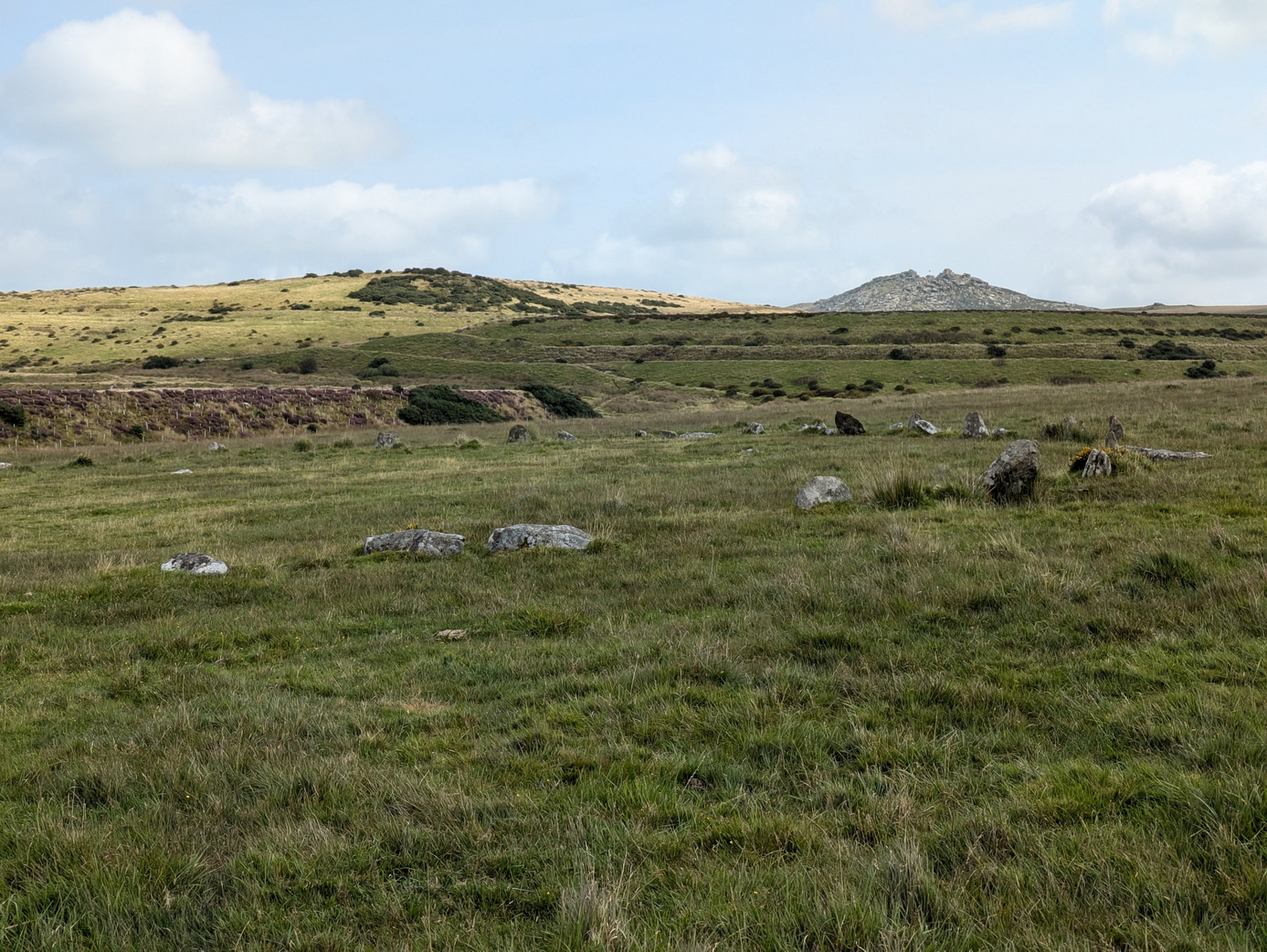
The first delight was Stannon stone circle which consists of 39 standing stones and about another 40 recumbent, according to Craig Weatherhill, out of a probable total of 82. There were various alignments with Rough Tor, Brown Willy and the gap between which we could not test on a sunny day.
The effect of its isolation is rather ruined by the large, obviously man-made hill alongside: the remains of former china clay mining which has resulted in the large Stannon reservoir.
Onwards to a small ring cairn of unknown purpose, probably dating to the Bronze Age (ca 200 BCE). This was much harder to interpret, rather like a baby stone circle.
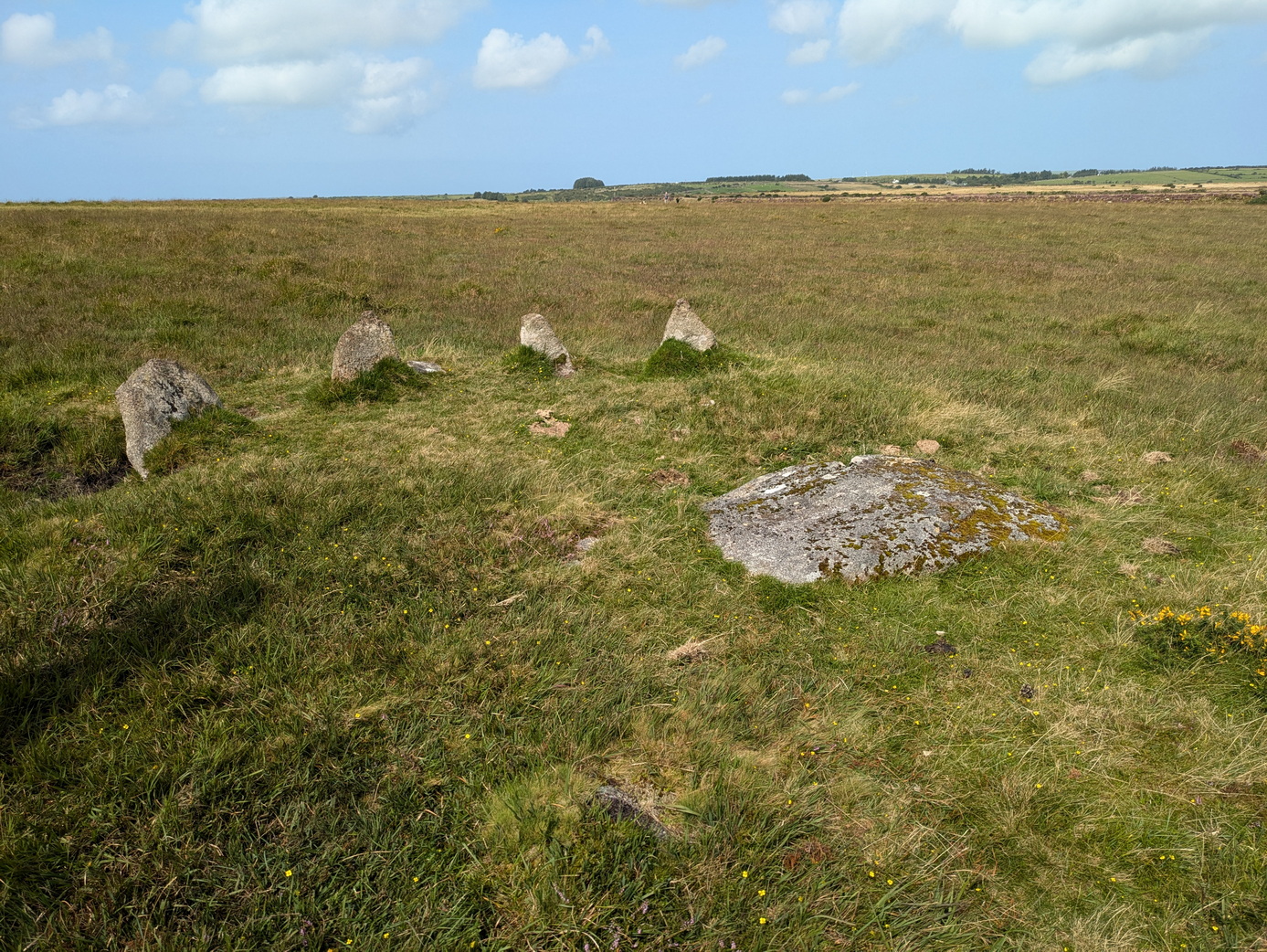
The next delight was a series of hut circles, very familiar in their basic form from places like Bosporthennis or Carn Euny (both Iron Age), but without the developed courtyards. Then, across open ground to the logan rock on Louden Hill which refused to move no matter how hard we jumped on it.

With the summit of Rough Tor beckoning, there was no real option: we had to climb it and descended into the shallow valley. To our left, the infant Camel stream made its way towards Padstow: to our right the infant De Lank headed off in the other direction before they joined up a few miles further on.
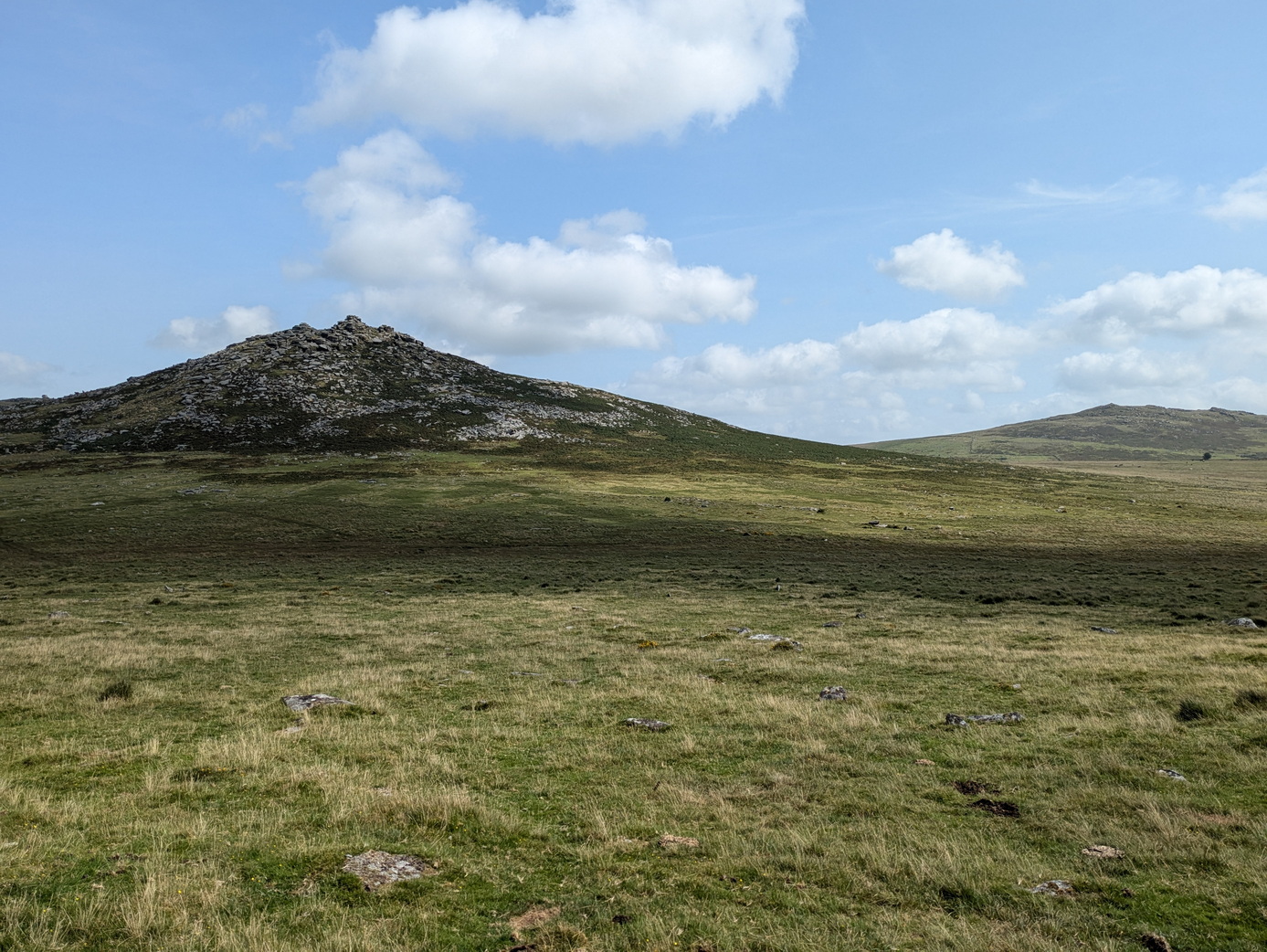
We scrambled up the direct route to the top. This was a mistake. It would have been far easier to climb from the S rather than the SW direction: there was even a path through the high bracken.
Returning to our route, we tripped over some more hut circles, including one that was clearly intended as something of a starter home, being rather smaller than the others.

A short way further on we encountered Fernacre stone circle, one of Cornwall’s largest with a diameters of about 44 x 46 metres.

Only a handful of the 60 or so stones surviving stones are standing and higher than 1m tall. There are said to be alignments with Brown Willy (equinox sunrise) and Louden Hill (sunset on 1 May).
The location of Stannon and Fernacre, almost within visibility of each other in a densely populated landscape is something of a mystery. Were they like two parish churches of later ages, each serving their own communities, or did they have different purposes at different times of the year?
There are not many places where you can visit three different stone circles in a easy day’s walk. The Hurlers, on the other side of Bodmin moor, have three but they are clearly part of a single complex. Tregeseal and Wendron have evidence of having had companions, now lost to view. Others are not far off if you are feeling strong.
We think that only Dartmoor and Aran boast multiple local concentrations.
One thing was clear: no matter how many very large rocks there were around, the builders of the Rough Tor area preferred smaller stones. Photographing stone circles in this area is better done by drone.

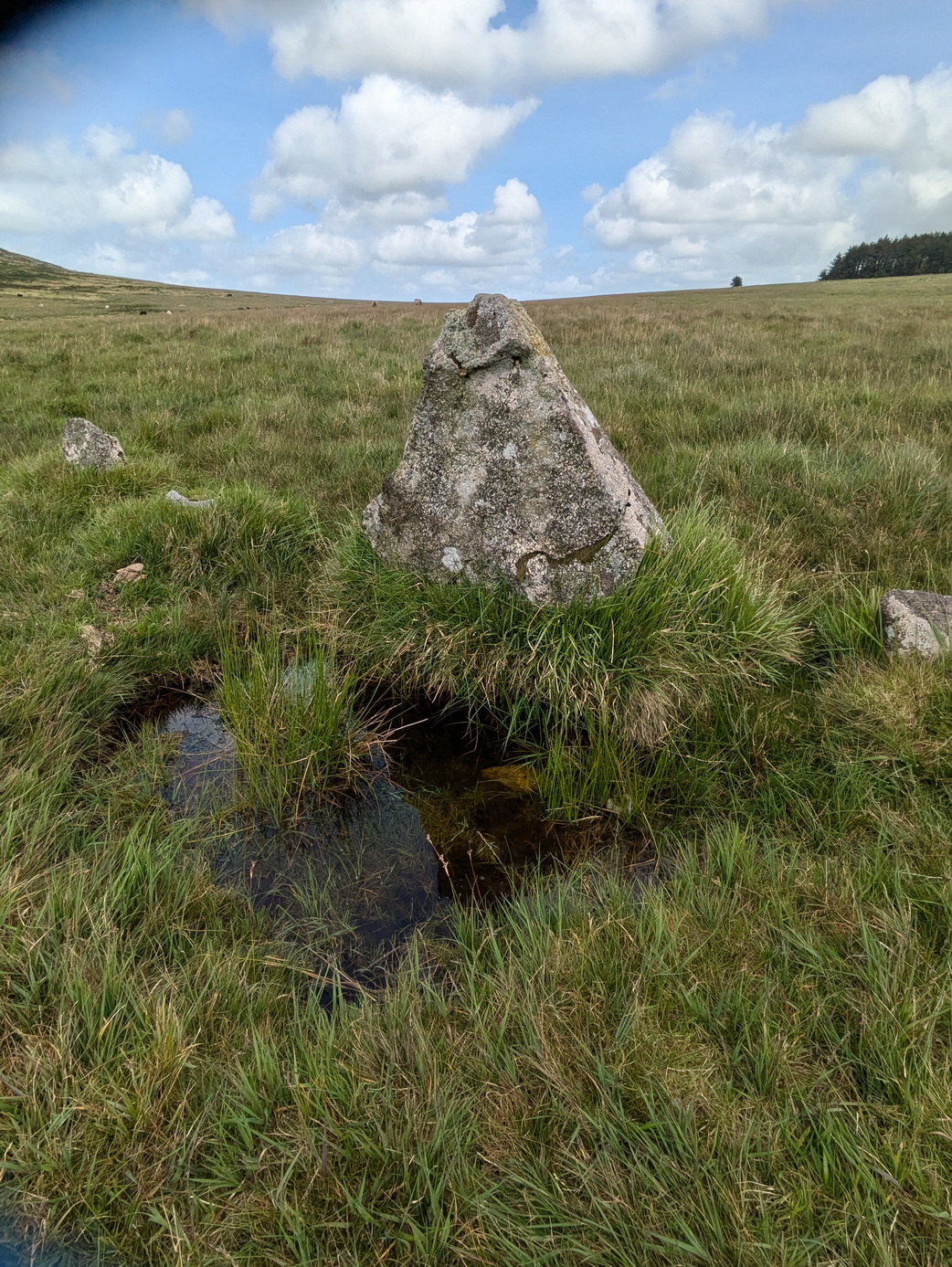
Joining a long rough track which led to a series of isolated farmsteads, we passed by Louden Hill stone circle which was even more invisible than Fernacre. Only discovered in 1973, this is much the size of Fernacre in theory but consists of a dozen or so fallen stones and only one which stands to about 1.5m, leaning at a drunken angle.

Our instructions told us to turn right at the wonderfully-named Middlemoor (or Middle Moor) Cross, a wheelheaded cross with a Latin cross incised on each side.

From here, we returned to our car after a roughly 4mile walk in some of the most wonderful open country. It would be a nightmare to navigate on a misty day and when wet under foot.
We had hardly scraped the surface of the prehistoric delights that abound in the area.


 A Cornish Journey