

On a bright Spring day at the end of April, we set off from Sancreed Beacon following an excellent route provided by iWalk Cornwall. This had it all: ancient monuments, a splendid church, a holy well, and a fogou (than which there is nothing better).
The route took us off to look at the end of the Drift reservoir before returning us to Sancreed itself, passing through some lovely green lanes, resplendent with bluebells, white leek and that soft green of spring, eventually emerging by Sancreed church.
On the way we encountered a ghost path in a grass field. We are all familiar with the various stages of paths: grass is initially knocked flat by passing boots; then, as the pressure increases, the grass is worn away and the path becomes a mix of brown and green; eventually the pressure tells, the grass gives up and the path becomes brown, often turning to mud in winter.
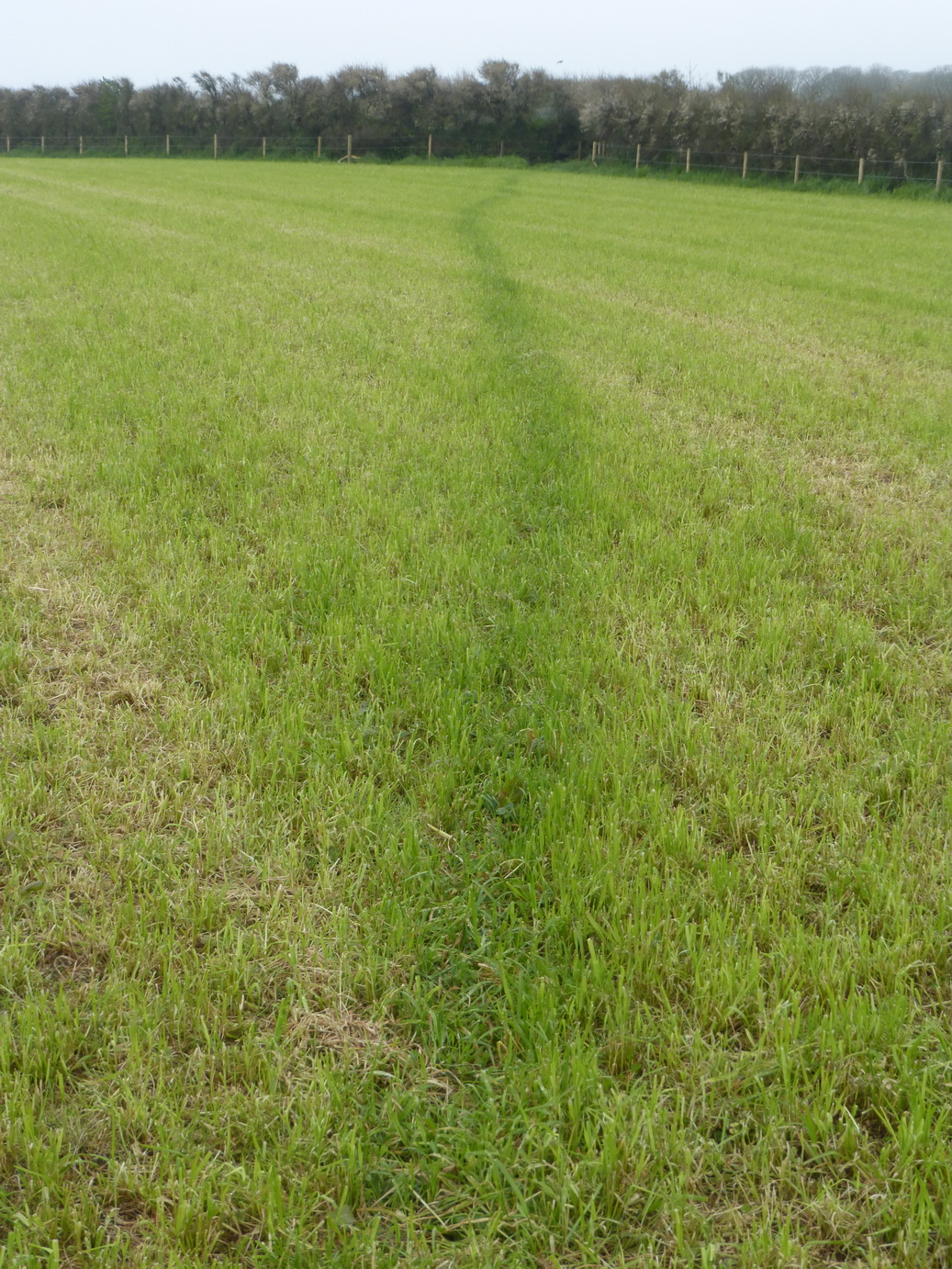
The ghost path was harder to explain. It was obvious where the path ran but the grass on it was noticeably longer than the surrounding area, more lush too. What is the process that leads to this? Would the weight of walkers not compact the earth and make it harder for the grass to grow, producing something like a crop mark? Or is it that it is the ‘roller effect’ well-known to cricket groundsmen: that rolling – ie applying some pressure – encourages the grass to thicken up its root system and thus produce a green growth.
Either way, we could see where we had to walk.
Entering Sancreed village we passed a wonderful relic of the past: an empty playground in a field. Football goal posts, four swings and a table in a rough field. It was a school day but it felt very out-dated and in need of enthusiastic young dragged away from their screens. Do they have young in Sancreed?

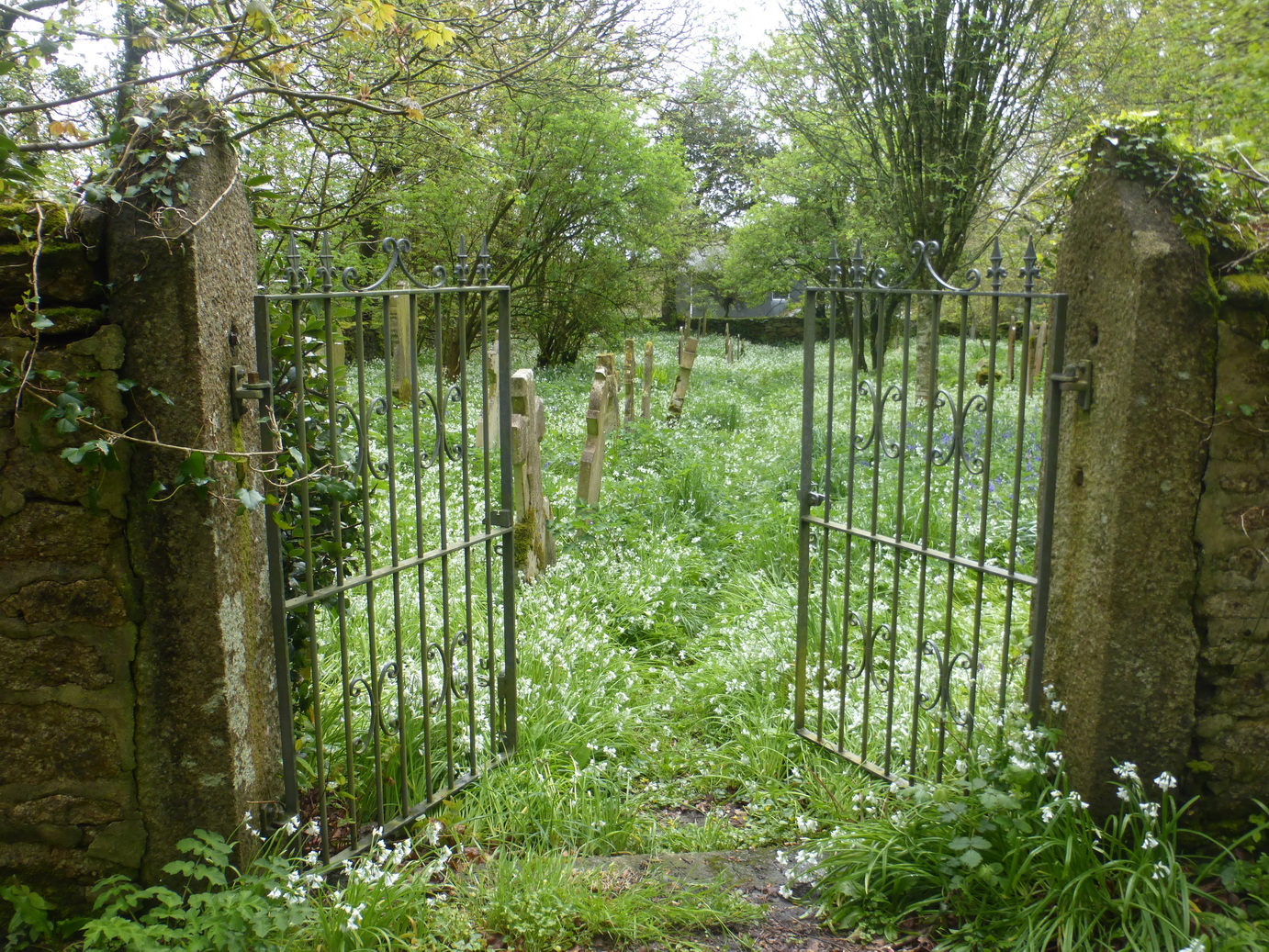
Just beyond, was a lovely walled churchyard with an abundance of bluebells and three-cornered leek bursting through the long grass. It would be hard to think of a more tranquil setting for the C19 residents of Sancreed to have been buried. The leek (‘wild garlic’) would keep away the vampires.
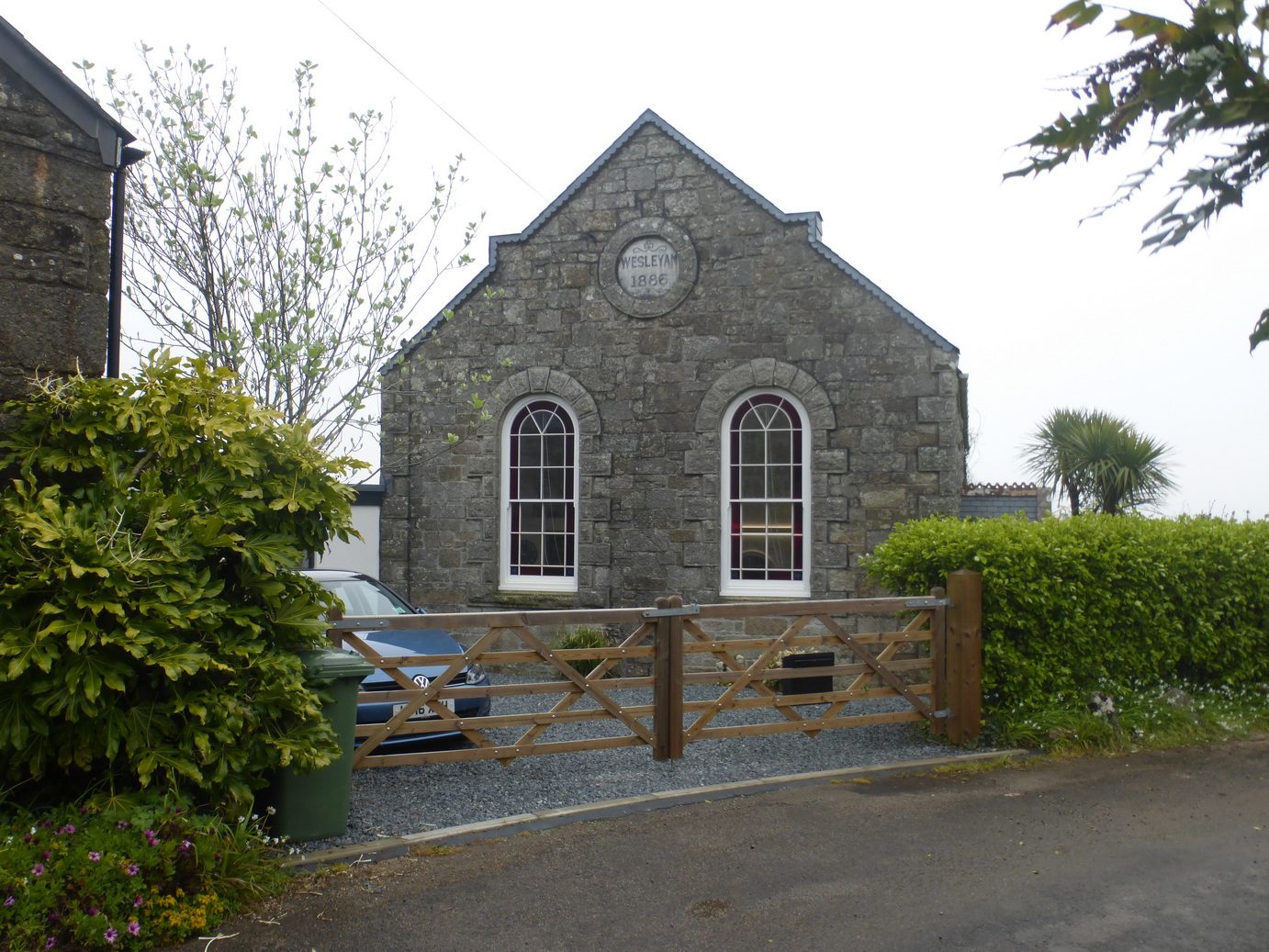
Sancreed is a lovely-looking village with some fine houses although with no pub or shop that we could see. It felt a cut above a typical small community in the area and is the proud possessor of a grand church with plenty of interest.
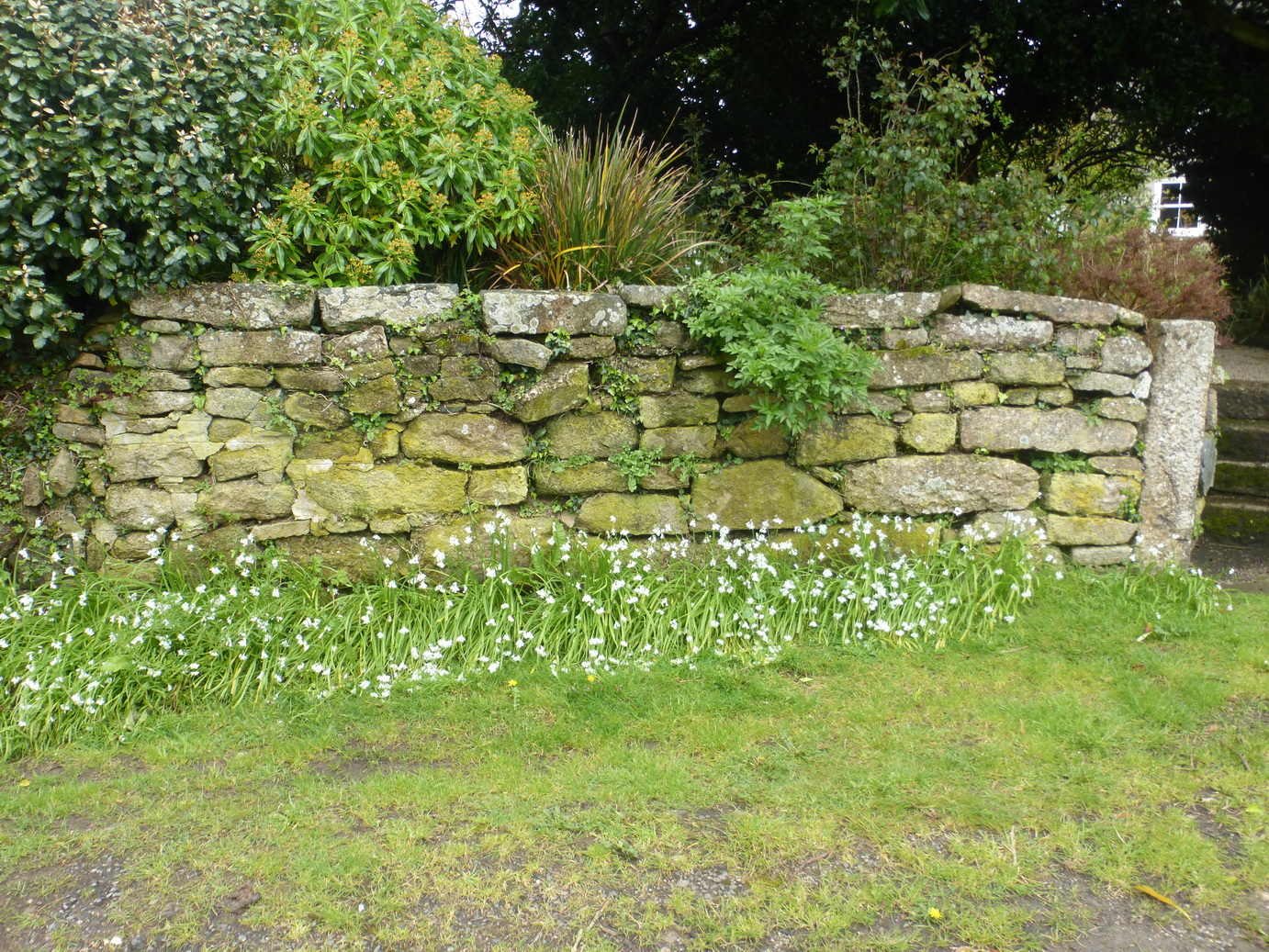
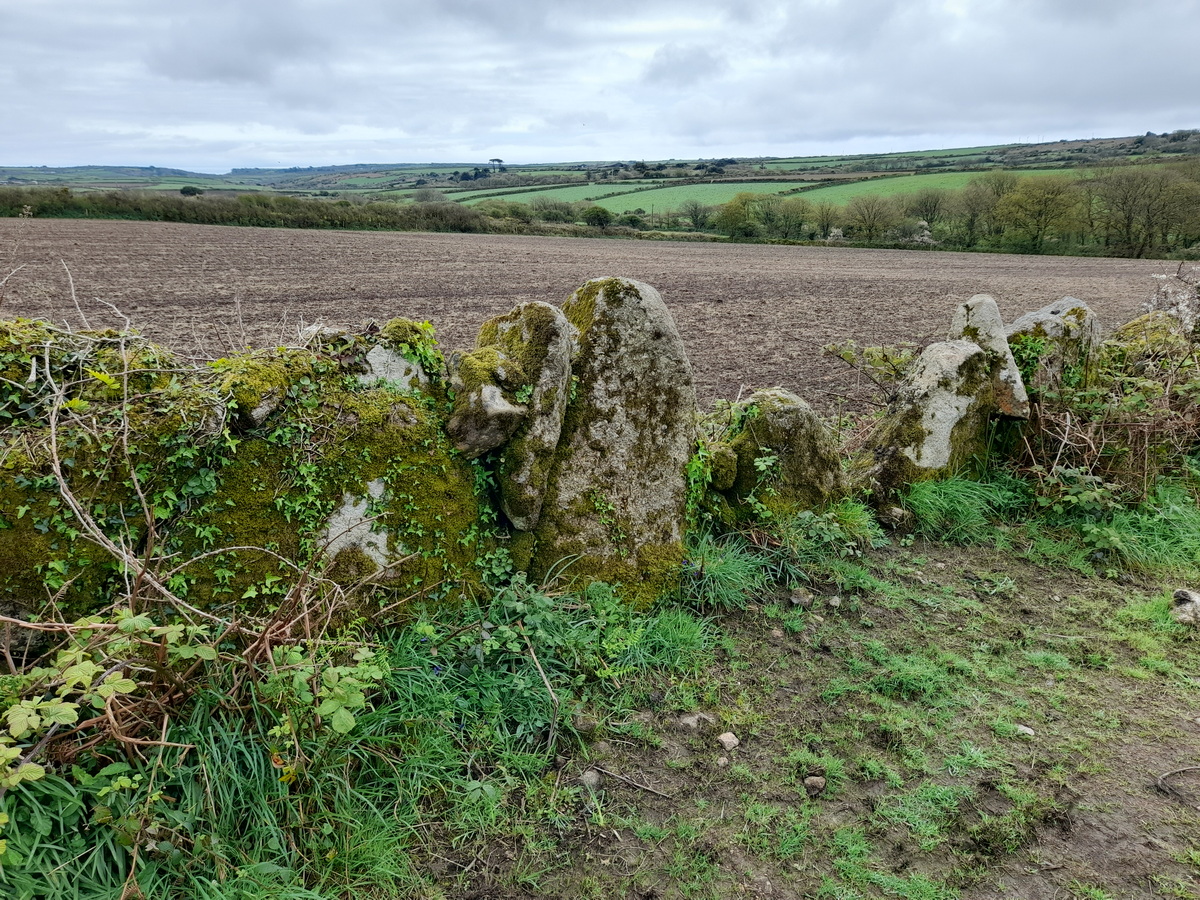
A side path took us on to the holy well where we made our devotions before setting off on a wide sweep across country to Carn Euny. The walling around here reminding one that this was an area that had been inhabited since the Iron Age, and probably earlier. Moving large stones was no problem for our ancestors.

Carn Euny itself was its usual brilliant self: an Iron Age village with the huts helpfully delineated thanks to some recent work by the Cornwall Heritage Trust who have taken over the site management from English Heritage. It appeals to everyone: the young for the games of hide and seek, to the aged archaeologist keen to speculate on the purpose of the fogou; or simply to sit in the sun and enjoy a picnic.

A short detour took us to the two holy wells – and third of indeterminate age – that sit in a grove nearby.
We skirted Caer Bran on our return and climbed Sancreed Beacon for one of those 360 degree views that are only possible in this area. All the recognisable landmarks were there: the Ding Dong (Greenbarrow) mine, Trencrom Hill, Mount’s Bay, St Michael’s Mount, the Lamorna valley, St Buryan church, around to Chapel Carn Brae. Truly one of the High Spots of Cornwall.





 A Cornish Journey
One thought on “Sancreed to Carn Euny”
Comments are closed.