Bohortha to Nare Head

150629 Walk 02
Nare Head, Gull rock and the Dodman

Having finished filling some missing stretches of the coast path, we turned our attention to extending eastwards, picking up where we had left off on the south coast.

A bright sun and wonderful south easterly sailing wind greeted us as we headed down to the bottom of the Roseland at Bohortha. It really is untrodden ways down there. As usual, Froe Creek was a delight with its little half tide dam.
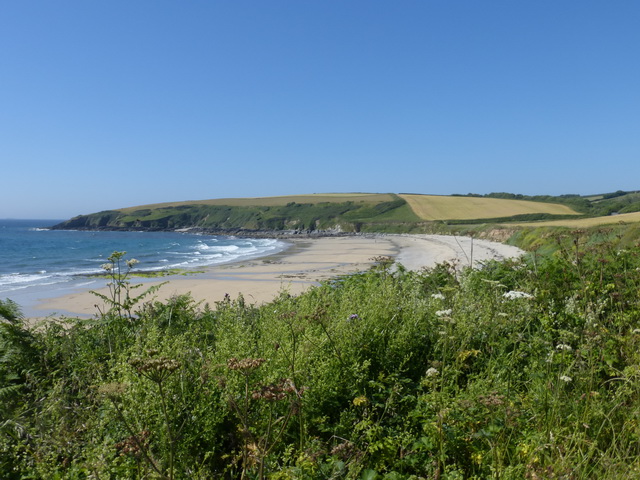
150629 Walk 01
Towan beach

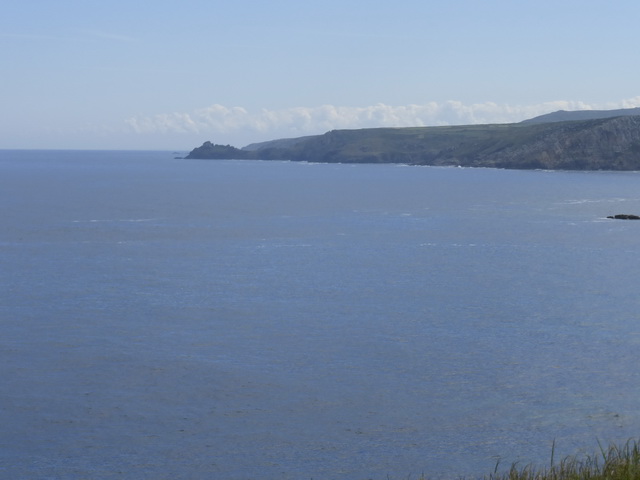
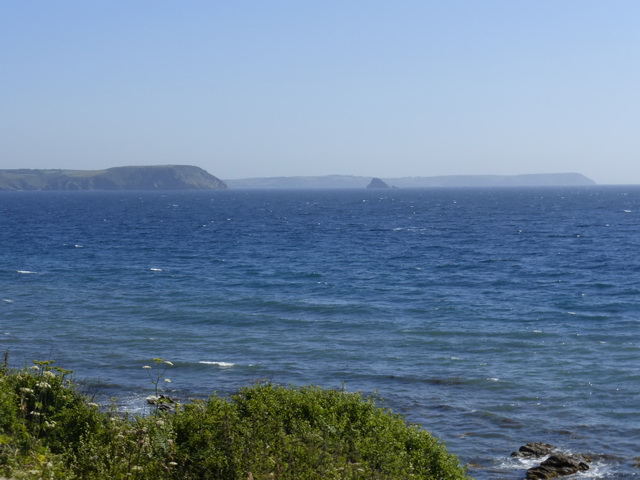
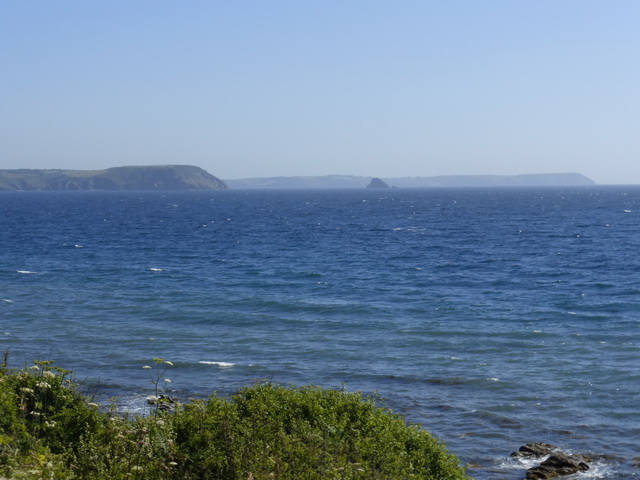
We picked up our previous trail at Porthbeor beach and headed around Porthmellin Head from where we could see our objective for the day: Nare Head and its accompanying pyramidal Gull rock, the Dodman hovering in the background.

After our walks in Penwith and on the North coast the going seemed almost tame. The path was easy going and largely on the level. The landscape rolled but there were none of the towering cliffs to which we were accustomed. Beaches were extensive and had sand in abundance, interspersed with rocky outcrops. 150629 Walk 03
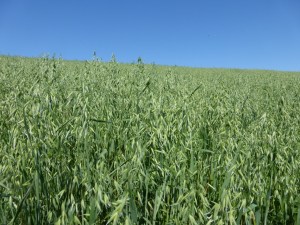
Alongside us fields of winter wheat were ripening; grass was standing tall unaware that the harvesters would soon be on their way; and the surface of a great field of oats rippled like waves, creating the illusion of  a magic-eye picture. Later we would pass an equally large field of fresh-green bracken. The long days of summer did not feel far off.

Portscatho appeared very suddenly as we rounded a corner, heralded by a wonderfully planned and kept garden. It is a smart village, remarkably similar in conformation to Coverack and a mini version of St Mawes. Its houses, no doubt largely holiday cottages, were well-painted: almost painfully white in the bright sun thanks to Mr Dulux’s excellent products.
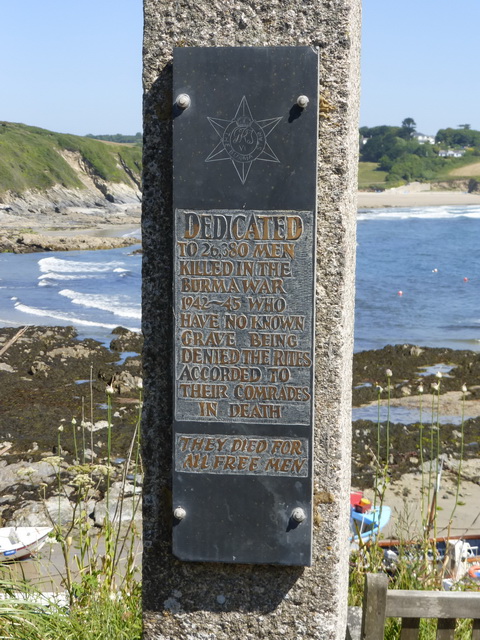
150629 Walk 06We were slightly surprised to find a memorial to the Burma Star Association with which we have a family association. We have yet to find a link between the Association and the village, but here the memorial stands on the edge of a Cornish sea.

We walked on, past the Hidden Hut at the end of Porthcurnick beach which was predictably popular, and towards Pendower beach which beckoned us on, two windsurfers making the most of the conditions. An occasional distant rumble suggested that the Navy was ‘conducting exercises’ over the horizon: no doubt rattling sabres to reassure us that they would protect us from lone terrorists.

150629 Walk 11
‘I cannot see the sea let alone any ships’

On these walks we have often remarked on the placing of some of the benches, especially those which commemorate someone special. Despite the National Trust’s generally excellent work keeping the paths in order and the vegetation cut back, not all these benches are intelligently maintained. We came across two wonderful examples of benches which gave a detailed view of a blackthorn hedge instead of the intended sea view.

We had a slight loss of charity about the unnecessary small detour around the Pendower Hotel. It would have cost them nothing to allow us to cross the 100 yards or so of frontage. It was a reminder of some of the diversions along Carbis Bay.

I am sorry to say that we took it out on the Nare Hotel a little further on and marched through their garden ‘confused’ by the conflicting messages alongside saying ‘Non-residents welcome’ and ‘Residents only’.

A ruined cafe on Pendower beach was a stark contrast to the buzz of Porthcurnick beach with the Hidden Hut. Here, the cafe had gone and the beach was strewn with rubbish and broken glass. A real lost opportunity.
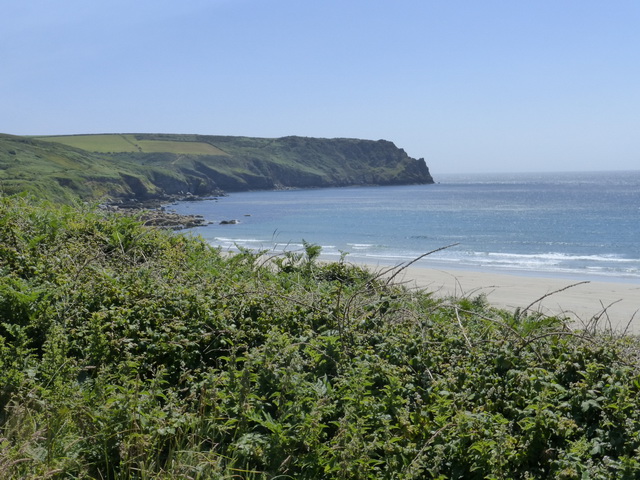
150629 Walk 15
Nare Head

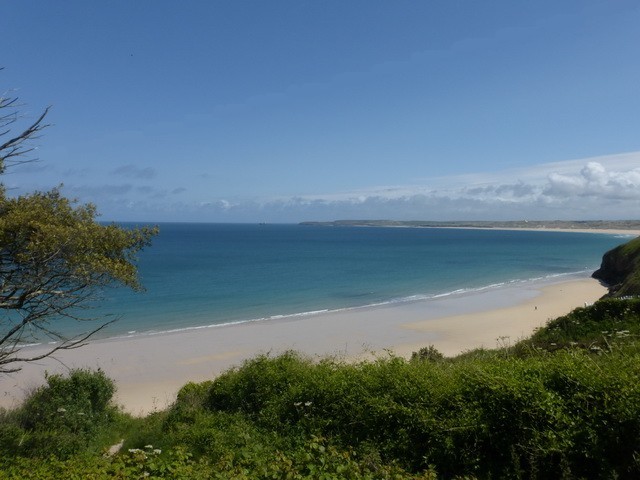
The sandy stretch of Carne beach is glorious and was filled with walkers and dogs. Nare Head looked close enough to touch.

The guidebook had said that this stretch was going to be ‘Strenuous’ but we had seen nothing that was not ‘Easy’ or at best ‘Moderate’. There were dark warnings about the climb to Nare Head but this turned out to be mild compared with the area around Zennor. It was helped by being a simple path without unevenly-spaced and high steps which require an added umph to raise the aching body.
150629 Walk 20
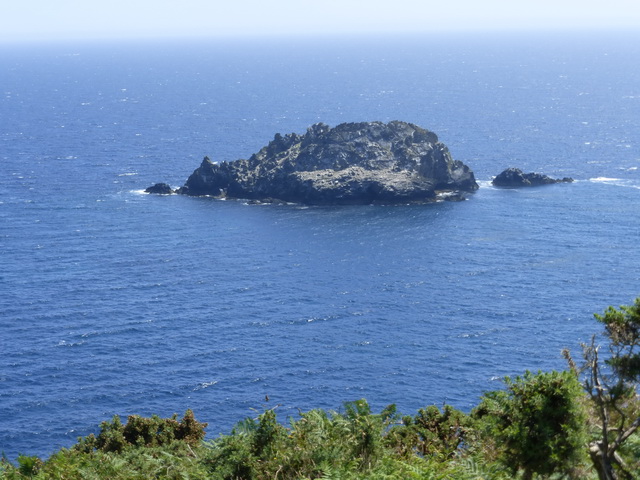
Gull rock

Breathless, we flung ourselves onto the top of the Head and nibbled some sandwiches admiring Gull Rock which had changed shape since we had last seen it.

Behind us were some weird green tubes which we recognised as the entrance to a nuclear bunker. Unless it had been permanently manned, it would have taken its team some time to reach such a remote spot. Like some of the wartime pill boxes around the coast, one could think of worse views to spend the hours waiting for disaster to strike.

It was a short step from here to our car. We had covered 8 miles in under three hours.

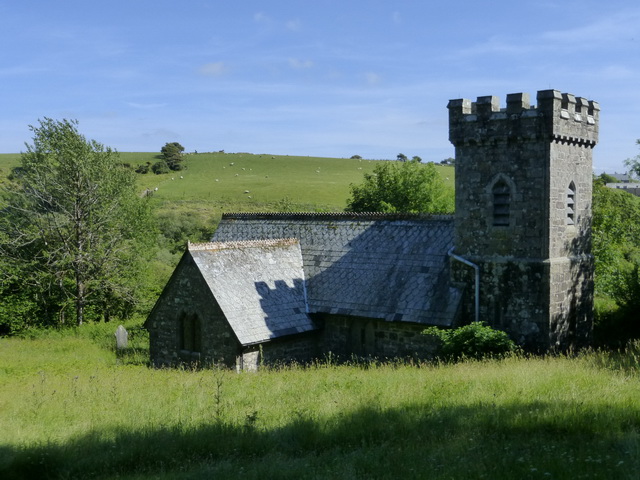
There were more treats in store for us because we then visited the churches at Gerrans, St Anthony in Roseland and St Just in Roseland with its holy well: the last two churches being each given one star by Simon Jenkins. We also dropped in on Tregony church to capture some missing photographs.

Lower Boscaswell to Zennor

P1030522Another lovely sunny day for a glorious stretch of coast, starting from where we left off last time, checking on Boscaswell fogou.

We were glad to leave the ruined landscape of Geevor behind and quickly found ourselves on a classic cliff path, walking just outside the margin of cultivation with an ancient granite boulder wall to our right and a vertiginous cliff and a turquoise sea to our left.

Rounding Pendeen Watch with its smart lighthouse, whose windows were being cleaned from a cherry-picker, we sighted Gurnard’s Head which was a pretty constant companion on this walk. It was also a reluctant one for it seemed never to get any closer and occasionally hid behind another head, fooling us into thinking it might suddenly pop out and ‘Boo’ us.

We resisted the temptation to turn inland to Borlase’s house to inspect Pendeen fogou, remembering the need for serious welly boots to wade through the slurry.

P1030523Portheras cove below Pendeen was unexpected: a lovely sandy beach with a small boat cove hidden behind the Kenidjack rocks, no doubt thrown here from the carn by a friendly giant.

As civilisation fell away, the path became sublime: easy walking on a firm surface. The flowers, provided a degree of delight and we added blue sheepsbit scabious to our collection as well as something that looked like an orchid but has, so far, defied better description.

P1030529The National Trust has done some good work repairing the path and creating bridges. We particularly enjoyed one which had a lintel which was large enough to grace Stonehenge and which had been elegantly provided with a handrail.

Porthmeor cove was another surprise. Although largely rocky, it offered a landing beach for a small boat. Close inspection of the headlands alongside showed they were populated by climbers attempting to find a way up. We simply used the path.

We took a break for lunch overlooking Gurnard’s Head, which was almost teeming with other walkers. It seemed strange to be looking at another Trereen Dinas close to Treen, much as we had done a few weeks ago on the south coast.

P1030537We almost tripped over Chapel Jane about which we can find nothing other than the mark on the map.

Treen Cove lay below. Here stood a house which must vie for one the greatest houses on the coast path, rivalling the Rinsey House and an unnamed one we found deep on the Lizard. Isolated on its little promontory, it seemed to have its own private beach and rocks, plus the picturesque ruins of a mine. How different it would have been when those mines were working.

A short distance onwards took us to the foot of Zennor for be warned, despite appearances, Zennor is actually at the top of a steep climb from whichever direction you approach it.

P1030538
Never was a sign so welcome as on a hot sultry day

A stiff uphill stretch and we linked up with our previous walk and so completed Penwith and almost everything from Mawgan Porth to St Anthony’s Head. ‘Almost’ meaning a couple of half kilometre stretches which we will complete at some point.

We had taken 3 and half hours to cover 7.5 miles.

We looked in on Morvah, Madron and Gulval churches on the way home, avoiding the competing delights of Porthmeor fogou, the Men and Tol, Lanyon Quoit, Madron well … all of which we had visited before. The area is so rich in evidence of the past.

Sennen Cove to Lower Boscaswell

P1030424
We were not the only ones taking flight

Being a bright sunny June day, we set off from Sennen Cove, heading northwards towards Pendeen.

We had a gap to fill in, one to which we had been looking forward as we knew and loved the area.

Whitesand bay was glorious with surfers enjoying some good waves under the watchful eye of the lifeguards. Gwynver beach looked the better, and less populous, option.

P1030433The stretch from Tregiffian Vean cliff to Gribba Point was classic cliff path: an occasional scramble but mostly walking through low scrub. There was a strange zigzag at one point and then a small detour up the Cot valley for some reason but otherwise the going was easy and the route obvious.

Most of the Spring flowers were faded by now and the great carpets we had seen in recent weeks were gone. The foxgloves were in bold flower but little else was fresh. In places a red mat of dodder covered the top of the gorse. We quickly identified the flower of the day which we think is English stonecrop, a sparkly succulent, which covered many of the rocks. The general smell was of fresh bracken.

P1030435
Cape Cornwall

Below us, the sea was its usual turquoise but you would expect nothing less on a sunny Cornish day.

Emerging from the Cot valley, we skirted Ballowall (Carn Gloose) barrow without stopping, having visited it in the past. Although apparently terribly important archaeologically, this is surely one of the most confusing monuments for the amateur to disentangle. Our ancestors certainly picked a wonderful site for whatever it was they were trying to create.

A short distance further on was Cape Cornwall, so much better than Land’s End and reputedly better known by our ancestors. The little harbour, with its small tidal swimming pool looked calm and sheltered although it probably took the full force of the storms a couple of winters ago.

P1030437
St Helen’s Oratory

We had not come across the little medieval St Helen’s Oratory before. Perched on the saddle approaching Cape Cornwall, it has been rescued from its former use as a cowshed and turned back into something more evocative.

It is not hard to imagine that many such oratories once existed in Cornwall. Some must lie under our churches, others, like that at Madron or further up the coast beyond Zennor, have been almost recaptured by nature.

Porth Ledden lies on the north side of Cape Cornwall and is a natural harbour which has been described as ‘the best-defended early harbour in Cornwall’ with a cliff castle on both sides. We had visited this when we walked the Tinner’s Way a year or so ago. Today it was just as appealing even though the tide was out.

P1030441The landscape changes markedly from Cape Cornwall onwards. We were approaching St Just and there was evidence of past industrial activity and disused mines – with as many warning notices – everywhere.

Round the corner from Cape Cornwall was the Crowns Mine of Botallack. It is almost a law that you have to take far too many photographs of it and we did, eating our lunch looking down on its amazing engine houses.

Behind us, the ghostly sounds of the folk music of Brenda Wooton and John the Fish seemed to waft to us from the Count House where they used to sing.

P1030447Passing the Levant mine (NT) we came all too quickly to the immense denuded landscape and buildings of Geevor mine. Mining and arsenic production has so damaged the surface that little will grow here.

We had one last treat however. We had parked in Lower Boscaswell on purpose and the path to our car passed what remains of Boscaswell fogou. This was almost completely destroyed by a farmer in the past but a short section still exists, hidden away behind some long grass in the a wonderful wide, above ground Iron Age wall.

The walk had taken us three and half hours. The book says we had covered about 8 miles, Google thinks it was about 7.5 miles.

On the way home we visited Pendeen, St Just in Penwith and Sennen churches.

Hellesveor cliffs to Godrevy

P1030173This walk had many similarities to our recent ones and not just because it was along a cliff. It included cliff, hills and flat; tarmac, path and sand-walking; a clear objective – Godrevy lighthouse – which could be seen almost from the beginning of the walk which ‘simply’ needed reeling in. ‘Reeling in’ does not mean that one always walks towards the objective. To the lighthouse!

Parking outside St Ives – high parking fees are not an alluring attraction – we followed a lovely bit of cliff path before entering the charming delights of St Ives.

P1030188It is difficult to believe that two such contrasting towns as St Ives and Newquay can be so physically close and yet so different. St Ives is, of course, filled with alluring signs to artists’ studios and aquamarine and turquoise gift shops, but its architecture is generally of a good quality, granite and robust.

It is impossible to understand the light in St Ives. Like Scilly, it is simply different: clearer and more translucent. Listing the possible constituents does not point to an obvious solution. Cornwall generally benefits from clean, clear air, scrubbed and salted by the Atlantic. Other places have golden sand allowing the sea to take on its azure clarity. Other places have sheltered shallow waters. None of these is unique and so it has to be a combination of them: the protected east-facing bay of shallow sandy-filled water may just help to reflect the light back up into the sky to give St Ives its special soft light.

P1030174Whatever the cause, walking into St Ives can sometimes feel like walking into a painting. Quite apart from the bright sun and acres of golden sand, it is hard not to be impressed by St Ives, in or out of season.
The visitors – or tourists – ambling along the quayside, wondering how to ‘use’ the town now that they have arrived, wondering whether to give into the blandishments of the ‘boat trip to see the seals’. It is undoubtedly a tourist trap but thankfully only a few shops let the side down and hint at the slippery slope towards Newquay.

A visit to St Ia’s church was essential, a gentle smell of incense filling our nostrils as we made our way southwards towards Porthminster beach and Carbis Bay, Godrevy lighthouse beckoning us on.

P1030193The path here was a mix of dried mud and rough lane, thankfully relieved of any further tarmac, as we made our way through lush greenery. On one side we had a variety of ‘more exclusive houses’ bordering the sea, and the railway line, surely one of the most scenic short journeys in the country. The views were constantly amazing.
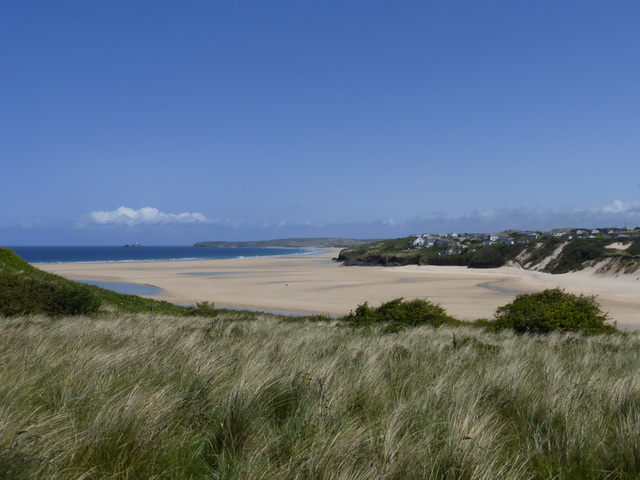
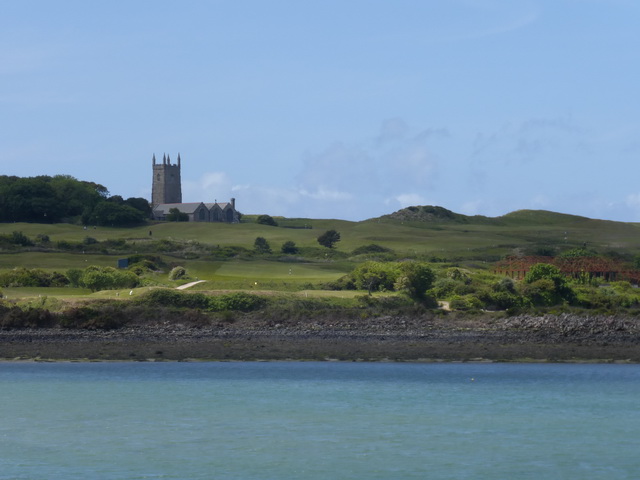
Passing Carbis Bay, the sands of Porth Kidney stretched out, seemingly continuous with Hayle Sands. Only a small blue line seemed to separate the two.

P1030196The St Michael’s Way joined us as we approached Lelant golf course where the managers had erected various bossy notices about their right to bombard us with random golf balls, warning us to keep firmly to the path as though this might protect us. The thought of the important St Uny church drawing us onwards.

There are moments when one wishes for some stepping stones or a small ferry. This was one of them for the next couple of miles were eminently forgettable. Lelant turned out to have some lovely granite C18 and C19 houses reflecting its former importance as a small port on this now-silted up estuary.

P1030218
Approaching Hayle

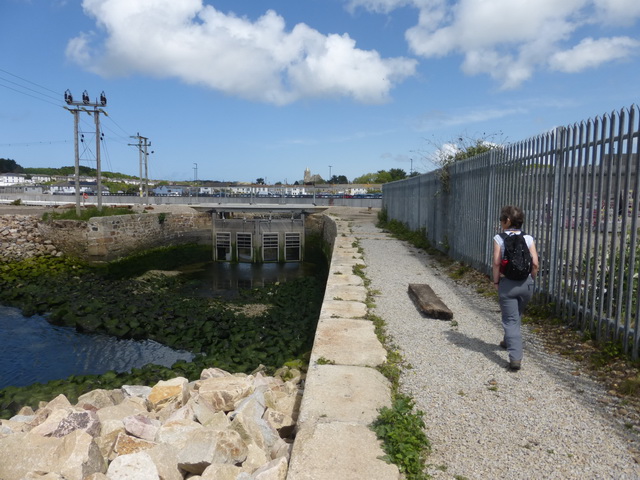
The tramp, for tramp it was, around the saltings was pretty uninspiring, tarmac, traffic and a decayed landscape contrasting to the views we had been experiencing so far. The nadir was the entrance into Hayle itself, along a clinker-covered path towards an ultra-modern supermarket replacing the former Harvey’s factory at the centre of the town.

Escaping Hayle, we started the long sandy path through the Towans, the distant view of St Uny cheering us and reminding us of the missing stepping stones.

P1030217
St Uny church

The Towans, a great expanse of grassy sand dunes, has been populated by holiday shacks of all sorts and sizes. Where these are unique they have a certain charm but sadly great estates of them have emerged which are less acceptable.

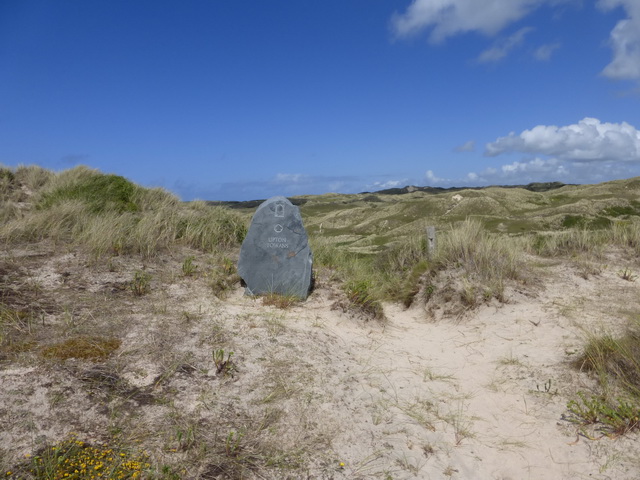
Signage is essential here and has been well done with standing stone monoliths indicating the way in a landscape which looks positively extra-terrestrial. We had plenty of time to speculate as to how Mexico or Upton Towans got their names.

P1030222Our only minor complaint was that the marked distances were distinctly Cornish. Initially signed as being 4 miles, it was still 4 miles about half an hour later and adding in the value on the reverse made the total distance around 5.5 miles. Maybe they were as lost as we were.

We did enjoy the wildlife, though. The flower species of the walk was undoubtedly valerian, available in its white, red and strong red versions. Above us birds sang and a kestrel went hunting, undisturbed by the distant kite-surfers.

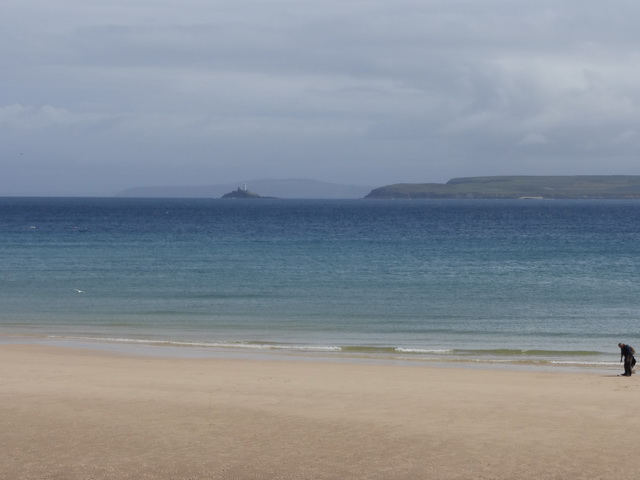
By now Godrevy light appeared within reach, clear in the azure sea. We eventually emerged from this sand-waste to discover Gwithian car park from where it was an easy step, with the tide still out, onto the beach and along the strand to the NT car park.

We had covered a distance of about 12.5 miles – although the gps said it was further – in five hours of fairly steady walking and felt we needed a rest. We had also visited two churches: St Ives and St Uny and planned to pop into Gwithian on the way home. The memories of the blues – ‘improbably blue sea’ (Pevsner) – and golds of the day will stay with us for some time.